The Way Your Implement Connects to the Tractor Changes How It Performs
Every tractor-powered implement connects to the tractor in one of two ways: mounted on the three-point hitch (carried by the tractor’s hydraulic arms) or trailed behind the tractor on its own wheels (towed via a drawbar or hitch pin). The same type of implement — a potato digger, a stone crusher, a fertilizer applicator — may be available in both configurations. Choosing between them involves trade-offs in weight handling, stability, manoeuvrability, transport, and tractor compatibility that affect daily productivity and operational safety.
This is not a trivial decision. A mounted implement that is too heavy for the tractor’s rear axle creates a dangerous front-wheel-lift condition. A trailed implement that is unnecessarily complex for a simple, lightweight tool adds cost and turning-radius limitations without benefit. Understanding when each configuration excels — and when it creates problems — helps you select the right version of every implement in your fleet.
How Each Configuration Works
|
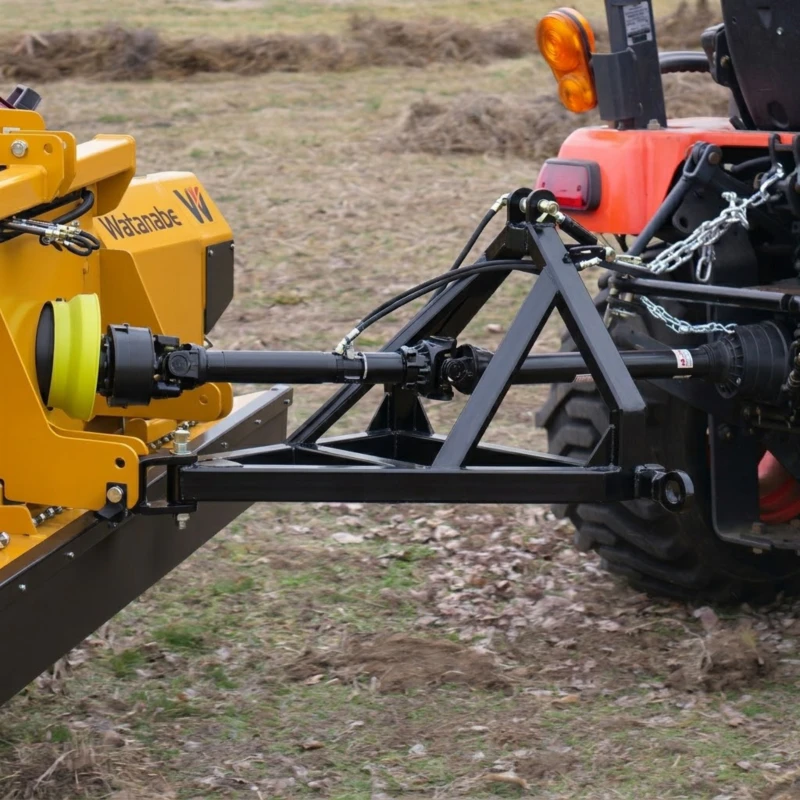
Mounted (Three-Point Hitch) Connection: The implement attaches to the tractor’s two lower lift arms and one upper link via standardized pins (Cat I, II, or III). The tractor’s hydraulic system raises and lowers the implement. Weight bearing: The tractor carries the implement’s entire weight on its rear axle when raised, and shares weight with the ground when lowered into working position. No wheels on the implement itself. Depth control: The tractor’s hydraulic draft control or position control regulates working depth. The implement follows the tractor’s vertical position — depth changes as the tractor pitches over terrain unless hydraulic draft sensing compensates. |
Trailed (Drawbar / Tow Hitch) Connection: The implement connects to the tractor’s drawbar via a single hitch pin or clevis. The implement rides on its own wheels (one or more axles) and follows the tractor as a towed unit. Weight bearing: The implement’s weight is carried by its own wheels — only a small vertical load (tongue weight) transfers to the tractor’s drawbar. The tractor’s rear axle is not significantly loaded. Depth control: The implement’s own wheels act as depth reference — the implement follows the ground surface independently of the tractor’s pitch. This provides more consistent depth on uneven terrain than a mounted implement. |
Head-to-Head Comparison
| Factor | Mounted | Trailed |
|---|---|---|
| Weight on tractor rear axle | Full implement weight | Tongue weight only (10-15%) |
| Front axle lift risk | Yes — if implement too heavy | No — weight on own wheels |
| Tractor lift capacity needed | Must exceed implement weight | Not required (no lifting) |
| Rear traction | Increased (weight on rear axle) | Unchanged (weight on own wheels) |
| Depth consistency on uneven ground | Variable (follows tractor pitch) | Consistent (own wheels follow ground) |
| Turning radius | Tight (implement turns with tractor) | Wider (implement swings behind) |
| Headland space required | Less (compact turning) | More (longer combination) |
| Road transport | Raised on hitch (rear visibility limited) | Towed on wheels (stable, visible) |
| Working speed potential | Limited by rear axle loading | Higher (stable on own wheels) |
| Hitching/unhitching time | Fast (3 pins + PTO) | Moderate (drawbar + PTO + hydraulics) |
| Machine complexity | Simpler (no wheels, axle, or chassis) | More complex (wheels, bearings, chassis) |
| Purchase cost | Generally lower | Generally higher |
| Max practical weight | Limited by tractor lift (~3,000-5,000 kg) | Virtually unlimited (own support) |
When to Choose Each Configuration
|
Choose Mounted When: The implement is light enough for the tractor to carry safely. As a rule, the implement’s total weight (including product load) should not exceed 60 to 70 percent of the tractor’s rated rear lift capacity. Beyond this, front axle safety is compromised. You work in small or irregular fields. Mounted implements turn tighter and need less headland space. On short fields, narrow paddocks, or irregularly shaped plots, the compact turning circle of a mounted implement saves time and avoids unworked corners. You need rear traction. The implement’s weight on the rear axle increases traction — beneficial for PTO-driven implements on slippery or hilly ground where wheel slip wastes power. Stone crushers and rotavators operating in soft or wet conditions benefit from the extra rear-axle loading that a mounted configuration provides. |
|
Choose Trailed When: The implement is too heavy for the tractor to lift. Any implement exceeding the tractor’s rear lift capacity must be trailed. The implement’s own wheels carry the weight — the tractor only provides draft and PTO power. You need consistent depth on uneven terrain. Trailed implements follow the ground surface independently of the tractor’s pitch. On rolling, undulating, or terraced ground, a trailed implement maintains working depth far more consistently than a mounted implement that rises and falls with the tractor. You transport between distant fields or on public roads. Trailed implements travel on their own wheels at road speed — stable, visible, and safe. Mounted implements raised on the hitch create a rear-heavy tractor with limited visibility and potential steering issues at speed. You want higher working speed. Trailed implements are more stable at higher field speeds (5 to 10+ km/h) because their own wheels absorb ground irregularities independently. Mounted implements at high speed can bounce on the hitch, causing depth inconsistency and increased wear. |
Our Product Range: Mounted, Trailed, or Both
| 产品 | Config | Weight | Why This Configuration |
|---|---|---|---|
| EW-4000/T Rock Rake | Mounted | 680 kg | Light — easily lifted by 75 hp tractor |
| CT-2100 Rock Picker | Trailed | 2,500+ kg loaded | Heavy with stone load — own wheels essential |
| PSW-3200 Rotavator | Mounted | 3,800-5,400 kg | Heavy — requires Cat III tractor with high lift capacity; weight adds traction |
| THOR 2.4/3.0 Crusher | Mounted + drawbar option | 3,500-5,000+ kg | Mounted standard (rear traction); drawbar kit for tractors with limited lift or road transport |
| THOR ST Stabilizer | Mounted + drawbar option | 3,000-4,500 kg | Mounted standard; drawbar for road work requiring long-distance transport |
| ERA Cultivator | Mounted | ~800 kg | Compact, light — mounts on 75 hp tractor |
| ADB-380/480 Applicator | Mounted | ~500-700 kg | Light, simple — no need for own wheels |
| PAI-2100 / PANTHER Planter | Mounted | 900-1,800+ kg loaded | Hitch-mounted; loaded weight must fit tractor lift capacity |
| PAI-480-AR Planter | Trailed | 6,500+ kg loaded | Extremely heavy loaded (4,000 kg seed + 2,500 kg fertilizer) — trailed essential |
| AWB-1600 Digger (base-C) | Mounted | 800-1,350 kg | Compact, light — mounts on 75-95 hp tractor |
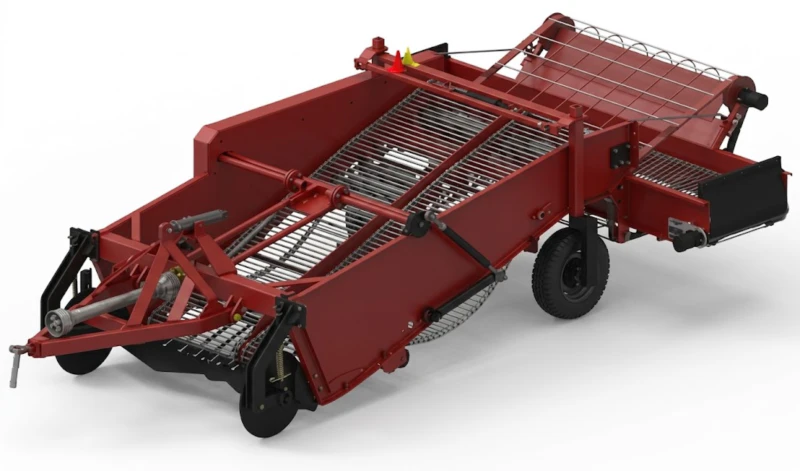
| AWB-1600 AAR/BAR/CAR | Trailed | 1,200-1,650 kg | Higher speed, consistent depth — trailed chassis advantage |
| CWB-2L Harvester | Trailed | 3,150 kg | Heavy, multi-stage sieve + elevator — own chassis essential |
| DESTROYER 2.0/3.0 | Mounted | 460-660 kg | Very light — no benefit from trailed chassis |
| DCW 2.2 Spreader | Mounted | ~800 kg + 2,200 kg load | Mounted; tractor carries loaded hopper weight on rear axle |
The Drawbar Kit: Converting Mounted to Trailed
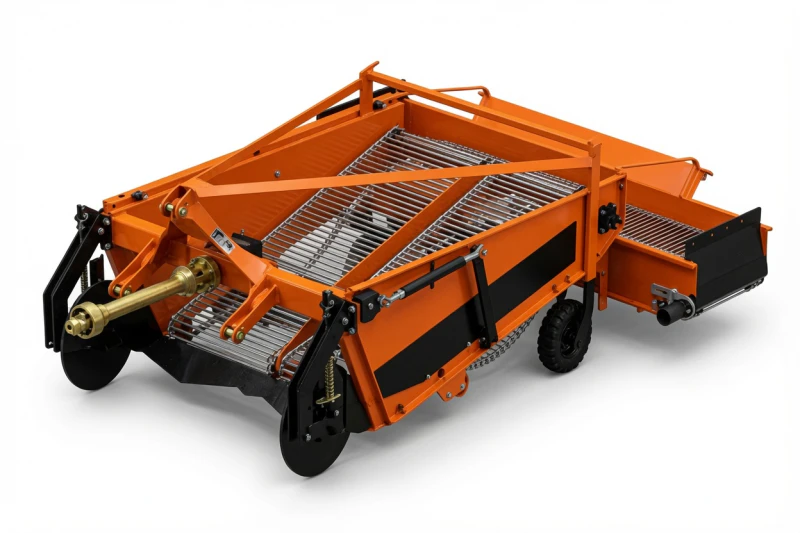
The THOR stone crusher and THOR ST soil stabilizer offer an optional drawbar kit that converts the implement from three-point mounted to trailed configuration. This provides the flexibility to operate in both modes with the same machine:
| Use mounted mode | For field work where the weight on the rear axle provides traction benefit — especially on soft, wet, or hilly ground where rear wheel grip is critical for maintaining forward progress during crushing or stabilizing. |
| Use trailed mode | For road transport between distant fields or job sites, and for tractors with limited rear lift capacity that cannot safely carry the crusher’s full weight on the hitch. Also preferred for road stabilization projects where the implement moves along a road continuously — trailed mode provides more stable tracking on road surfaces. |
| Conversion time | The drawbar kit bolts to the implement’s frame — conversion between mounted and trailed takes approximately 30 to 60 minutes with standard tools. Not a daily swap, but practical for seasonal reconfiguration or when moving between farm work (mounted) and contractor road work (trailed). |
Real-World Example: AWB Mounted vs. AWB Trailed Digger
Our potato digger range illustrates the mounted-vs-trailed decision perfectly — both configurations exist within the same product family:
| Factor | AWB Mounted (1600/A/B/C) | AWB Trailed (AAR/BAR/CAR) |
|---|---|---|
| Working speed | 3-5 km/h | 5-10 km/h |
| Depth consistency | Follows tractor pitch | Independent ground following |
| Stability at speed | Bounces above 5 km/h | Stable to 10 km/h |
| Tractor loading | Full weight on rear axle | Weight on own wheels |
| Turning radius | Tighter | Wider |
| Best for | Small farms, small tractors, short fields | Larger farms, higher throughput, long fields |
The trailed AWB diggers cover nearly twice the daily area of their mounted counterparts — the speed and stability advantage of the independent chassis directly translates to higher harvest throughput. For growing operations transitioning from mounted to trailed, the upgrade path is clear: sell the mounted AWB and upgrade to the trailed version when acreage justifies the higher daily capacity. See: Potato Digger vs. Potato Harvester: Which Is Right for Your Operation?
Frequently Asked Questions
|
Q1: Is trailed always better than mounted? No. For light implements under 1,500 kg, mounted is simpler, cheaper, and provides tighter turning. Trailed adds cost, complexity, and turning-radius limitations without meaningful benefit on light machines. Trailed becomes advantageous when weight exceeds the tractor’s comfortable lifting range, when higher speed is needed, or when independent ground following improves depth consistency. |
|
Q2: Can I use a mounted implement on a tractor with limited lift capacity? Only if the implement’s loaded weight is within the tractor’s lift capacity with a 15 to 20 percent safety margin. If the implement is too heavy, the tractor cannot raise it safely for turns and transport. In this case, choose the trailed version (if available) or select a larger tractor. Never exceed the tractor’s rated lift capacity — the consequences (front wheel lift, rear axle failure) are dangerous. |
|
Q3: Do I need the drawbar kit for the THOR crusher? Most THOR users operate in mounted mode — the weight on the rear axle provides valuable traction during crushing. The drawbar kit is recommended if you regularly transport the crusher more than 10 km between fields on public roads, or if your tractor’s rear lift capacity is marginal for the crusher’s weight. Contact us with your tractor specifications and we will advise whether mounted or drawbar configuration is optimal for your operation. |
|
Q4: Why is the PAI-480-AR trailed while other planters are mounted? Loaded weight. The PAI-480-AR carries 4,000 kg of seed, 2,500 kg of fertilizer, and 300 to 600 L of insecticide — total loaded weight exceeds 6,500 kg. No agricultural tractor can safely carry this weight on its three-point hitch. The trailed chassis with its own axle is the only practical solution for this level of payload capacity. |
|
Q5: Does the PTO driveline work differently on trailed implements? The PTO connection is functionally the same — a telescoping driveshaft connects the tractor’s PTO output to the implement’s input. On trailed implements, the driveshaft is longer to span the greater distance and must accommodate more angular variation during turns. Wide-angle PTO joints or constant-velocity joints are used to maintain smooth power delivery through the articulation angles that occur during turning. See: Understanding PTO Speed: 540 vs 1000 RPM. |
|
Q6: How do I decide which configuration is right for my situation? Contact our team with your tractor model, rear lift capacity, field sizes, transport distances, and intended use. We will recommend mounted or trailed (or both via drawbar kit) based on your specific operational requirements — ensuring safe, productive, and compatible implement selection. |
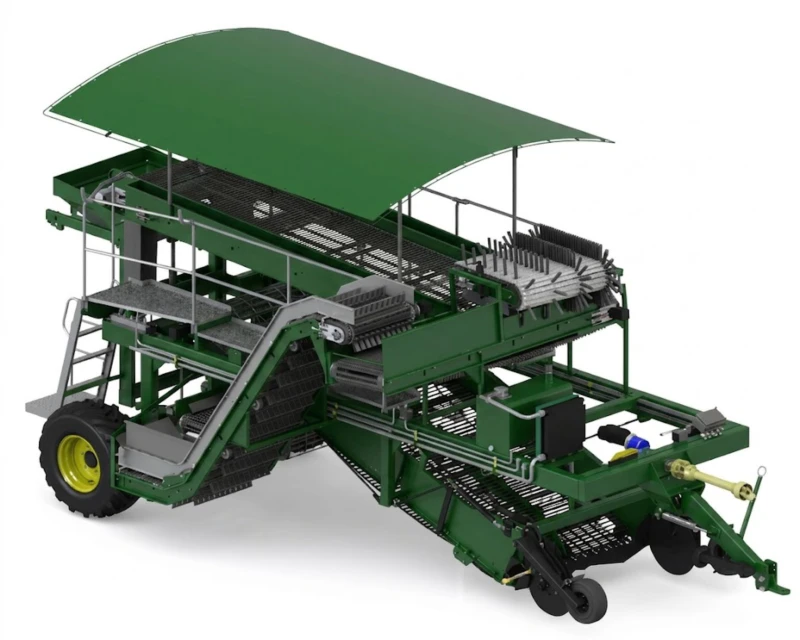
Mounted or Trailed — The Right Configuration Matches the Job
Neither configuration is universally better. Mounted is simpler and cheaper for light implements. Trailed is safer and more capable for heavy ones. Some machines offer both via a drawbar conversion kit. Every implement in our range is engineered in the optimal configuration for its weight, function, and tractor match — and we confirm compatibility for every order. Contact us with your tractor specs for a matched recommendation. Factory-direct pricing, worldwide delivery.
|
Configuration Advice Mounted vs trailed for your tractor |
Equipment Quote Any product, right configuration |
Dealer Inquiries Full product range |