The Number on Your PTO Shaft That Determines Whether Your Implement Works — or Breaks
Every tractor-mounted implement that runs off the tractor’s power take-off (PTO) is designed for a specific PTO rotational speed — either 540 RPM or 1,000 RPM. These are not interchangeable. Running a 540 RPM implement at 1,000 RPM nearly doubles its operating speed — overstressing gearboxes, bearings, and drivelines, generating dangerous centrifugal forces, and risking catastrophic mechanical failure. Running a 1,000 RPM implement at 540 RPM starves it of rotational energy — the tool operates at roughly half its designed speed, producing poor results and potentially stalling under load.
Despite this importance, PTO speed is one of the most overlooked specifications when farmers purchase new implements. A tractor may have 540, 1,000, or both PTO output options. The implement requires one specific speed. Matching them correctly is a non-negotiable prerequisite for safe, effective operation.
This guide explains what PTO speed means, why two standards exist, which implements use which speed, and how to verify compatibility before you connect any implement to your tractor.
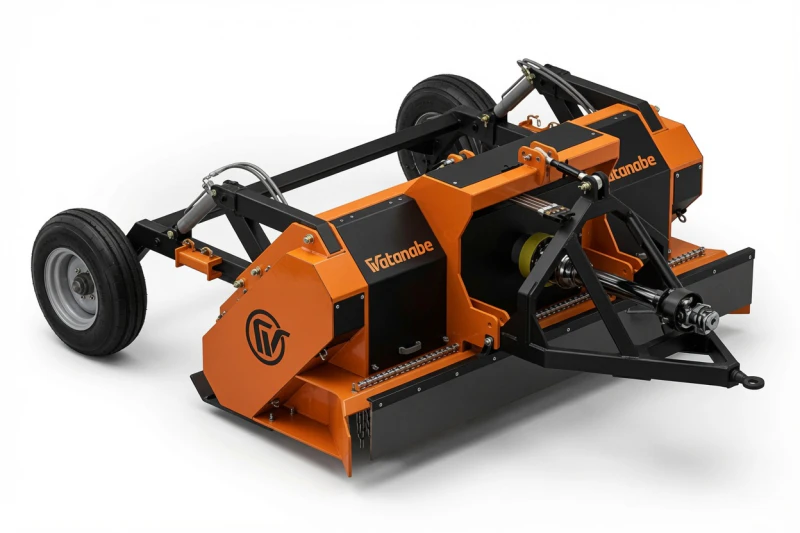
What Is a PTO and Why Does Speed Matter?
The Power Take-Off (PTO) is a rotating shaft at the rear (and sometimes front) of the tractor that transfers mechanical power from the tractor’s engine to an attached implement. The PTO shaft rotates at a standardized speed — determined by the tractor’s engine RPM and the gearing between the engine and the PTO output — and this rotation drives the implement’s working components: rotary blades, crushing drums, mixing rotors, stirring tines, or pump mechanisms.
Two international standards define PTO shaft speed and dimensions:
| Specification | 540 RPM PTO | 1,000 RPM PTO |
|---|---|---|
| Shaft rotation speed | 540 revolutions per minute | 1,000 revolutions per minute |
| Shaft spline count | 6 splines (1-3/8 inch diameter) | 21 splines (1-3/8 inch diameter) |
| Engine RPM at rated PTO speed | Typically 1,900-2,100 RPM | Typically 1,900-2,100 RPM |
| Torque characteristic | Higher torque, lower speed | Lower torque, higher speed |
| Power delivery style | Slow, powerful rotation | Fast, high-energy rotation |
| Typical tractor class | 40-120 hp (compact to mid-range) | 100-400+ hp (mid-range to high-power) |
The physical safety feature: The 540 RPM shaft has 6 splines; the 1,000 RPM shaft has 21 splines. These different spline patterns are deliberately incompatible — a 540 RPM input yoke physically cannot connect to a 1,000 RPM output shaft, and vice versa. This mechanical lockout prevents accidental connection at the wrong speed. However, adapter sleeves exist in the aftermarket — never use them. They defeat the safety interlock and expose the implement to dangerous over-speed or under-speed operation.
Why Two Different Speeds Exist
The two PTO speeds exist because different implement types need fundamentally different power delivery:
|
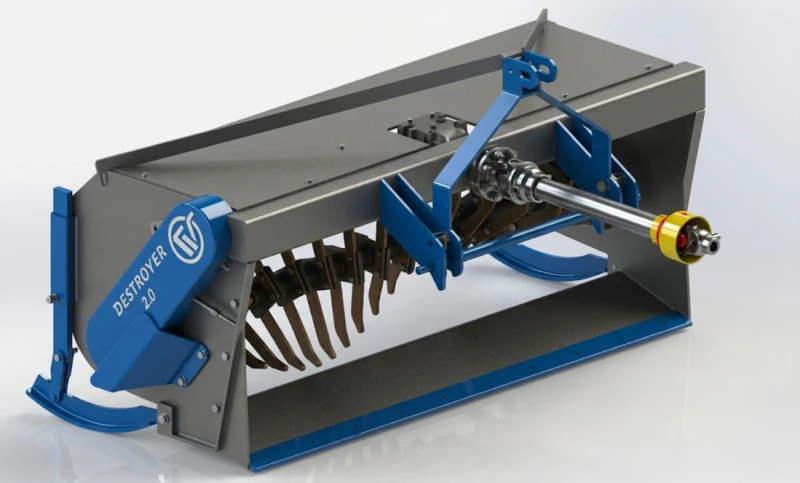
540 RPM: Torque-Intensive Implements Implements that need slow, powerful rotation — where the load is heavy but speed is not critical. The lower shaft speed means higher torque per revolution for the same engine power. This suits machines that turn against heavy resistance: mowers cutting dense vegetation, manure spreaders turning heavy loads, feed mixers rotating thick material, and compost barn stirrers pushing through deep, dense bedding. Think of it as: low gear in a car — slow but powerful. |
1,000 RPM: Speed-Intensive Implements Implements that need high rotational speed — where the working mechanism must spin fast to generate kinetic energy for impact, cutting, or mixing. Stone crushers need high drum RPM to shatter rock on impact. Rotavators need high blade speed for effective soil pulverization. Soil stabilizers need high rotor speed for thorough binder mixing. Hydraulic pumps driving large-displacement implements need high flow rates. Think of it as: high gear in a car — fast, less pushing force, more kinetic energy. |
Which Implements Use Which Speed?
| 540 RPM | 1,000 RPM |
|---|---|
|
DESTROYER 2.0/3.0 compost barn stirrer EW-4000 / EW-4000T rock rake Most mower-conditioners Manure spreaders Feed mixers / TMR wagons Small balers (square) Post-hole diggers Grain augers Small generators |
THOR 2.4 / 3.0 เครื่องบดหิน THOR ST soil stabilizer PSW-3200 series rotavator Large round balers High-capacity forage harvesters Large hydraulic pumps High-speed mulchers Stump grinders High-flow slurry tankers |
Note: Some implements are available in both 540 and 1,000 RPM versions — the gearbox ratio changes internally to match the input speed to the required working speed. Always check the implement’s specification plate or manual for the correct PTO speed. Never assume based on the implement type alone.
Does Your Tractor Have 540, 1,000, or Both?
|
Compact and utility tractors (40-80 hp) Most offer 540 RPM only. This is the standard PTO speed for the implement types these tractors typically power: mowers, small balers, post-hole diggers, feed mixers, rock rakes, and compost barn stirrers. The DESTROYER 2.0/3.0 (75-80 hp, 540 RPM) and EW-4000T rock rake (75 hp, 540 RPM) are designed specifically for this tractor class. |
|
Mid-range tractors (80-150 hp) Most offer both 540 and 1,000 RPM — selectable via a lever or electronic switch. This is the most versatile class: one tractor can power both 540 RPM implements (mowers, stirrers) and 1,000 RPM implements (rotavators, balers). Confirm your tractor’s PTO options in the operator’s manual or on the PTO shaft itself (spline count: 6 = 540, 21 = 1,000). |
|
High-power tractors (150-400+ hp) Nearly all offer 1,000 RPM standard, with 540 RPM available as a secondary option. These tractors are matched to the most power-hungry 1,000 RPM implements: stone crushers (THOR 2.4/3.0, 180-250+ hp), soil stabilizers (THOR ST, 180+ hp), and heavy rotavators (PSW-3200 series, 160+ hp). |
What About “Economy PTO” (540E / 1000E)?
Many modern tractors offer an “economy PTO” mode — labeled 540E or 1000E. This delivers the standard PTO shaft speed (540 or 1,000 RPM) at a lower engine RPM than normal. The engine runs at approximately 1,500 RPM instead of 2,000 RPM to achieve the rated PTO speed, saving 15 to 25 percent on fuel for light-load PTO applications.
| When to use economy PTO | Light-load implements where the full engine power is not needed: mowing light grass, running a generator at partial load, stirring compost bedding in good condition, or operating pumps at less than full capacity. The PTO speed is correct but the available torque reserve is lower. |
| When NOT to use economy PTO | Heavy-load implements that require the tractor’s full power: stone crushers, soil stabilizers, heavy rotavators, large round balers under load. These implements demand maximum torque and power — using economy PTO reduces the power reserve, causing the engine to lug down under peak loads and potentially stalling the PTO drive. |
Rule of thumb: If the implement specification states a minimum tractor HP that is close to your tractor’s rated HP, use standard PTO mode (full engine RPM). Economy PTO is appropriate only when the implement’s power demand is well below the tractor’s rated capacity — typically less than 60 percent of available PTO power.
Our Equipment PTO Speed Map
| ผลิตภัณฑ์ | PTO Speed | Min. HP | Why This Speed |
|---|---|---|---|
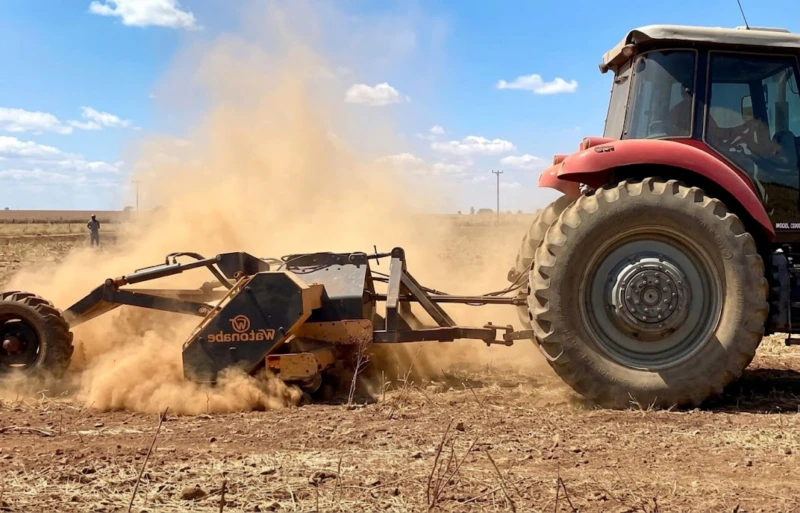
| EW-4000 / EW-4000T Rock Rake | 540 | 75 | Raking action is slow, torque-based |
| PSW-3200 / A / B Rotavator | 1,000 | 160 | High blade speed needed for soil pulverization |
| THOR 2.4 / 3.0 Stone Crusher | 1,000 | 180 / 250 | High drum RPM generates rock-shattering impact |
| THOR ST Soil Stabilizer | 1,000 | 180 | High rotor speed for thorough binder mixing |
| DESTROYER 2.0 / 3.0 Stirrer | 540 | 75 / 80 | Slow deep stirring in soft composting material |
| ERA Rotary Cultivator | 540 | 75 | Zone tillage at moderate blade speed |
5 Common PTO Mistakes and How to Avoid Them
|
1. Using a speed adapter sleeve Adapter sleeves that convert 6-spline to 21-spline (or vice versa) defeat the safety interlock and allow an implement to run at the wrong speed. This is dangerous and voids the implement’s warranty. If the splines do not match, the implement is not designed for your tractor’s PTO speed. Either switch PTO modes (if your tractor has both) or select a different implement version. |
|
2. Forgetting to check PTO speed before purchase Always confirm your tractor’s PTO output speed before ordering an implement. A 75 hp tractor with 540 RPM only cannot power a 1,000 RPM stone crusher — regardless of HP. Check the tractor manual, the PTO shaft spline count (6 or 21), or the PTO selector (if equipped) before committing to a purchase. |
|
3. Running economy PTO on heavy implements Economy PTO delivers the correct shaft speed at reduced engine RPM — fine for light loads, dangerous for heavy ones. A stone crusher or heavy rotavator on economy PTO has insufficient torque reserve to handle peak loads from stone impacts. Use standard PTO mode for any implement operating near the tractor’s rated power. |
|
4. Incorrect PTO shaft length The telescoping PTO driveline between tractor and implement must be correctly sized: too short risks the driveline pulling apart on tight turns; too long risks the tubes bottoming out on tight articulation. Measure the working distance between tractor PTO output and implement input when the implement is raised and lowered, and cut the driveline to the correct overlap range specified by the manufacturer. |
|
5. Missing or damaged PTO shield The PTO driveline rotates at 540 or 1,000 RPM — contact with the spinning shaft or universal joints is instantly lethal. The plastic shield covering the driveline is not optional decoration. Replace damaged or missing shields immediately. Never operate a PTO-driven implement with an exposed driveline, loose clothing, or without the tractor’s PTO master shield in place. |
Frequently Asked Questions
|
Q1: My tractor has both 540 and 1,000. How do I switch? On most tractors with dual PTO: either a mechanical lever near the PTO engagement control selects the speed, or (on newer tractors) an electronic dashboard button switches modes. On some models, the PTO stub shaft is physically changed — one shaft for 540, another for 1,000, swapped via a retaining pin. Consult your tractor manual for the specific method. Always switch with the PTO disengaged and the engine off. |
|
Q2: Can I run a 540 RPM implement at 1,000 RPM if I reduce engine speed? No. The PTO gearing is fixed — changing engine RPM changes PTO speed proportionally. To run a 1,000 RPM output at 540 RPM, you would need to reduce engine speed to approximately 1,000-1,100 RPM — far below the engine’s efficient operating range, producing inadequate power and lugging the engine. This is neither safe nor effective. Use the correct PTO speed setting. |
|
Q3: How do I identify my PTO speed by looking at the shaft? Count the splines on the PTO stub shaft. 6 large splines = 540 RPM. 21 small splines = 1,000 RPM. The shaft diameter is the same (1-3/8 inch / 35 mm) for both — only the spline pattern differs. If the shaft has been modified or you cannot count splines, check the tractor’s specification plate or manual. |
|
Q4: Does PTO speed affect how much power the implement receives? Power = torque × speed. Both 540 and 1,000 RPM deliver the same total power (determined by the engine), but distributed differently: 540 RPM delivers it as high torque at low speed; 1,000 RPM delivers it as lower torque at higher speed. The implement’s internal gearbox converts the input speed and torque to the working speed its mechanism requires. The total available PTO horsepower is the same at both speeds on the same tractor. |
|
Q5: I want to buy a THOR crusher but my tractor only has 540 PTO. What are my options? The THOR stone crusher requires 1,000 RPM PTO and 180+ hp — tractors in this power class virtually always have 1,000 RPM capability. If your current tractor is a lower-power model with 540 only, the tractor itself is underpowered for the crusher regardless of PTO speed. For stone crushing, the tractor upgrade to 180+ hp naturally provides 1,000 RPM. Alternatively, hire a contractor with the appropriate tractor and THOR for a one-time treatment. |
|
Q6: How do I confirm PTO compatibility before ordering your equipment? Contact our team with your tractor model, HP, and PTO specification. We will confirm compatibility for any implement in our range and advise if your tractor’s PTO output matches the implement’s requirement. Every product page on our website lists the required PTO speed. |
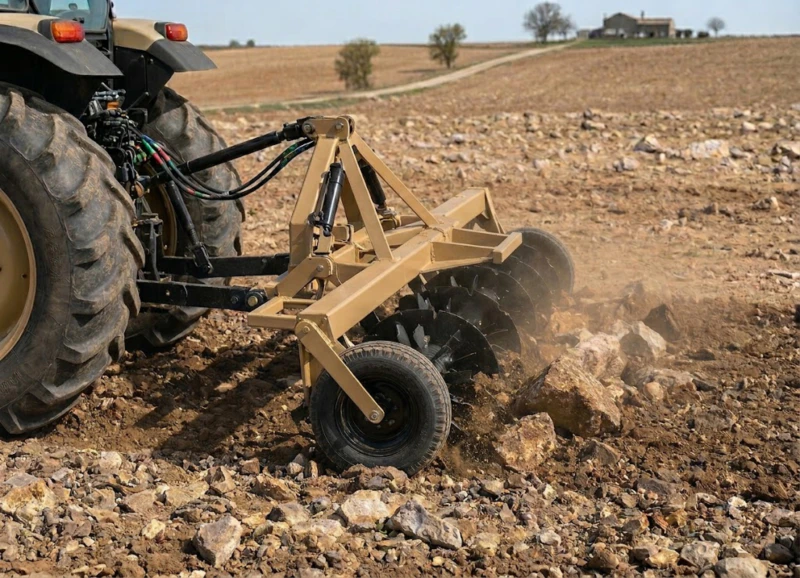
Know Your PTO. Match Your Implement. Work Safely.
PTO speed compatibility is a non-negotiable specification — not a suggestion. Before purchasing any implement, confirm your tractor’s PTO output matches the implement’s requirement. Every product in our range lists the required PTO speed and minimum tractor HP. Contact us with your tractor model for compatibility confirmation on any implement. Factory-direct pricing, worldwide delivery.
|
Compatibility Check Your tractor vs our implements |
Equipment Quote Any product, PTO-matched |
Dealer Inquiries Full product range |