The Engineering Technique That Turns Weak Soil Into Strong Ground
Soil stabilization is a ground improvement technique that permanently enhances the engineering properties of existing soil — its load-bearing capacity, resistance to water, cohesion, and durability — by mixing it with a chemical binder (typically lime, cement, or a combination of both). The treated soil becomes harder, stronger, and more resistant to deformation under traffic and weather than the original untreated material.
Unlike conventional construction that replaces weak soil with imported material (gravel, aggregate, or asphalt), soil stabilization upgrades the soil already in place. The existing ground becomes the construction material. No quarrying, no material transport, no waste disposal. The only imported material is the binder itself — a relatively small volume of powdered lime or cement that triggers a chemical transformation within the soil structure.
This article explains the science, the materials, the process, and the applications of soil stabilization — from the chemical reactions that make it work to the equipment that makes it practical.
The Science: How a Powder Transforms Weak Soil Into Strong Ground
Soil stabilization works through chemical reactions between the binder and the soil’s mineral components. Two primary binders are used, each triggering different reactions:
|
Lime Stabilization Reaction 1 — Ion exchange: Calcium ions from lime replace sodium and potassium ions in clay minerals, causing clay particles to clump together (flocculation). The sticky, plastic clay immediately becomes crumbly and workable. Reaction 2 — Pozzolanic cementation: Over weeks to months, lime reacts with silica and alumina in clay minerals to form calcium silicate hydrate and calcium aluminate hydrate — the same binding compounds found in concrete. These compounds cement soil particles together, progressively increasing strength. Best for: Clay soils with Plasticity Index above 10. The higher the clay content, the stronger the reaction. |
Cement Stabilization Reaction — Hydration: Portland cement reacts with water in the soil to form calcium silicate hydrate (C-S-H) crystals that bond soil particles together into a rigid matrix. This is the same hydration reaction that hardens concrete — but at lower cement concentrations, it produces a stabilized soil rather than a solid slab. Speed: Rapid strength gain. Measurable hardening within 24 to 72 hours; design strength at 7 to 28 days. Best for: Silty, sandy, and granular soils with low clay content (Plasticity Index under 15). Also effective on well-graded gravel and laterite. |
For medium-clay soils (Plasticity Index 10 to 20), a dual treatment is often used: lime first to modify the clay (reduce plasticity), then cement to add structural strength. This combined approach delivers results that neither binder achieves alone on this soil type. For detailed binder selection guidance, see: Lime vs Cement Stabilization: How to Choose the Right Binder.
What Changes in the Soil After Stabilization
| Soil Property | Before Stabilization | After Stabilization |
|---|---|---|
| Bearing capacity (CBR) | 2-8% (weak — deforms under load) | 40-120+% (strong — supports heavy traffic) |
| Water sensitivity | High — softens and loses strength when wet | Low — maintains strength in wet conditions |
| Plasticity (clay soils) | High — sticky, unworkable when wet | Low — crumbly, workable, stable |
| Swell / shrinkage | High — expands when wet, cracks when dry | Dramatically reduced — dimensionally stable |
| Dust generation | Yes — loose particles become airborne | No — particles are chemically bonded |
| Erosion resistance | Low — rain and wind erode the surface | High — bound surface resists erosion |
| Compaction potential | Limited — re-softens under moisture cycles | Excellent — achieves and maintains target density |
The transformation is permanent. Once the chemical reactions complete (days for cement, weeks to months for lime), the improved properties are locked in. The stabilized layer does not revert to its original state — it remains stronger, harder, and more water-resistant for the life of the treatment (typically 5 to 15+ years depending on traffic and conditions).
The Process: Four Steps From Weak Soil to Strong Surface
|
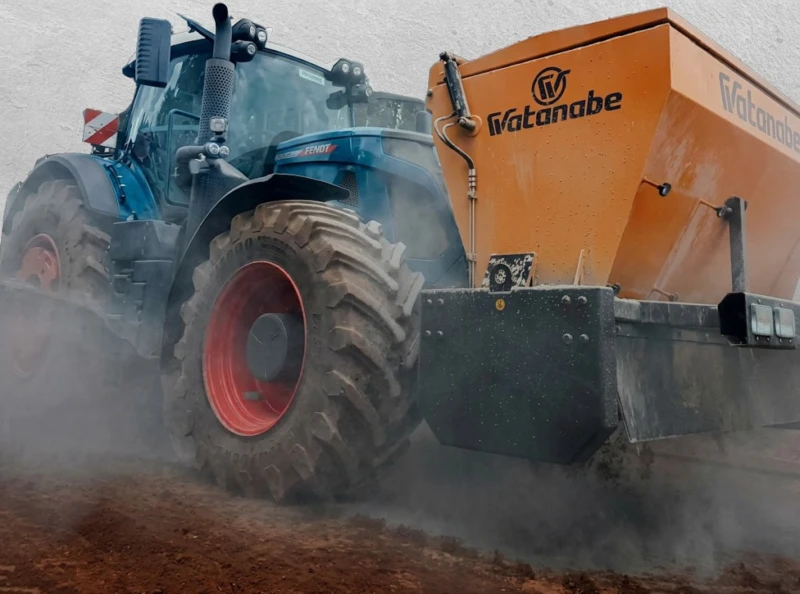
Step 1: Spread Binder A mechanical spreader — such as the DCW 2.2 Binder Spreader (2,200 kg hopper, calibrated metering) — distributes a precise, uniform layer of powdered lime or cement across the soil surface. Uniformity is critical: uneven distribution produces alternating strong and weak zones in the finished surface. |
|
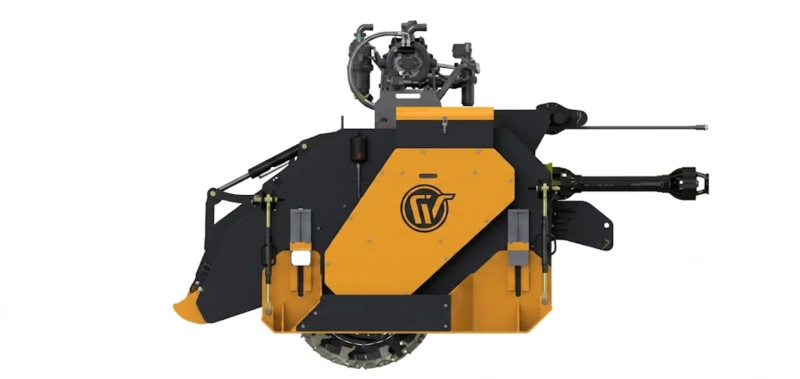
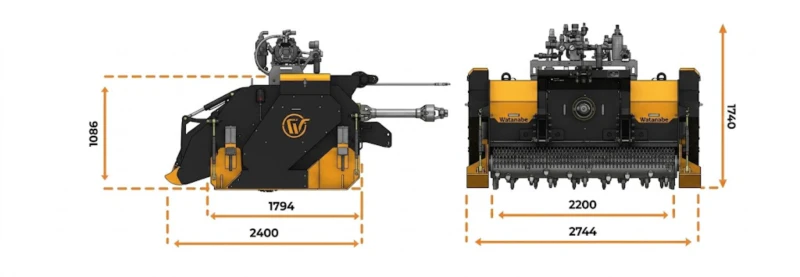
Step 2: Mix Into Soil A soil stabilizer — such as the THOR ST Soil Stabilizer (tungsten carbide rotor, up to 40 cm depth) — blends the binder uniformly into the existing soil throughout the full treatment depth. The high-speed rotating drum pulverizes soil clods and rocks while mixing, producing a homogeneous soil-binder mixture. |
|
Step 3: Grade and Shape A grader shapes the mixed material into the final surface profile — crowned for water drainage on roads, level for building pads, or sloped for embankments. The workable window after mixing is 2 to 4 hours for cement and several hours to days for lime. |
|
Step 4: Compact and Cure A vibratory roller compacts the material to maximum density, closing voids and accelerating the chemical reaction. For cement stabilization, the surface is kept moist for 3 to 7 days (curing) to allow full hydration. The result is a hard, durable, load-bearing surface ready for traffic. |
For the complete step-by-step operational guide, see: The Complete Rural Road Construction Workflow: Spread, Mix, Grade, Compact.
Where Soil Stabilization Is Used
|
Rural and Farm Roads The most common agricultural application. Unpaved farm haul roads, access tracks, and field-to-silo routes are stabilized to eliminate mud, dust, ruts, and seasonal closure — at 60 to 80 percent less than conventional paving. See: How Soil Stabilization Transforms Rural Roads at 60-80% Lower Cost. |
|
Road Sub-base and Base Course In highway construction, weak subgrade soils are stabilized before asphalt or concrete pavement is laid on top. The stabilized sub-base distributes vehicle loads over a wider area, reducing pavement thickness requirements and extending pavement life. This is the largest-volume application of soil stabilization globally. |
|
Building Pads and Foundations Weak or expansive clay soils under building foundations are stabilized to prevent differential settlement (one corner sinking while another rises) and swell/shrink damage. Lime stabilization of expansive clay is a standard geotechnical treatment for residential, commercial, and industrial building sites. |
|
Airfields and Runways Military and civilian airstrips in remote locations are often built on stabilized soil rather than imported aggregate — especially where material transport is impractical. The stabilized surface handles light to medium aircraft loads with minimal maintenance. |
|
Embankments and Earthworks Fill material for embankments, dams, and earth retaining structures is stabilized to increase shear strength, reduce settlement, and prevent erosion. Stabilized fills perform better than untreated fill at lower total cost. |
|
Dust Control Stabilization permanently eliminates dust from unpaved surfaces by bonding loose particles into a cohesive matrix. This is the only permanent dust solution — water spraying and calcium chloride are temporary. See: How to Eliminate Dust on Farm Haul Roads Permanently. |
Key Technical Terms Explained
| CBR (California Bearing Ratio) | A standardized measure of soil bearing strength. Expressed as a percentage: CBR 2-5% = very weak (clay subgrade); CBR 20-40% = moderate (good sub-base); CBR 80-120+% = strong (suitable for heavy traffic road base). Stabilization typically increases CBR by 5 to 20 times. See: Understanding CBR in Road Construction (coming soon). |
| Plasticity Index (PI) | A laboratory measurement of how much a soil’s behavior changes between wet and dry states. High PI (above 20) = highly plastic clay (use lime). Low PI (under 10) = non-plastic silt or sand (use cement). PI determines which binder is correct for a given soil. |
| Binder dosage rate | The percentage of binder (by dry weight of soil) mixed into the soil. Typical rates: 2 to 6 percent for lime, 3 to 8 percent for cement. Higher dosage produces higher strength but costs more. The optimal rate is determined by laboratory mix design or field trial — balancing target strength against material cost. |
| Mellowing period | The waiting time after lime is mixed into clay before final compaction or cement addition. Typically 1 to 7 days. Allows the pozzolanic reaction to modify the clay’s plasticity before further treatment. Only applies to lime stabilization of clay soils. |
| OMC (Optimum Moisture Content) | The soil moisture level at which compaction achieves maximum density. Compacting at OMC produces the strongest, most durable stabilized layer. Too wet or too dry reduces final density and strength. OMC is determined by a Proctor compaction test in the laboratory. |
| Curing | Keeping the compacted surface moist for 3 to 7 days after cement stabilization to allow full hydration of the cement. Premature drying halts the cement reaction, producing only 50 to 70 percent of potential strength. Curing is done by light water spraying or covering with damp fabric. |
Summary of Benefits
|
Cost: 60-80% less than conventional paving No imported aggregate, no asphalt plant, no heavy construction convoys. The only import is the binder itself — lightweight and compact. See: How Soil Stabilization Transforms Rural Roads. |
|
Speed: 500-1,000 meters per day A two-machine team (DCW 2.2 + THOR ST) with grader and roller completes the entire process in a single working day per section. A 10 km road network is stabilized in 10 to 20 working days. |
|
Durability: 5-15+ years per treatment Properly constructed and compacted stabilized surfaces serve for years with minimal maintenance. When eventual re-treatment is needed, the THOR ST re-mixes additional binder into the existing stabilized layer — refreshing and strengthening rather than starting from scratch. |
|
Environmental: Low carbon, zero waste, in-situ material No quarrying of natural aggregate. No trucking of heavy materials over long distances. No waste disposal of excavated soil. Stabilization uses the soil in place with minimal added material — the lowest-impact ground improvement method available. |
|
All-weather performance Stabilized surfaces maintain bearing capacity in rain — no mud, no ruts, no seasonal road closure. The chemically bound soil sheds water rather than absorbing it. |
Frequently Asked Questions
|
Q1: Is soil stabilization the same as soil compaction? No. Compaction increases soil density by removing air voids using mechanical force (a roller). It does not change the soil’s chemical or mineral properties. Stabilization adds a chemical binder that permanently changes the soil’s structure at the particle level. Compaction is the final step of the stabilization process — it maximizes the density of the already-stabilized material — but stabilization does something compaction alone cannot: create chemical bonds between particles. |
|
Q2: Can any soil be stabilized? Most mineral soils respond well: clay, silt, sand, and gravelly soils. Highly organic soils (peat, muck) respond poorly because organic acids inhibit the chemical reactions. Very coarse gravel and rock are already strong enough that stabilization adds little benefit. A simple soil test (Atterberg limits, particle size distribution) determines whether your soil is suitable and which binder to use. |
|
Q3: How deep does stabilization treat the soil? The treatment depth depends on the mixing machine. The THOR ST mixes to a maximum depth of 40 cm — sufficient for road base, sub-base, and most construction platform applications. Shallower treatment (15 to 25 cm) is adequate for light-traffic roads and dust control. Deeper treatment (30 to 40 cm) is used for heavy-traffic roads and building pads. |
|
Q4: Is stabilization environmentally safe? Yes. Lime and cement are inorganic, non-toxic materials that become inert once reacted with soil. They do not leach harmful chemicals into groundwater. The reaction products (calcium silicate hydrate, calcium aluminate hydrate) are the same minerals found naturally in many rock types. Stabilization is widely accepted by environmental regulators worldwide as a low-impact construction method. |
|
Q5: How much does it cost per square meter? Cost varies by binder type, dosage rate, treatment depth, and local binder pricing. As a general benchmark, soil stabilization costs 20 to 40 percent of equivalent gravel road construction and 15 to 25 percent of asphalt construction per square meter. The exact cost for your project depends on soil conditions and specifications — kontakta oss for a project-specific estimate. |
|
Q6: What equipment do I need? Two specialized machines: a binder spreader (DCW 2.2) and a soil stabilizer (THOR ST). Plus standard equipment: a grader for shaping and a vibratory roller for compaction. The DCW 2.2 and THOR ST are tractor-mounted — no heavy construction plant required. Factory-direct pricing on both machines, worldwide delivery. |
|
Q7: How do I learn more or get started? Contact our team with your project details (soil type, area, intended use). We will advise on binder selection, dosage rate, and equipment specification. For deeper reading, see our complete guide library: Lime vs Cement, Complete Road Workflow, Dust Elimination, and Transport Cost Reduction. |
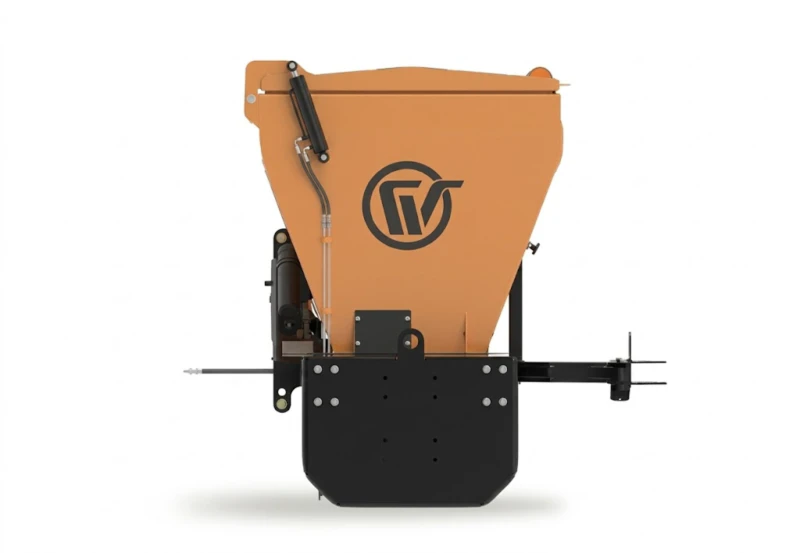
Soil Stabilization Turns Your Weakest Ground Into Your Strongest Asset
Whether you are building a farm road, preparing a construction site, or eliminating dust on a haul route, soil stabilization delivers a durable, all-weather surface from the soil already under your feet — at a fraction of conventional construction cost. Two tractor-mounted machines make it practical: the DCW 2.2 Binder Spreader and the THOR ST Soil Stabilizer. Factory-direct pricing, worldwide delivery.
|
Equipment Quote DCW 2.2 + THOR ST |
Project Consultation Soil, binder, and process advice |
Contractor Inquiries Stabilization service equipment |