Every Tonne You Lose at Harvest Is a Tonne You Already Paid to Grow
By the time your potatoes reach harvest, you have already invested in seed, fertilizer, crop protection, fuel, labor, and months of management. The cost of producing those tubers is sunk — fixed — regardless of how many you actually recover from the ground and deliver to market in saleable condition. Every tuber left behind, bruised beyond sale, cut by a digging share, greened by sunlight exposure, or downgraded from ware to processing represents revenue that was grown but never captured.
On well-managed farms with the right equipment, total harvest losses can be held below 3 percent of the standing yield. On poorly equipped or poorly managed operations, losses of 8 to 15 percent are common — and on stony ground with outdated equipment, losses can exceed 20 percent. The difference between 3 percent and 15 percent on a 40 t/ha crop across 100 hectares is 480 tonnes of potatoes per season — revenue that was produced but destroyed at the last stage.
This guide identifies the five major sources of harvest loss, explains the equipment and management decisions that control each one, and provides a practical roadmap to achieving the 3 percent benchmark on your farm.
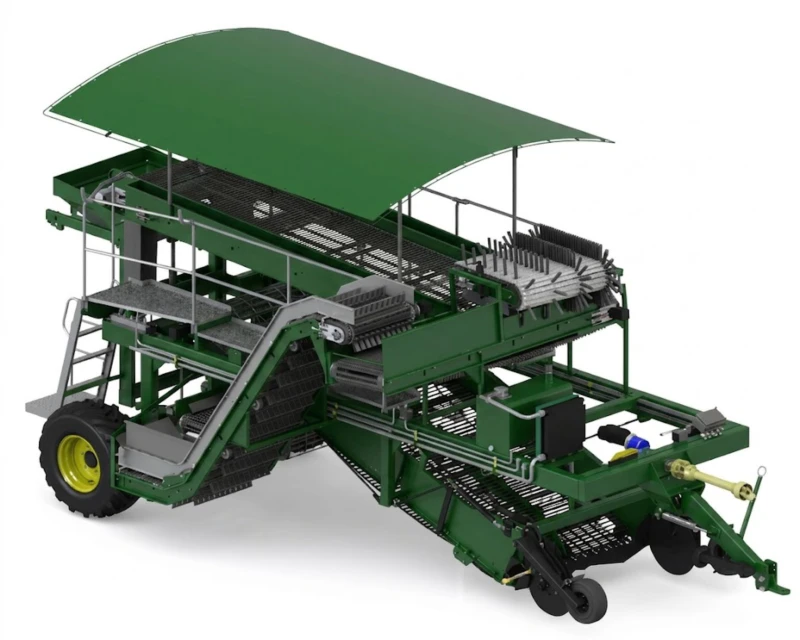
The Five Sources of Harvest Loss — and How to Eliminate Each One
|
Loss Source 1: Mechanical Damage (Bruising, Cutting, Skinning) What happens: Tubers are bruised by impact against hard surfaces (stones, metal sieve rods, elevator transitions), cut by digging shares set too shallow, or skinned by rough handling on webs and conveyors. Bruised tubers develop internal black spot within 24 to 48 hours — invisible at harvest but discovered during grading, causing downgrading or rejection. Cut tubers are immediately unmarketable. Skinned tubers lose moisture in storage and develop entry points for disease. Typical loss contribution: 3 to 8 percent of gross yield on average operations. Often the single largest loss source. |
|
How to Reduce Mechanical Damage Below 1% 1. Eliminate stones from the ridge zone. Stones are the primary cause of tuber bruising during harvest. On stony ground, tubers collide with rocks on the sieve web, producing impact bruises that develop into unsaleable black spot. The THOR stone crusher permanently eliminates this source of damage. Farms that crush report 50 to 70 percent reduction in harvest bruising. 2. Use the right harvest machine for your scale. The CWB-2L elevator harvester has multiple sieve stages with rubber-cushioned transitions that handle tubers gently. Mounted diggers have fewer sieve stages and shorter drop distances, which can be gentler but deposit tubers on the ground for re-handling — adding a second damage opportunity during pickup. 3. Set digging share depth correctly. Shares set too shallow cut tubers at the base of the ridge. Shares set too deep waste energy lifting excess soil. The optimal depth is 5 to 8 cm below the lowest tuber — check by digging a test section and inspecting for cut tubers before committing to the full field. 4. Ensure skin set before harvest. Kill haulm 10 to 14 days before harvest to allow the tuber skin to harden. Set-skin tubers resist bruising dramatically better than soft-skinned tubers. A 2-day difference in skin set timing can reduce bruising by 30 to 50 percent. |
|
Loss Source 2: Tubers Left in the Ground (Incomplete Recovery) What happens: Digging shares fail to lift all tubers from the ridge. Tubers at the ridge edges or below the share depth remain in the soil. On uneven or poorly formed ridges, the share cannot follow a consistent path and misses tubers in the low spots. Typical loss contribution: 1 to 5 percent of gross yield, higher on poorly prepared fields. |
|
How to Reduce Ground Losses Below 0.5% 1. Build uniform ridges at planting. The R-380 or R-580 Potato Furrower and the ERA Rotary Cultivator create consistent ridge profiles. Uniform ridges allow the harvest machine’s digging shares to follow a consistent depth across the entire field — no high spots where shares ride up and no low spots where tubers are missed. 2. Match digger width to ridge spacing. Ensure the harvest machine’s digging share width covers the full ridge base, including the shoulder zone where stolons spread tubers to the edges. Shares that are too narrow leave tubers in the ridge shoulders. 3. Avoid harvesting in saturated soil. Wet soil sticks to tubers and sieve webs, causing tubers to be carried off the end of the sieve rather than being separated and recovered. If soil is sticking, slow down or wait for drier conditions. |
|
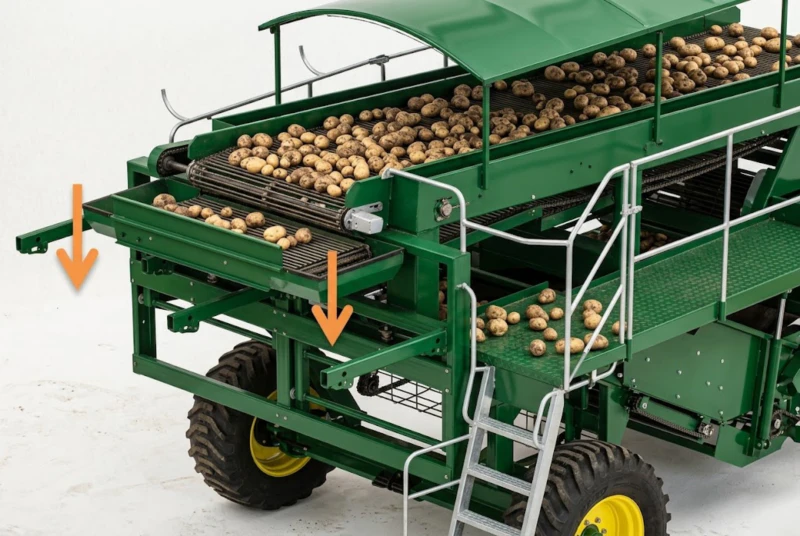
Loss Source 3: Greening (Light Exposure After Digging) What happens: Tubers exposed to sunlight develop solanine (a toxic glycoalkaloid) and turn green within hours. Green tubers are unmarketable and must be discarded or downgraded. This is exclusively a digger problem — machines that deposit tubers in a windrow on the soil surface expose them to direct sunlight until the picking crew collects them. Typical loss contribution: 0.5 to 3 percent with diggers (depending on sun intensity and pickup speed). Near zero with elevator harvesters. |
|
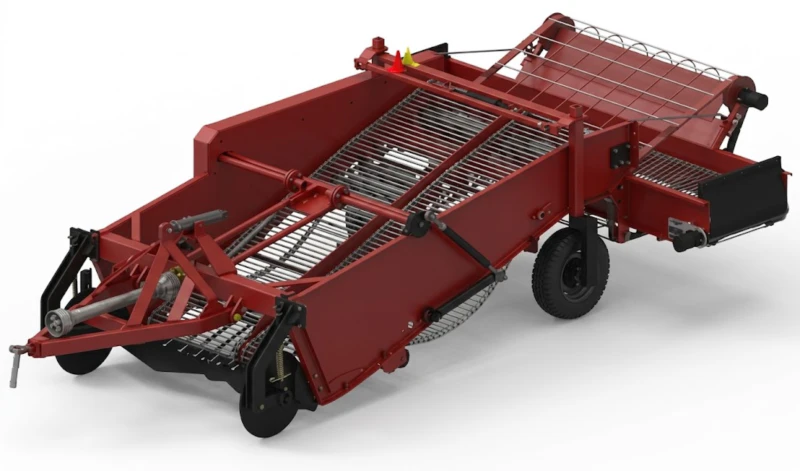
How to Eliminate Greening 1. Use an elevator harvester. The CWB-2L harvester loads tubers directly into a covered trailer. Tubers never touch the ground surface and have minimal light exposure. Greening is essentially eliminated. 2. If using a digger: pick up windrows immediately. Do not let tubers sit in the sun. On bright days, dig only as far ahead as your picking crew can collect within 1 to 2 hours. Use the AWB trailed digger at higher speed to keep windrows shorter and more concentrated for faster pickup. |
|
Loss Source 4: Weather Damage (Rain, Frost After Digging) What happens: Tubers in ground-level windrows are exposed to rain (causing mud, disease entry, re-wetting) and frost (causing cellular damage and rot). A sudden rain shower or overnight frost on an uncollected windrow can damage an entire day’s digging output. Typical loss contribution: 0 to 5+ percent — zero in dry, mild conditions; catastrophic in late-season storms. |
|
How to Eliminate Weather Damage 1. Use an elevator harvester. Tubers go from soil to covered trailer in seconds. No ground exposure, no weather risk. The CWB-2L is the only machine that completely eliminates this loss source. 2. If using a digger: never dig more than the crew can collect the same day. Check the weather forecast before every harvest day. Stop digging early enough to allow the crew to clear all windrows before evening. Never leave windrows overnight when frost is possible. |
|
Loss Source 5: Clod and Stone Contamination What happens: Soil clods and stones of similar size to tubers pass through the sieve and are mixed into the harvested crop. These contaminants add dead weight (you transport and store soil instead of potatoes), damage tubers in storage through impact, and must be removed at the grading line — adding cost and slowing throughput. In severe cases, stone contamination leads to load rejection by processors. Typical loss contribution: 1 to 3 percent indirect (contamination downgrade, grading rejection, storage damage). |
|
How to Eliminate Contamination 1. Crush stones before planting. The THOR stone crusher reduces all stones to under 50 mm — far smaller than any marketable tuber. Crushed fragments pass through the sieve, never reaching the harvested crop. Stone contamination is eliminated at source. 2. Build fine-tilth ridges. Clods form when the seedbed is too coarse. The ERA Rotary Cultivator or PSW-3200 Rotavator creates 5 to 20 mm aggregate ridges that break down easily during harvest sieving. Coarse, cloddy ridges produce tuber-sized clods that are impossible to separate from tubers on the sieve. 3. Use the CWB-2L’s multiple sieve stages. The harvester’s multi-stage sieving provides more separation opportunities than a single-web digger, removing more soil, clods, and debris before tubers reach the elevator. |
The 3% Roadmap: Summary of Actions
| Loss Source | Uncontrolled | Target | Key Action |
|---|---|---|---|
| Mechanical damage | 3-8% | Under 1% | Crush stones + correct share depth + skin set |
| Tubers left in ground | 1-5% | Under 0.5% | Uniform ridges + full-width shares |
| Greening | 0.5-3% | Near 0% | CWB-2L (direct to trailer) or fast pickup |
| Weather damage | 0-5+% | 0% | CWB-2L or same-day windrow clearance |
| Clod/stone contamination | 1-3% | Under 0.5% | Crush stones + fine tilth ridges + multi-sieve |
| TOTAL | 8-20+% | Under 3% | Crush + fine seedbed + CWB-2L + technique |
The Stone Factor: Why Harvest Quality Starts at Planting
Three of the five loss sources — mechanical damage, incomplete recovery, and contamination — are directly caused or worsened by stones in the ridge zone. Stones are responsible for more harvest loss than any other single factor on stony farmland. The THOR stone crusher addresses all three simultaneously and permanently:
| Bruising eliminated | No stones on the sieve = no impact bruising. Tuber-to-tuber contact on a stone-free sieve produces far less damage than tuber-to-stone impacts. |
| Recovery improved | Without large stones deflecting the digging shares, the machine follows a consistent depth across the entire field. No share deflection = no missed tubers. |
| Contamination eliminated | Crushed particles (under 50 mm) fall through the sieve. No tuber-sized stones reach the harvested crop. Zero stone contamination at the grading line. |
The compounding effect: Farms that combine stone crushing (THOR) with fine-tilth seedbed preparation (ERA cultivator or PSW-3200) and an elevator harvester (CWB-2L) consistently achieve total harvest losses below 2 percent — dramatically below the industry average of 8 to 12 percent.
Frequently Asked Questions
|
Q1: Is 3% harvest loss really achievable? Yes — on stone-free ground with a properly set-up harvest machine and adequate skin set. European commercial farms with stone-crushed land and elevator harvesters routinely achieve 2 to 3 percent total losses. The 3 percent target is conservative for a well-equipped operation. |
|
Q2: What is the biggest single action to reduce losses? On stony ground: stone crushing. It eliminates the root cause of the three largest loss sources simultaneously. On already stone-free ground: ensuring adequate skin set (kill haulm 10 to 14 days before harvest) is the single highest-impact action — soft-skinned tubers bruise 3 to 5 times more readily than set-skinned tubers. |
|
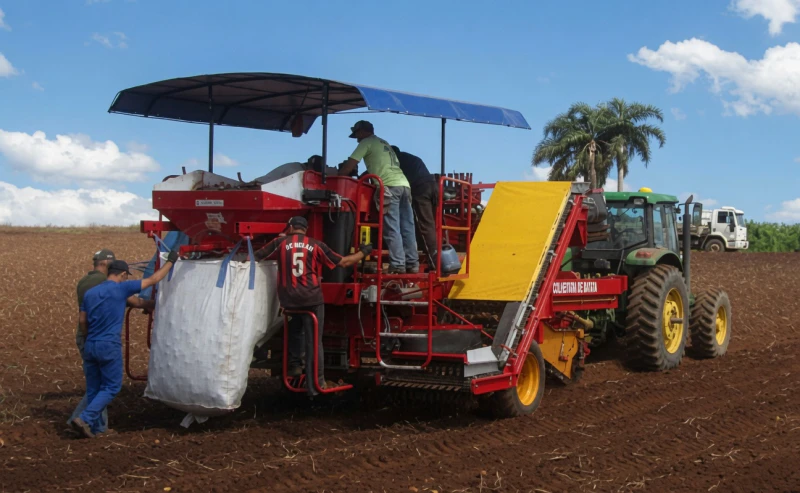
Q3: Does the CWB-2L harvester reduce losses more than a digger? Yes. The CWB-2L eliminates two loss sources entirely (greening and weather damage) and reduces a third (contamination) through multiple sieve stages. On average, operations switching from digger-plus-crew to CWB-2L report 3 to 5 percentage points lower total losses, in addition to eliminating the picking crew cost. |
|
Q4: How does harvesting speed affect losses? Excessive speed increases mechanical damage (more violent sieve action) and increases the chance of leaving tubers behind (shares ride up at high speed). The optimal speed balances throughput with quality: typically 4 to 6 km/h for the CWB-2L and 3 to 5 km/h for mounted diggers. Trailed diggers handle higher speeds (5-10 km/h) due to their independent chassis stability. |
|
Q5: How do I measure my current harvest losses? After harvesting a section, walk 20 meters of harvested row and count or collect any tubers remaining on the surface or visible in the shallow soil. Weigh them and calculate as a percentage of the yield from that section. Do this at 3 to 5 points across the field for a representative estimate. Also count damaged tubers at the grading line as a percentage of the graded sample. |
|
Q6: Does ridge quality really affect harvest losses? Absolutely. Uniform ridges created by the R-380/R-580 furrower or ERA cultivator allow the digger to follow a consistent depth — reducing both missed tubers and cut tubers. Uneven ridges force the operator to set shares deeper than necessary to avoid missing tubers in the low spots, which wastes energy and lifts excess soil. |
|
Q7: Can I reduce losses without buying a harvester? Yes. Stone crushing (permanent), fine seedbed preparation, correct share depth, adequate skin set, and same-day windrow clearance can reduce losses from 15+ percent to 5 to 7 percent using a digger alone. The CWB-2L gets you from 5 to 7 percent down to 2 to 3 percent by eliminating greening, weather exposure, and improving sieve separation. |
|
Q8: Do you supply all the equipment mentioned in this guide? Yes. Stone crushers (THOR), rotavators (PSW-3200), ERA cultivators, furrowers (R-380/R-580), mounted diggers (AWB-1600 series), trailed diggers (AWB trailed series), and the CWB-2L elevator harvester. One manufacturer, one support team, factory-direct pricing on the complete loss-reduction equipment chain. |
|
Q9: How do I get a loss-reduction equipment plan? Contact our team with your current estimated harvest loss percentage, stone conditions, current equipment, and farm size. We will identify which loss sources are costing you the most and recommend the specific equipment investments that deliver the fastest payback through recovered yield. |
Every Percent of Loss Reduction Is Revenue Recovered
Reducing harvest losses from 12 percent to 3 percent on a 40 t/ha crop across 100 hectares recovers 360 tonnes of potatoes per season. At any market price, the equipment that delivers this recovery pays for itself many times over. We supply every machine in the loss-reduction chain at factory-direct pricing.
|
Loss Assessment Identify your biggest loss source |
Equipment Recommendation Highest-ROI upgrades first |
Complete System Quote Crusher to harvester chain |