Building Roads That Cost the Earth Less — Literally
Conventional road construction is an extractive process. Aggregate is quarried from natural rock deposits — blasting, crushing, and screening millions of tonnes of stone that are then trucked to the road site, spread, compacted, and often covered with asphalt produced from petroleum. Every stage consumes energy, produces CO₂, generates dust and noise, disrupts ecosystems, and leaves behind a quarry scar that may never be restored. A single kilometre of conventional rural road can consume 1,000 to 3,000 tonnes of imported aggregate and generate 50 to 200 tonnes of CO₂ equivalent in material production and transport alone.
Soil stabilization builds the same road from the ground it stands on. The existing soil is mixed with a small volume of binder (lime or cement — typically 3 to 8 percent by weight) and compacted into a durable, load-bearing surface. No quarrying, no aggregate trucks, no asphalt plant, no petroleum. The only imported material is the binder itself — a fraction of the mass, energy, and emissions of conventional construction.
This article quantifies the environmental advantage across seven impact categories and explains why soil stabilization is increasingly favoured by governments, development agencies, and environmentally conscious operators worldwide.
7 Environmental Benefits of Soil Stabilization
|
1. No Quarrying — Natural Landscapes Preserved Every tonne of aggregate used in conventional road construction was once part of a hill, a riverbed, or a rock formation. Quarrying removes vegetation, destroys habitat, alters drainage patterns, generates dust and noise, and leaves permanent scars on the landscape. In many regions, aggregate quarries are the single largest source of land-use change and habitat loss from infrastructure development. Stabilization impact: Zero quarrying. The road material is the soil already in place. No new land is disturbed, no habitat is destroyed, no quarry is opened. For a 10 km rural road that would consume 10,000 to 30,000 tonnes of quarried aggregate conventionally, stabilization eliminates 100 percent of this extraction. |
|
2. 60-80% Less Material Transport — Fewer Trucks, Less Fuel, Less Damage Aggregate transport is one of the heaviest freight operations in construction. Moving 10,000 tonnes of crushed rock from quarry to road site requires 400 to 500 truck trips (20 to 25 tonnes per load). Each trip burns diesel, produces CO₂, generates road dust, damages the roads it travels on, and creates noise and safety hazards for communities along the route. Stabilization impact: The only material transported to the site is the binder — typically 3 to 8 percent of the treated soil mass. For the same 10 km road, binder transport requires 20 to 60 truck trips instead of 400 to 500. A reduction of 85 to 95 percent in construction traffic, with proportional reductions in fuel consumption, CO₂ emissions, road damage, and community disruption. |
|
3. Lower Carbon Footprint — 40-70% Less CO₂ Per Kilometre The carbon footprint of a conventional road comes from three sources: aggregate production (quarrying, crushing, screening — energy-intensive processes), material transport (diesel trucks over distance), and asphalt production (heating bitumen and aggregate to 150-180°C using fossil fuel). Combined, these produce 50 to 200 tonnes of CO₂ equivalent per kilometre of completed road. Stabilization impact: Lime and cement production generates CO₂ (approximately 0.7 to 0.9 tonnes CO₂ per tonne of cement; 0.5 to 0.8 for lime). But the volume of binder used per km is far smaller than the volume of aggregate replaced. Net result: 40 to 70 percent lower CO₂ per kilometre versus conventional aggregate or asphalt road construction. The smaller the transport distance for the binder, the larger the carbon advantage. |
|
4. Zero Waste — No Excavated Soil to Dispose Conventional road construction often requires excavating weak subgrade soil and replacing it with imported aggregate. The excavated soil becomes waste — trucked to a disposal site, stockpiled, and often never reused. On a 10 km road with 30 cm excavation depth and 6 m width, the waste volume is approximately 18,000 m³ — 25,000 to 30,000 tonnes of soil that must be removed, transported, and dumped. Stabilization impact: Zero excavation, zero waste, zero disposal. The weak soil is not removed — it is upgraded in place. The material that conventional construction would discard as waste becomes the construction material itself. This eliminates excavation cost, disposal cost, and the environmental impact of waste soil stockpiles (erosion, habitat loss, contamination risk). |
|
5. Permanent Dust Elimination — Clean Air, Clean Water, Healthy Communities Unpaved roads are the largest source of particulate dust in rural areas. Dust from vehicle traffic settles on crops (reducing photosynthesis and yield), enters homes (respiratory health impact), contaminates water sources, and reduces visibility (accident risk). Gravel roads generate less dust than earth roads but still produce significant particulate emissions as vehicle tyres grind gravel into fine powder. Stabilization impact: The chemically bonded surface does not generate dust. Soil particles are locked into a cohesive matrix that resists abrasion from tyre contact. Dust generation drops to near zero — permanently, not temporarily like water spraying or calcium chloride treatments. See: How to Eliminate Dust on Farm Haul Roads Permanently. |
|
6. Reduced Erosion — Stabilized Surfaces Resist Rain and Run-Off Unpaved earth roads erode under rainfall — loose soil is washed into ditches, streams, and rivers, carrying sediment, nutrients, and contaminants into waterways. Road erosion is a significant contributor to sedimentation in rural catchments, degrading water quality, filling reservoirs, and harming aquatic ecosystems. Gravel roads erode less but still lose material through surface wash and tyre displacement. Stabilization impact: The bonded surface resists erosion from rainfall and run-off. Water sheds across the crowned surface into side drains rather than penetrating and washing away the road material. Sediment load to adjacent waterways drops dramatically. This is particularly valuable for roads near sensitive water features — streams, wetlands, reservoirs, and irrigation canals. |
|
7. Longer Life, Less Re-Treatment — Reduced Lifetime Material Consumption Gravel roads require re-gravelling every 1 to 3 years as traffic displaces and erodes the surface layer. Over 20 years, a gravel road may consume 5 to 10 times its initial gravel volume in replenishment — each cycle requiring new quarrying, transport, and placement. Earth roads need grading after every wet season and may become impassable entirely during prolonged rain. Stabilization impact: A properly constructed stabilized surface lasts 5 to 15+ years before re-treatment is needed. When re-treatment is eventually required, the THOR ST re-mixes additional binder into the existing stabilized layer — refreshing it rather than replacing it. Over 20 years, total material consumption is a fraction of the gravel-road equivalent. The cumulative environmental footprint per year of road service is the lowest of any rural road construction method. |
Quantified Comparison: 10 km Rural Road
| Impact Category | Conventional (Gravel/Asphalt) | Soil Stabilization | Reduction |
|---|---|---|---|
| Virgin material extracted | 10,000-30,000 tonnes aggregate | 300-900 tonnes binder only | 95-97% |
| Truck trips (construction) | 400-1,200 | 15-45 | 85-96% |
| CO₂ emissions (construction) | 500-2,000 tonnes | 150-600 tonnes | 40-70% |
| Soil waste excavated | 18,000-30,000 m³ | Zero | 100% |
| Dust generation (ongoing) | Gravel: moderate. Earth: severe | Near zero | ~100% |
| Erosion / sediment to waterways | Ongoing (gravel + earth) | Minimal (bonded surface) | 80-95% |
| 20-year maintenance material | Gravel: 5-10x initial volume | 1 re-treatment (same binder volume) | 70-90% |
Addressing the Question: “But Cement Production Generates CO₂”
A common objection to soil stabilization’s environmental credentials is that cement and lime production are themselves carbon-intensive processes. This is true — but the comparison must be system-level, not product-level:
|
Volume comparison A stabilized road uses 30 to 90 kg of binder per m³ of treated soil. A conventional concrete or asphalt road uses 300 to 500+ kg of cement/bitumen per m³ of pavement plus the aggregate. Even accounting for cement’s CO₂ intensity, the dramatically lower volume means the total CO₂ from binder production in stabilization is 40 to 70 percent less than the total CO₂ from material production in conventional construction. |
|
Transport elimination Conventional construction’s carbon footprint includes transporting 10,000 to 30,000 tonnes of aggregate — a significant CO₂ source that stabilization eliminates almost entirely. The transport saving often exceeds the entire binder production footprint, making stabilization net-positive even before counting the quarrying elimination. |
|
Lime carbonation (CO₂ reabsorption) Lime (CaO) produced by calcining limestone releases CO₂ during manufacture. However, when lime reacts with soil and atmospheric CO₂ over time (carbonation), it reabsorbs a portion of this CO₂ — partially closing the carbon cycle. This carbonation effect is not counted in most carbon calculations but represents a real atmospheric CO₂ reduction over the road’s lifetime. |
Who Is Choosing Stabilization for Environmental Reasons?
|
Government rural road programs in developing nations Countries building thousands of kilometres of rural road annually are adopting stabilization to connect more communities with the same budget — and with lower environmental impact per kilometre. Programs funded by the World Bank, African Development Bank, and Asian Development Bank increasingly specify or recommend stabilization where soil conditions permit. |
|
Environmentally certified agricultural operations Farms with environmental certifications (GlobalG.A.P., organic, Rainforest Alliance, LEAF) that include dust, erosion, and carbon criteria can use stabilized roads as part of their environmental management plan. Eliminating dust and erosion from farm roads demonstrates proactive environmental stewardship to auditors and buyers. |
|
Mining and energy operations near sensitive environments Access roads to mining sites, wind farms, and solar installations in ecologically sensitive areas benefit from stabilization’s zero-quarry, low-transport, no-dust profile. Environmental impact assessments for these projects increasingly favour stabilization over conventional construction to minimise disturbance footprint. |
|
European and North American municipalities with carbon targets Local governments with municipal carbon reduction commitments are evaluating their road maintenance programs for carbon savings. Replacing annual gravel re-application (quarry + transport every 2 years) with one-time stabilization (lasting 10+ years) delivers measurable carbon reduction that counts toward published targets. |
Frequently Asked Questions
|
Q1: Is soil stabilization truly “environmentally friendly” if it uses cement? No construction method is zero-impact. The relevant comparison is system-level: stabilization versus the alternative. Stabilization uses 95 to 97 percent less virgin material, generates 40 to 70 percent less CO₂, produces zero waste, and eliminates dust and erosion. It is not impact-free — but it is dramatically lower-impact than any conventional alternative that achieves the same road performance. |
|
Q2: Are the binder materials (lime, cement) safe for the environment once mixed into soil? Yes. Once reacted with soil, lime and cement form inert calcium silicate and aluminate hydrates — the same minerals found naturally in many rock types. They do not leach harmful chemicals into groundwater. The reaction products are chemically stable and non-toxic. Stabilization is accepted by environmental regulators worldwide as a low-impact construction method. See: What Is Soil Stabilization? |
|
Q3: Can I claim carbon credits for using stabilization instead of gravel? Carbon credit eligibility depends on the specific programme and methodology used. The CO₂ reduction from avoided quarrying, avoided transport, and avoided asphalt production is real and quantifiable. Some voluntary carbon programmes accept infrastructure construction methodology shifts as eligible reductions. Consult a carbon credit advisor for your specific project and jurisdiction. |
|
Q4: Does stabilization work near waterways and wetlands? Yes — and it is often preferred in these settings precisely because it eliminates erosion and sediment run-off. During construction, dust is managed by the DCW 2.2’s low-drop binder delivery, and the mixing window is short (compaction completes within hours). Once cured, the bonded surface generates neither dust nor sediment — protecting adjacent water features permanently. |
|
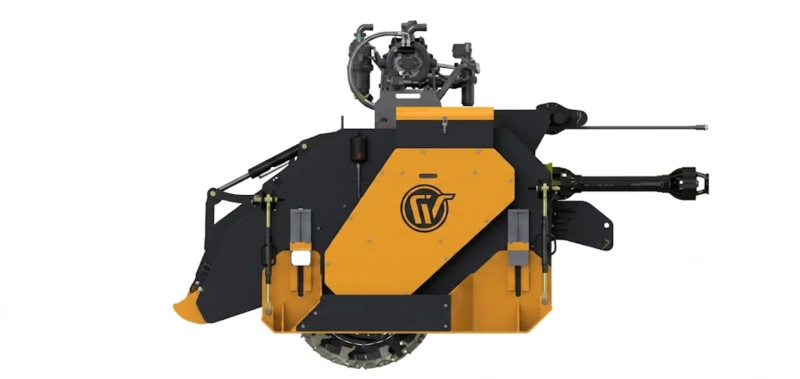
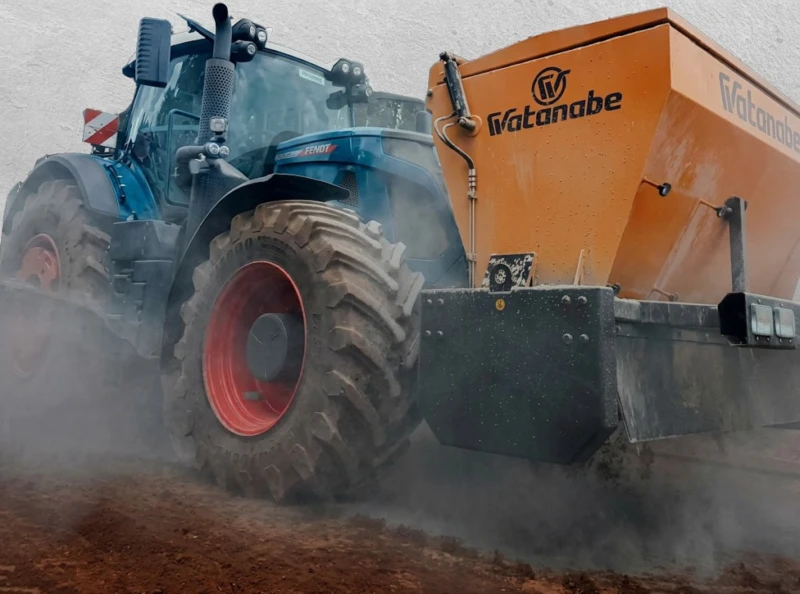
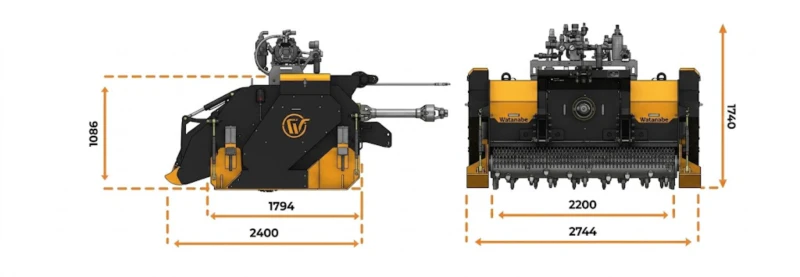
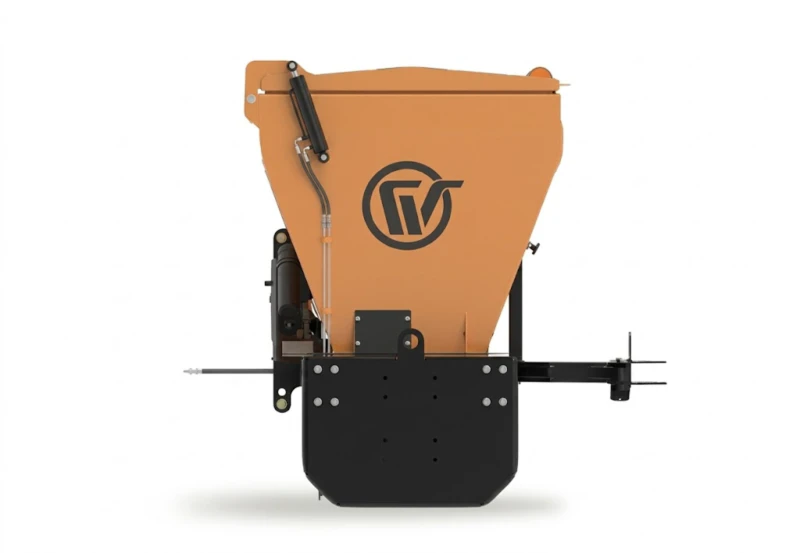
Q5: What equipment do I need? Two tractor-mounted machines: the DCW 2.2 Binder Spreader for precise binder distribution and the THOR ST Soil Stabilizer for thorough mixing. Plus standard grading and compaction equipment. No heavy construction plant, no asphalt paving machines, no quarry infrastructure. Contact us for equipment pricing and project consultation. |
Better Roads. Lower Impact. Fewer Trucks. Less CO₂. Zero Quarrying.
Soil stabilization delivers the same road performance as conventional construction — at 60 to 80 percent lower cost and 40 to 70 percent lower environmental impact. The DCW 2.2 Binder Spreader and THOR ST Soil Stabilizer make it practical for any scale — from a single farm road to a national rural road programme. Factory-direct pricing, worldwide delivery.
|
Equipment Quote DCW 2.2 + THOR ST |
Environmental Impact Assessment CO₂ and material comparison |
Government / Agency Programs Large-scale stabilization fleet |
Contact Us — Build Better Roads With Lower Environmental Impact