The Road Between Your Field and Your Market Is Eating Your Profit
Agricultural profitability is calculated at the point of sale — the price per tonne received at the market, processor, or collection point minus the cost per tonne of production and delivery. Most farmers invest heavily in optimizing production costs: better seed, precision fertilizer, efficient machinery, crop protection timing. Far fewer invest in optimizing delivery costs — the expense of moving harvested product from the field to the buyer. Yet on many farms, transport costs consume 10 to 25 percent of the crop’s gross value, and the single largest driver of those costs is the condition of the road the trucks drive on.
An unpaved road in poor condition inflates every component of transport cost: fuel consumption rises 25 to 40 percent on soft, rutted surfaces; vehicle maintenance costs double or triple from road-induced damage; travel speed drops to 10 to 20 km/h (versus 40 to 60 km/h on a good surface); seasonal road closures force product to wait — or rot — while the road dries; and fragile products like potatoes, fruit, and vegetables arrive bruised, contaminated, or downgraded from the journey itself.
Soil stabilization addresses every one of these cost drivers simultaneously by transforming the road surface from a transport liability into a transport asset — at 60 to 80 percent less than conventional paving. This article quantifies each saving and demonstrates why road investment delivers one of the highest returns available to any agricultural operation.
The Five Cost Drivers That Bad Roads Inflate — and Stabilization Eliminates
|
Cost Driver 1: Fuel — 25 to 40% More Per Trip on Bad Roads A loaded truck on a soft, rutted, or muddy surface encounters dramatically higher rolling resistance than on a firm, smooth surface. The tires sink into the material, the engine works harder to maintain forward motion, lower gears are selected more frequently, and speed is reduced — all of which burn more fuel per kilometer. Studies on unpaved road fuel consumption consistently show 25 to 40 percent higher fuel use compared to equivalent trips on stabilized or paved surfaces. On a stabilized road: The firm, smooth surface provides low rolling resistance — comparable to a sealed road. Trucks maintain higher gears, use less throttle, and travel at 40 to 60 km/h instead of 10 to 20 km/h. Fuel consumption per tonne-kilometer drops to near-paved levels. |
|
Example: A 20-tonne grain truck making a 10 km round trip to the silo burns approximately 8 to 12 liters on a bad road versus 5 to 7 liters on a stabilized road. Over a 500-trip harvest season, the fuel saving is 1,500 to 2,500 liters — significant at any fuel price. Multiply by multiple trucks and the saving scales linearly. |
|
Cost Driver 2: Vehicle Maintenance — 2x to 3x Higher on Rough Roads Rutted, potholed, washboarded roads destroy vehicles systematically. Tires wear faster from irregular surfaces and sidewall damage from rut edges. Shock absorbers and springs fail prematurely from constant impact. Chassis components crack from vibration fatigue. Engine air filters clog with dust in days rather than months. Hydraulic hoses and electrical connections are loosened by vibration. On a stabilized road: The smooth, firm surface eliminates impact loading, reduces vibration, and produces zero dust. Vehicle maintenance intervals return to manufacturer specifications rather than the accelerated schedules demanded by rough roads. Tire life doubles. Suspension component life triples. Air filter replacement drops by 60 to 80 percent. |
|
Cost Driver 3: Speed — 10-20 km/h vs. 40-60 km/h A truck limited to 15 km/h on a bad road takes 40 minutes to cover 10 km. The same truck on a stabilized road at 50 km/h covers the same distance in 12 minutes. Each round trip saves nearly an hour — and that hour is either productive capacity returned (more trips per day) or driver cost saved (shorter working day for the same output). Capacity impact: A truck making 6 round trips per day at 15 km/h on a bad road can make 10 to 12 round trips at 50 km/h on a stabilized road — nearly doubling daily transport capacity without adding a vehicle. For operations that hire transport by the hour or the trip, this is a direct cost reduction of 40 to 50 percent. |
|
Cost Driver 4: Seasonal Closure — Lost Revenue Days When rain turns an unpaved road to mud, traffic stops. Product that was harvested cannot reach the buyer. Inputs that were ordered cannot reach the farm. Every closed-road day is a lost-revenue day — and the cost compounds: harvested perishable product spoils in field storage, market windows close while the road is impassable, and contracted delivery deadlines are missed (often incurring penalties). On a stabilized road: The chemically bonded surface sheds water and maintains bearing capacity in rain. Trucks operate in all weather conditions. There are no road-closure days. Harvest transport continues regardless of rainfall — eliminating the most unpredictable and damaging cost of rural logistics. |
|
Cost Driver 5: Product Damage — Bruised, Contaminated, Downgraded Potatoes, fruit, vegetables, eggs, and other impact-sensitive products are physically damaged by the jolting, vibration, and impacts of rough road transport. Bruised potatoes are downgraded from ware to processing. Damaged fruit is rejected at intake. Dust-contaminated produce requires additional cleaning — or is rejected by quality-conscious buyers. The value difference between Grade A and Grade B for many crops is 20 to 40 percent of the sale price. On a stabilized road: The smooth surface eliminates the jolting and vibration that cause in-transit damage. Product arrives in the same condition it left the farm — Grade A, clean, unmarked. For potato growers in particular, combining stone-free harvesting with stabilized transport roads delivers a complete bruise-reduction chain from field to buyer. |
Quantified Savings: Unstabilized vs. Stabilized Road Transport
| Cost Component | Unstabilized Road | Stabilized Road | Saving |
|---|---|---|---|
| Fuel per tonne-km | Baseline (high) | 25-40% lower | 25-40% |
| Vehicle maintenance per year | Baseline (high) | 40-60% lower | 40-60% |
| Trips per day (same truck) | 6 trips | 10-12 trips | 67-100% more capacity |
| Lost-access days per year | 10-40 days (wet season) | 0 days (all weather) | 100% eliminated |
| Product downgrade rate | 5-15% (road damage) | Under 2% | 70-90% reduction |
| Combined transport cost reduction | 40-60%+ | ||
Payback Period: How Quickly Road Investment Returns Its Cost
The payback calculation for road stabilization is straightforward: compare the one-time stabilization cost against the annual transport savings it generates.
|
High-Traffic Farm Roads (20+ truck passes/day) Main haul routes carrying harvest traffic, input deliveries, and daily operations. Fuel and maintenance savings alone at this traffic level typically recover the stabilization cost within 1 to 2 seasons. When vehicle capacity gains, product quality improvement, and eliminated closure days are added, payback often occurs within the first harvest season. |
|
Medium-Traffic Roads (5-20 passes/day) Secondary routes connecting fields to the main road. Payback is typically 2 to 4 seasons based on fuel and maintenance savings. The value of all-weather access (eliminating seasonal closure) often accelerates payback on routes that serve time-critical operations like fresh produce harvesting or milk collection. |
|
Low-Traffic Roads (under 5 passes/day) Field access tracks used seasonally. Payback is longer — typically 4 to 7 seasons — unless all-weather access has high value (e.g., the road is the only route to a perishable crop field that floods annually). For these roads, stabilize only if wet-weather closure causes significant production or revenue loss. |
Beyond Transport: The Secondary Economic Benefits
|
Better buyer pricing through reliable delivery Buyers — processors, wholesalers, exporters — offer better prices to suppliers who deliver reliably and on schedule. A farm that can guarantee delivery regardless of weather commands better contract terms than one that cannot. All-weather road access converts weather-dependent delivery into weather-independent delivery — a competitive advantage in any agricultural market. |
|
Access to more distant or premium markets When transport costs per tonne-km drop by 40 percent, markets that were previously uneconomic to reach become profitable. A farm that could only afford to deliver within a 50 km radius at old transport costs can now deliver within 80 to 100 km at the same cost per tonne — opening access to larger, higher-paying, or more specialized buyers. |
|
Increased land value Farm properties with all-weather road access are valued higher than properties with seasonal-access-only roads. The road improvement becomes a permanent infrastructure asset that increases the property’s market value — recoverable if the farm is ever sold, leased, or refinanced. |
|
Reduced driver fatigue and accident risk Drivers on smooth, stabilized roads experience less physical fatigue, better visibility (no dust), and lower accident risk from ruts and potholes. Safer roads mean fewer vehicle damage claims, fewer injury incidents, and lower insurance costs for farm fleet operations. |
The Equipment That Delivers the Savings
|
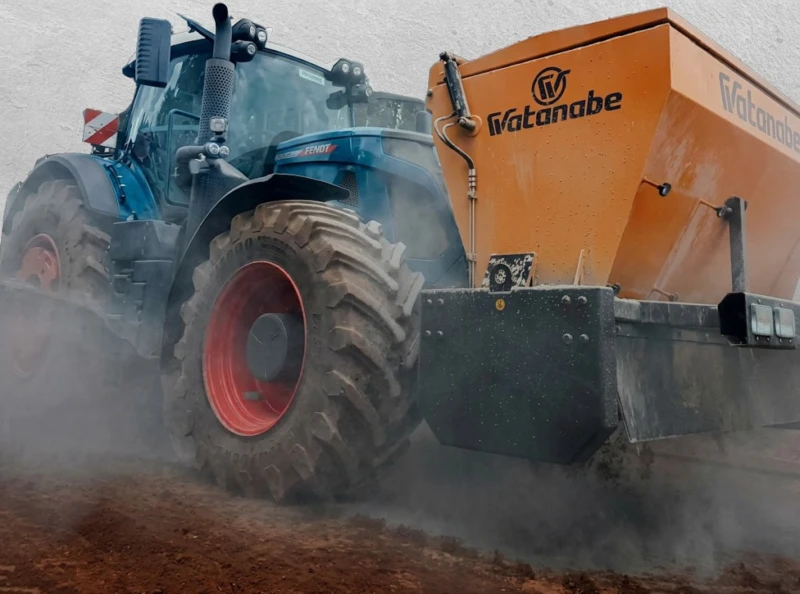
Distributes lime or cement uniformly across the road surface. 2,200 kg hopper, calibrated metering, tractor-mounted. Ensures the consistent binder distribution that produces a uniform road — no weak zones, no wasted material, no premature failure points. Dual use: Also spreads agricultural lime for field pH correction, earning revenue between road projects. |
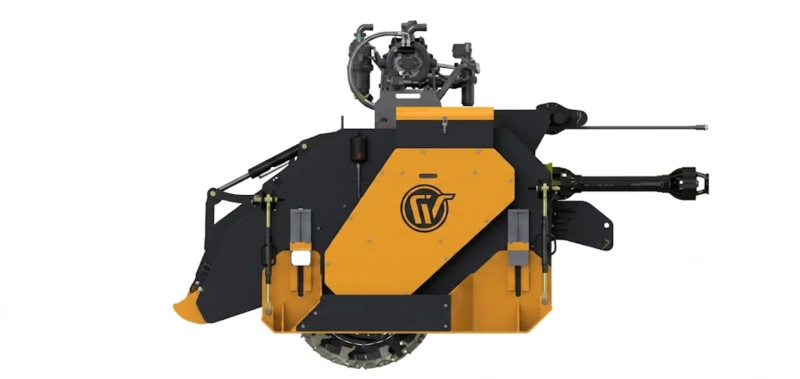
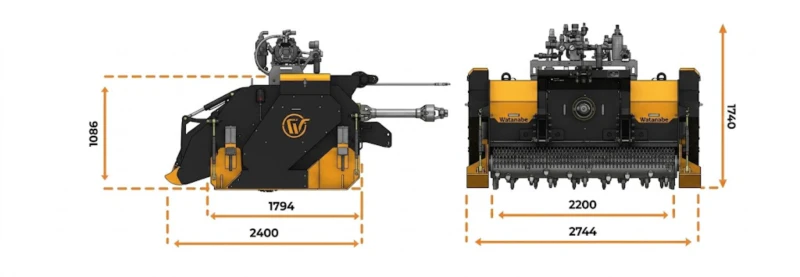
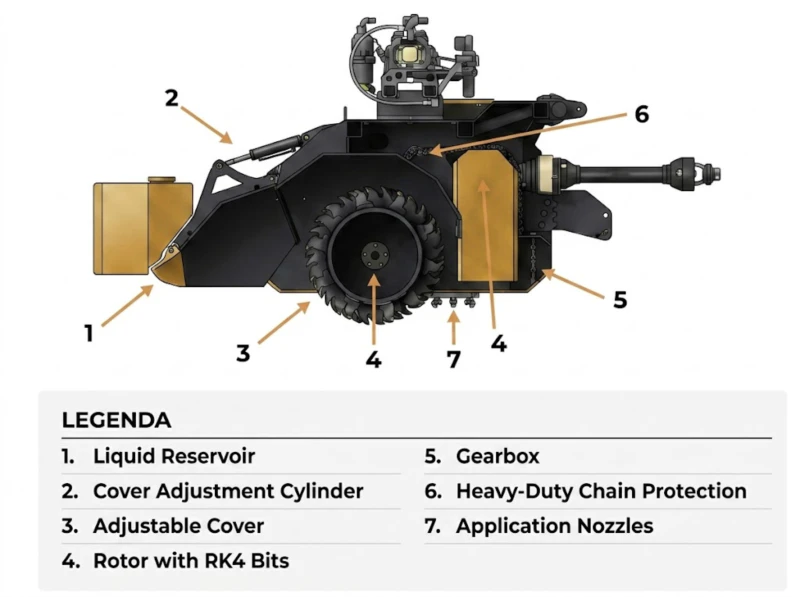
Mixes the binder into the existing soil to up to 40 cm depth, creating a homogeneous stabilized layer. Tungsten carbide rotor pulverizes clods and stones while blending. PTO-driven, 180+ hp tractor. The same rotor technology proven in our THOR stone crusher range. Dual use: Also serves as a soil reclaimer and subgrade preparation tool for construction projects. |
Frequently Asked Questions
|
Q1: Is the 40% transport cost reduction realistic? 40 percent is a conservative estimate for operations with heavily used farm roads in poor condition. The saving comes from fuel reduction (25-40 percent), maintenance reduction (40-60 percent), trip capacity increase (67-100 percent), and eliminated closure days. On operations where road-induced product downgrading is also significant, the total economic benefit can exceed 50 to 60 percent. |
|
Q2: Which road sections should I stabilize first for maximum transport savings? Start with the highest-traffic route — typically the main haul road from field storage to the loading point or public road. This section carries the most trips per day and therefore generates the largest per-kilometer fuel and maintenance savings. Every trip on a stabilized section saves money; the more trips, the faster the payback. |
|
Q3: How does stabilization compare to just adding gravel? Gravel improves the surface temporarily but requires replenishment every 1 to 3 years as gravel migrates, washes away, and gets ground into the subsoil. Over 10 years, cumulative gravel costs often exceed stabilization — and gravel never eliminates dust. Stabilization is a one-time treatment that produces a superior, dust-free, all-weather surface lasting 5 to 10+ years. See our detailed comparison: How Soil Stabilization Transforms Rural Roads at 60-80% Lower Cost. |
|
Q4: Does the saving apply to tractors and farm equipment as well as trucks? Yes. Tractors towing trailers, harvesters traveling between fields, and all other wheeled vehicles benefit equally from reduced rolling resistance, less vibration damage, higher travel speed, and all-weather access. On mixed-use roads carrying both trucks and farm machinery, the combined fleet savings are additive. |
|
Q5: How does this apply to potato farming specifically? Potatoes are particularly sensitive to transport damage — bruising from rough roads causes internal black spot that downgrades ware to processing grade. Potato transport on stabilized roads produces significantly less bruising, maintaining premium grade classification. Combined with stone crushing (eliminating field-level bruising) and the CWB-2L harvester (eliminating ground-level bruising), a stabilized transport road completes the bruise-free chain from field to buyer. |
|
Q6: Can a contractor stabilize my roads or do I need to buy equipment? Both options work. For a one-time project (5 to 10 km), hiring a contractor with a THOR ST and DCW 2.2 may be more economical. For ongoing road management across a large farm or multiple farms, owning the equipment provides scheduling independence, dual-use capability (agricultural liming), and lower long-term cost per kilometer. |
|
Q7: Do you supply both machines? Yes. The DCW 2.2 Binder Spreader and THOR ST Soil Stabilizer are a matched system. Factory-direct pricing on both, worldwide delivery, and package pricing when purchased together. |
|
Q8: How do I get a quote and transport cost analysis? Contact our team with your road network length, daily truck traffic, current road condition, and the products you transport. We will provide equipment pricing and help estimate your specific transport cost reduction based on your traffic and road data. |
Your Road Is Either Saving You Money or Costing You Money. There Is No In Between.
Every trip on a bad road costs more fuel, more maintenance, more time, and more product damage than the same trip on a stabilized road. The stabilization cost is a one-time investment; the transport savings recur with every trip, every day, every season — for 5 to 10+ years. DCW 2.2 + THOR ST, factory-direct pricing, worldwide delivery.
|
Equipment Quote DCW 2.2 + THOR ST system |
Transport Cost Analysis Your specific savings estimated |
Contractor Fleet Stabilization service business |
Contact Us — Start Cutting Transport Costs With Better Roads