The Pin Size That Decides Whether Your New Implement Actually Fits Your Tractor
The three-point hitch is the universal mounting system that connects virtually every rear-mounted implement to a tractor. It consists of two lower lift arms and one upper link, controlled by the tractor’s hydraulic system. The concept is the same on every tractor worldwide — but the physical dimensions of the pins, balls, and link arms are not. They come in standardized size categories, and if the implement’s hitch category does not match your tractor’s hitch category, the pins will not fit the holes, the implement cannot be connected, and your purchase becomes an expensive mismatch.
Three categories — Cat I, Cat II, and Cat III — cover the vast majority of agricultural tractors and implements. A fourth category (Cat IV) exists for the largest industrial tractors but is rare in standard farming. Each category defines the pin diameters, pin spacing, lift capacity range, and the tractor power class it is designed for. Understanding these categories is essential when purchasing any implement — including every product in our range.
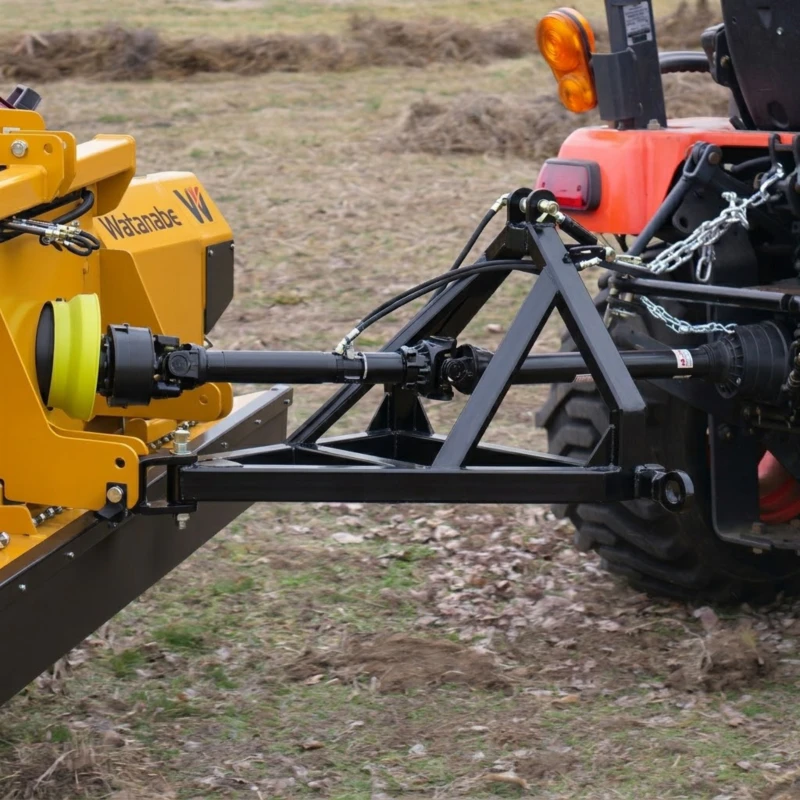
The Three Categories: Dimensions, Power Class, and Lift Capacity
| Specification | Category I | Category II | Category III |
|---|---|---|---|
| Lower link pin diameter | 22.4 mm (7/8 inch) | 28.7 mm (1-1/8 inch) | 36.5 mm (1-7/16 inch) |
| Upper link pin diameter | 19.0 mm (3/4 inch) | 25.4 mm (1 inch) | 31.75 mm (1-1/4 inch) |
| Lower link spacing (center-to-center) | 681 mm (26.8 inch) | 870 mm (34.3 inch) | 1,023 mm (40.3 inch) |
| Tractor power class (typical) | 20 to 45 hp | 40 to 100 hp | 80 to 225+ hp |
| Typical lift capacity at link ends | Up to 900 kg | 900 to 3,500 kg | 2,500 to 7,000+ kg |
| Mast frame height (max.) | 610 mm | 680 mm | 762 mm |
The categories scale upward with tractor size: larger, heavier tractors have larger pins, wider link spacing, and higher lift capacity to handle correspondingly larger, heavier implements. The pin diameter difference between Cat I (22.4 mm) and Cat III (36.5 mm) might seem small, but it represents a structural strength difference that determines whether the connection can safely handle 500 kg or 5,000 kg.
Which Tractors Have Which Category?
|
Category I — Sub-Compact and Compact Tractors (20-45 hp) John Deere 1-3 Series, Kubota BX/B Series, Massey Ferguson 1700, New Holland Workmaster 25-40, Kioti CK/DK Series (small models). These tractors handle light implements: small mowers, single-bottom ploughs, compact tillers, and landscape equipment. Cat I implements are typically under 500 kg. |
|
Category II — Utility and Mid-Range Tractors (40-100 hp) John Deere 5E/6M, Kubota M5/M6/M7, Massey Ferguson 4700/5700, New Holland T4/T5/T6, Case IH Farmall, Deutz-Fahr 5D/5G. The workhorse category for most farms. Handles the majority of agricultural implements: rotary cultivators, planters, diggers, compost barn stirrers, fertilizer applicators, and mounted sprayers. Most implements in the 500 to 2,500 kg range are Cat II. |
|
Category III — High-Power Tractors (80-225+ hp) John Deere 6R/7R/8R, Case IH Maxxum/Puma/Magnum, New Holland T7/T8, Massey Ferguson 6700/7700/8700, Fendt 700/800/900, Claas Axion. These tractors power the heaviest implements: stone crushers, heavy rotavators, large disc harrows, subsoilers, and soil stabilizers. Cat III connections handle implements from 2,000 to 5,000+ kg. |
Important: Many mid-range to large tractors (80-150 hp) are equipped with Cat II/III combo hitches — lower links that accept both Cat II and Cat III pins, with bushings or quick-hitch adapters for size conversion. This provides flexibility to run both medium and heavy implements from the same tractor. Check whether your tractor’s hitch is fixed Cat II, fixed Cat III, or combo.
Our Equipment: Hitch Category Map
| Өнім | Hitch Cat | Weight | Min. HP | Notes |
|---|---|---|---|---|
| EW-4000 Rock Rake | II | 680 kg | 75 | Standard mid-range connection |
| ERA-2100 Cultivator | II | ~800 kg | 75 | Compact 2-row, Cat II match |
| PAI-2100 Planter | II | ~900 kg | 75 | 2-row entry-level planter |
| PANTHER 3-Row Planter | II/III | ~1,800 kg loaded | 100 | Cat II or III depending on tractor |
| AWB-1600 Digger | II | 800 kg | 75 | Entry-level mounted digger |
| DESTROYER 2.0/3.0 | II | 460-660 kg | 75-80 | Lightweight stirrer, standard Cat II |
| PSW-3200 Rotavator | III | 3,800-5,400 kg | 160 | Heavy implement — Cat III required |
| THOR 2.4/3.0 Crusher | III (or drawbar) | 3,500-5,000+ kg | 180-250 | Cat III hitch or optional drawbar kit |
| THOR ST Stabilizer | III (or drawbar) | 3,000-4,500 kg | 180 | Cat III hitch or optional drawbar kit |
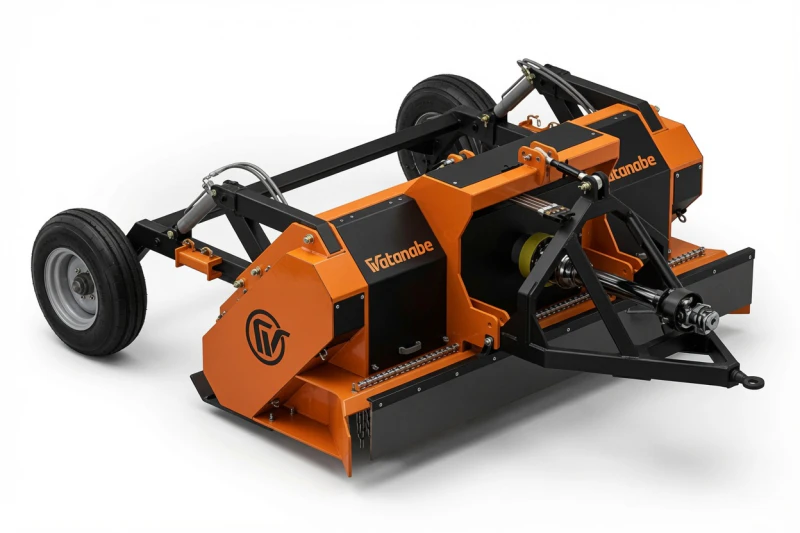
Quick Hitches and Category Adapters
Quick-hitch systems (also called quick couplers or A-frames) allow implements to be connected and disconnected without leaving the tractor cab. They bolt onto the tractor’s lower links and provide a standardized receiving frame that hooks onto the implement’s mounting points. Quick hitches are category-specific — a Cat II quick hitch accepts Cat II implement frames only.
| Quick hitch advantages | Implement change in under 2 minutes without leaving the cab. Eliminates manual pin insertion — reduces back strain and injury risk. Consistent connection alignment every time. Ideal for farms that switch implements frequently throughout the day. |
| Quick hitch limitation | The quick hitch adds 10 to 15 cm to the connection length, moving the implement slightly further from the tractor. For PTO-driven implements, check that the PTO driveline can accommodate the extra distance. Some heavy implements (stone crushers, heavy rotavators) may require direct pin connection for maximum rigidity — consult the implement manual. |
| Category bushings | Reducer bushings convert a larger hitch to accept a smaller implement — for example, a Cat III tractor can accept a Cat II implement by inserting bushings that reduce the lower link pin bore from 36.5 mm to 28.7 mm. This is standard practice and perfectly safe, provided the implement’s weight does not exceed the tractor’s lift capacity. Going the opposite direction (Cat II tractor mounting Cat III implement) is not possible — the pins are too large for the link bore. |
Lift Capacity: The Other Half of the Equation
Hitch category determines whether the pins physically fit. Lift capacity determines whether the tractor can actually raise the implement off the ground. A Cat II tractor might have link pins that fit a 2,000 kg implement, but if the tractor’s hydraulic lift capacity is only 1,500 kg, the implement will not lift properly — the arms strain, the hydraulic system overheats, and in extreme cases the tractor’s front axle lifts dangerously off the ground.
Always check both specifications when matching tractor to implement:
|
1. Hitch category — do the pins fit? Check the implement’s required hitch category against the tractor’s hitch category. Use bushings to downsize if needed (Cat III tractor → Cat II implement). Never upsize. |
|
2. Lift capacity — can the tractor raise it? Check the implement’s total weight (including product load: seed, fertilizer, insecticide for planters; soil load for diggers) against the tractor’s maximum rear lift capacity at the link ends. The tractor’s lift capacity must exceed the loaded implement weight by a safety margin of at least 15 to 20 percent. |
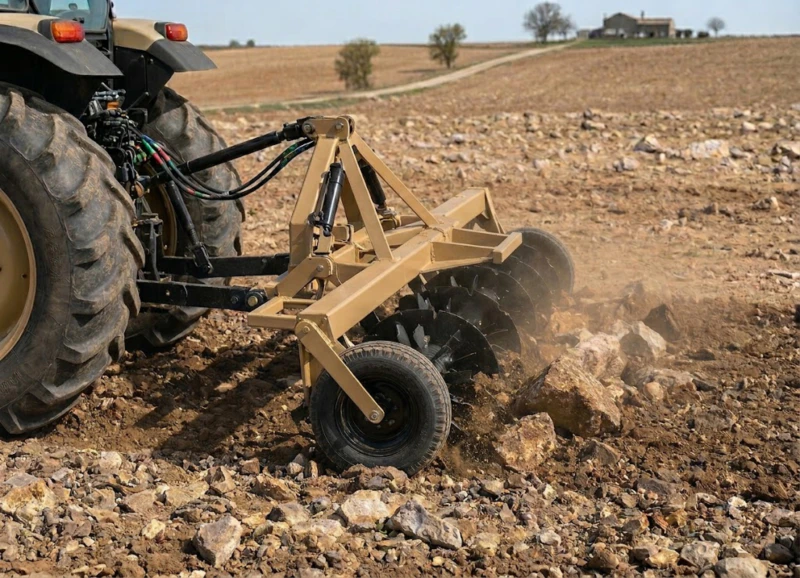
4 Common Three-Point Hitch Mistakes
|
1. Ignoring loaded weight A planter might weigh 900 kg empty but 1,800 kg when loaded with seed, fertilizer, and insecticide. The tractor must lift the loaded weight, not the catalogue weight. Always calculate the maximum loaded weight before confirming tractor compatibility. |
|
2. Using worn or wrong-size pins Worn pins allow lateral play in the hitch connection, creating side loads that damage both tractor links and implement frame. Undersized pins (using Cat I pins in Cat II holes) create dangerous slack. Always use the correct pin diameter for the hitch category, and replace pins showing visible wear. |
|
3. Forgetting the upper link The upper link (top link) controls the implement’s pitch angle — tilted forward, level, or tilted backward. An incorrectly adjusted or missing upper link allows the implement to pivot uncontrollably, creating erratic working depth and dangerous swinging during transport. Always connect and adjust the upper link before operating. |
|
4. Exceeding rear axle load A heavy implement on the three-point hitch transfers its weight to the tractor’s rear axle. If this exceeds the axle’s rated capacity, tires overload, bearings fail, and the front axle loses traction (the tractor becomes dangerously light at the front). For implements over 2,000 kg, add front counterweights to maintain safe axle balance — typically 30 to 50 percent of the implement weight. |
Frequently Asked Questions
|
Q1: Can I mount a Cat II implement on a Cat III tractor? Yes — using reducer bushings inserted into the Cat III lower link ball ends. This reduces the bore from 36.5 mm to 28.7 mm, accepting Cat II pins. This is standard practice. However, the upper link may also need a bushing or adapter. Bushings are inexpensive and widely available at agricultural supply stores. |
|
Q2: Can I mount a Cat III implement on a Cat II tractor? No. The Cat III pins (36.5 mm) are too large for Cat II link bores (28.7 mm). There is no adapter that enlarges the bore safely. A Cat III implement also almost certainly exceeds a Cat II tractor’s lift capacity and power. If the implement requires Cat III, your tractor needs to be Cat III class (typically 100+ hp with the appropriate hitch). |
|
Q3: How do I identify my tractor’s hitch category? Measure the lower link pin bore diameter: 22.4 mm = Cat I, 28.7 mm = Cat II, 36.5 mm = Cat III. Alternatively, check the tractor’s operator manual or specification plate. If the tractor has a quick hitch, the quick hitch frame is labeled with its category. Tractors with combo hitches will have bushings already installed that can be removed to reveal the larger bore. |
|
Q4: What about the drawbar option on THOR crushers? The THOR stone crusher and THOR ST stabilizer are available with an optional drawbar kit that converts the implement from three-point mounted to trailed configuration. In trailed mode, the implement rides on its own wheels and connects to the tractor’s drawbar — bypassing the three-point hitch entirely. This is useful for tractors with limited lift capacity or for transporting the crusher between distant fields on public roads. |
|
Q5: Does hitch category affect working performance? Not directly — the implement works the same regardless of hitch category. But an undersized hitch connection (e.g., Cat II pins in a Cat III application) creates mechanical weakness that can fail under the dynamic loads of field operation — especially on heavy PTO-driven implements like crushers and rotavators where the hitch absorbs reaction torque from the rotating drum. |
|
Q6: How do I confirm hitch compatibility before ordering? Contact our team with your tractor model, HP, hitch category, and rear lift capacity. We will confirm hitch and lift compatibility for any implement in our range and advise on bushings, counterweights, or drawbar options if needed. |
.webp "Correct Category Match: THOR 2.4 on Cat III Hitch — Safe, Rigid, and Reliable")
Pins Must Fit. Lift Must Match. Then the Work Begins.
Every implement in our range specifies its hitch category and minimum tractor requirements. Before ordering, confirm your tractor’s hitch category, lift capacity, PTO speed, and horsepower against the implement’s specification. We check compatibility for every order — бізбен хабарласыңы with your tractor details for a guaranteed-compatible recommendation. Factory-direct pricing, worldwide delivery.
|
Compatibility Check Your tractor + our implement |
Equipment Quote Hitch-matched to your tractor |
Dealer Inquiries Full product range |