The Distance Between Your Rows Affects Every Operation From Planting to Harvest
Row spacing is one of the first decisions a potato grower makes — and one of the most consequential. The distance between rows determines how many plants fit per hectare, how much soil is available for ridge formation, how much light each plant receives, how equipment tracks align with the crop, and how the harvester engages the ridges at the end of the season. Change the row spacing by 15 cm and you change the yield potential, tuber size distribution, mechanization logistics, and harvest efficiency of the entire crop.
Three row spacings dominate global potato production: 60 cm, 75 cm, and 90 cm. Each has its place — but the right choice depends on your climate, soil type, market (ware, seed, or processing), mechanization, and tractor wheel width. This guide compares all three across every factor that matters, and explains how to configure our equipment for each spacing.
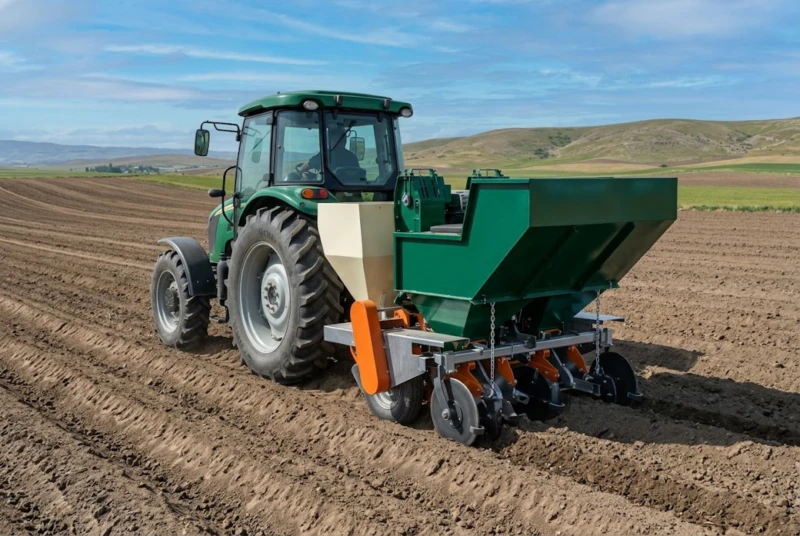
Complete Comparison: 60 cm vs. 75 cm vs. 90 cm
| Factor | 60 cm | 75 cm | 90 cm |
|---|---|---|---|
| Rows per hectare (100 m width) | 167 rows | 133 rows | 111 rows |
| Plants per ha (at 30 cm in-row) | 55,600 | 44,400 | 37,000 |
| Seed cost per ha | Highest (+25% vs 75 cm) | Baseline | Lowest (-17% vs 75 cm) |
| Available soil for ridging | Limited — narrow ridges | Adequate — standard ridges | Generous — large ridges |
| Ridge size and cover depth | Small — greening risk higher | Standard — good cover | Large — deep cover, lowest greening |
| Canopy closure speed | Fastest (narrow gaps) | Moderate | Slowest (wide gaps) |
| Light interception | Earlier full coverage | Balanced | More light per plant |
| Tuber size tendency | Smaller (more competition) | Medium — balanced distribution | Larger (less competition) |
| Total yield per ha | Often highest (more plants) | High — good balance | Moderate (fewer plants) |
| Tractor wheel fit | Difficult — narrow gauge needed | Standard — fits most tractors | Easy — wide gauge, no conflict |
| Equipment standardization | Less common | Global standard — widest equipment availability | Common in North America |
| Dominant regions | Parts of Asia, some European seed markets | Europe, Middle East, Africa, most of Asia | North America, Australia, some South America |
When to Choose Each Spacing
|
Choose 60 cm When: Seed potato production: Higher plant density produces more tubers per hectare — each tuber is smaller, which is exactly what the seed market wants (28 to 55 mm grade). More stems per hectare means more tubers per hectare, maximizing seed multiplication rate. Short growing seasons: Faster canopy closure compensates for limited growing days by intercepting maximum sunlight sooner. In northern regions or high altitudes with short seasons, 60 cm can produce higher total yield than wider spacing by capturing more light in the limited available time. Limitations: Narrow ridges provide less soil cover over tubers (higher greening risk). Tractor wheel gauge must match 60 cm multiples (120 cm or 180 cm track width) to avoid driving over ridges. Some harvest equipment is not available in 60 cm configuration. |
|
Choose 75 cm When: (Recommended Default) Ware potato production: The 75 cm standard produces the balanced tuber size distribution (40 to 80 mm) that most ware markets demand. Ridge volume is adequate for good soil cover, reducing greening. Plant population (44,000 to 48,000/ha at 28 to 30 cm in-row spacing) provides high total yield without excessive seed cost. Equipment compatibility: 75 cm is the global standard for European-designed potato equipment. All PANTHER, PAI, ERA, R-380, AWB, and CWB-2L models are designed around 75 cm as the default spacing. Tractor wheel gauge of 150 cm (2 × 75 cm) fits standard row crop tractors without modification. Versatility: Works across all climates, soil types, and markets. If you are unsure which spacing to choose, 75 cm is the safest default — it produces competitive yields for ware, processing, and fresh markets worldwide. |
|
Choose 90 cm When: Processing potato production: Processors (French fry manufacturers, chip makers) want large tubers (60 to 90+ mm). Wider spacing gives each plant more soil volume, more nutrients, and more room to develop fewer, larger tubers. The lower plant population (37,000/ha) reduces competition and shifts the size distribution toward larger grades. Hot, dry climates: Wider spacing reduces canopy density, improving air circulation and reducing humidity-related disease pressure (late blight, Alternaria). The larger ridge volume stores more soil moisture per plant, improving drought tolerance. Stony or heavy soils: Wider rows provide more soil for ridge building — critical on heavy clay where ridge formation is difficult, or on stony ground where the THOR stone crusher has cleared stones but the soil structure is still coarse. The extra ridge volume accommodates larger clod sizes without exposing tubers. |
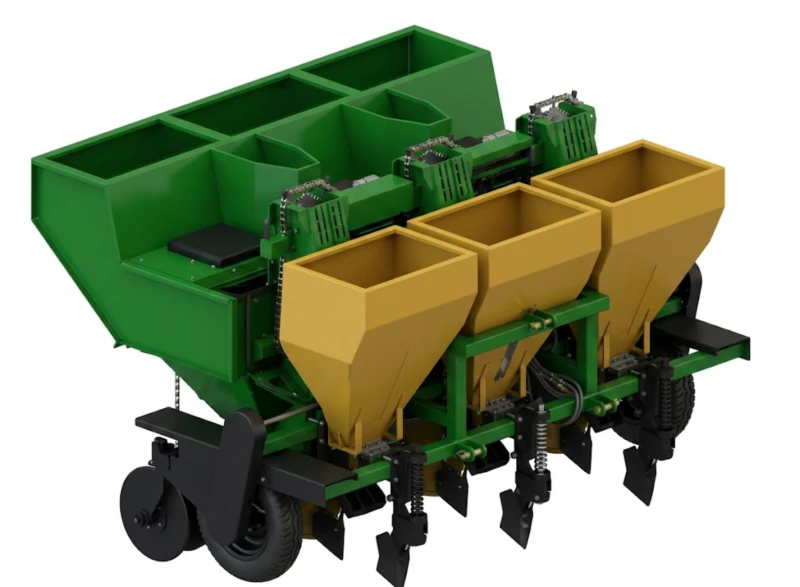
How Row Spacing Affects Every Field Operation
|
Seedbed Preparation and Ridging The ERA Rotary Cultivator and R-380/R-580 Furrower are adjustable across the 60 to 100 cm range. Row unit positions on the toolbar are repositioned mechanically to match the chosen spacing. The ERA’s spring furrowers form ridges at the exact width configured — ensuring the planter follows the same row pattern. Always configure seedbed equipment and planter to identical spacing before the season starts. |
|
Planting All PANTHER and PAI planters support 60 to 100 cm row spacing via adjustable row units. Specify your required spacing at order and we pre-configure the machine. Field adjustment between spacings requires repositioning the row units on the toolbar — a straightforward mechanical task requiring basic tools and 30 to 60 minutes. |
|
Hilling Post-emergence hilling with the R-380 Furrower must match the planted row spacing exactly. Misaligned hilling bodies damage plants, cut roots, and reduce yield. Set the furrower to the same spacing as the planter before entering the field. On 90 cm rows, the larger inter-row gap provides more room for the hilling bodies to draw soil without cutting into adjacent ridges. |
|
Spraying and Inter-Row Cultivation Tractor wheel track must fit between rows without driving over ridges. At 60 cm spacing, the tractor’s rear wheel gauge must be 120 cm (two rows) or 180 cm (three rows) — narrower than many standard tractors. At 75 cm, a 150 cm gauge fits standard row-crop tractors. At 90 cm, a 180 cm gauge provides comfortable clearance. Check your tractor’s minimum and maximum wheel gauge range against your chosen row spacing before committing. |
|
Harvest The AWB diggers and CWB-2L harvester engage 2 rows per pass. The digging share width and row unit spacing must match the planted rows. All models are adjustable across the 60 to 100 cm range. At 90 cm, the wider ridge base requires wider digging shares — confirm share width matches ridge width to avoid leaving tubers in the ridge shoulders. |
Yield and Economic Impact by Spacing
| Economic Factor | 60 cm | 75 cm | 90 cm |
|---|---|---|---|
| Seed tubers per ha | ~55,600 (highest cost) | ~44,400 | ~37,000 (lowest cost) |
| Total tuber yield (t/ha) | Highest (5-10% more than 75 cm) | High (baseline) | Lower (10-15% less than 75 cm) |
| Marketable ware yield | Lower ware % (more undersized) | Highest ware % (balanced sizes) | Good ware % (some oversized) |
| Processing yield (large tubers) | Low (too many small) | Moderate | Highest (largest tubers) |
| Seed multiplication ratio | Highest (most tubers/ha) | Good | Lower |
| Best market | Seed potato | Ware / fresh market | Processing (fries, chips) |
The key insight: Row spacing controls tuber SIZE DISTRIBUTION more than total yield. Narrow spacing produces many small tubers (good for seed). Wide spacing produces fewer large tubers (good for processing). Standard 75 cm produces the balanced mix that ware and fresh markets prefer. Choose spacing based on your target market, not maximum gross tonnage.
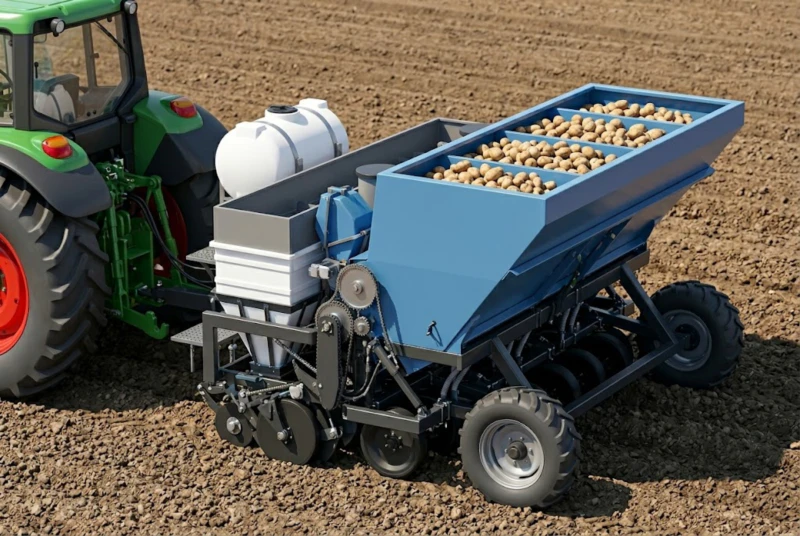
Our Equipment: Row Spacing Compatibility
| 製品 | Spacing Range | Default | Adjustment Method |
|---|---|---|---|
| ERA Rotary Cultivator | 60-100 cm | 75 cm | Reposition row units on toolbar |
| R-380 / R-580 Furrower | 60-100 cm | 75 cm | Slide furrowing bodies on beam |
| PAI-2100 Planter | 60-100 cm | 75 cm | Reposition row units on toolbar |
| PANTHER 2/3/4-Row Planter | 60-100 cm | 75 cm | Reposition row units on toolbar |
| PAI-480-AR Planter | 60-100 cm | 75 cm | Reposition row units on toolbar |
| AWB-1600 Digger (all models) | 60-100 cm | 75 cm | Adjust share positions and sieve guides |
| CWB-2L Harvester | 60-100 cm | 75 cm | Adjust digging share spacing |
All models support 60 to 100 cm spacing. Specify your required spacing at order for factory pre-configuration. Field adjustment between spacings is a mechanical procedure requiring standard tools — no welding, no fabrication, no special parts. You can change spacing between seasons or even between fields if different crops or markets require different configurations.
Frequently Asked Questions
|
Q1: Which spacing gives the highest total yield? In most trials, 60 cm produces 5 to 10 percent more total yield than 75 cm — because more plants per hectare produce more total tubers. However, the additional seed cost partially offsets the yield gain, and the tuber size distribution shifts toward smaller grades. For ware markets that pay by the tonne regardless of size, 60 cm can be more profitable. For markets that pay premium prices for specific size grades (60 to 80 mm ware), 75 cm produces the highest revenue despite slightly lower total tonnage. |
|
Q2: Can I mix spacings on the same farm? Yes — some farms use 60 cm for seed fields and 75 cm for ware fields, or 75 cm for ware and 90 cm for processing contracts. All our equipment is adjustable, so the same machines serve multiple spacings. The key discipline is ensuring every implement in the chain (cultivator, planter, furrower, digger/harvester) is set to the SAME spacing for each field. |
|
Q3: My buyer specifies 90 cm. Can I use your equipment? Yes. Every planter, cultivator, furrower, digger, and harvester in our range adjusts to 90 cm. Specify 90 cm at order and we will pre-configure the machine for 90 cm as the default. All metering rates (seed spacing, fertilizer rate) are independently adjustable and work correctly at any row spacing setting. |
|
Q4: Does row spacing affect stone management? Not directly — the THOR stone crusher treats the entire field uniformly regardless of future row spacing. However, at 90 cm spacing, wider ridges contain more soil volume and can tolerate slightly larger residual stone fragments than narrow 60 cm ridges — because there is more soil cover between the stone fragment and the tuber. |
|
Q5: What in-row spacing should I use with each row spacing? In-row spacing (distance between tubers within the row) interacts with row spacing to determine total plant population. Typical combinations: 60 cm rows × 25 to 30 cm in-row = 55,000 to 67,000 plants/ha (seed). 75 cm rows × 28 to 33 cm in-row = 40,000 to 48,000 plants/ha (ware). 90 cm rows × 30 to 38 cm in-row = 29,000 to 37,000 plants/ha (processing). All our planters offer adjustable in-row spacing through the cup-belt mechanism. |
|
Q6: How do I get equipment configured for my spacing? Contact our team with your required row spacing, target market (seed/ware/processing), and row count per implement. We will pre-configure every machine to your spacing at the factory — ready to plant from delivery, with no field adjustment needed for the first season. |
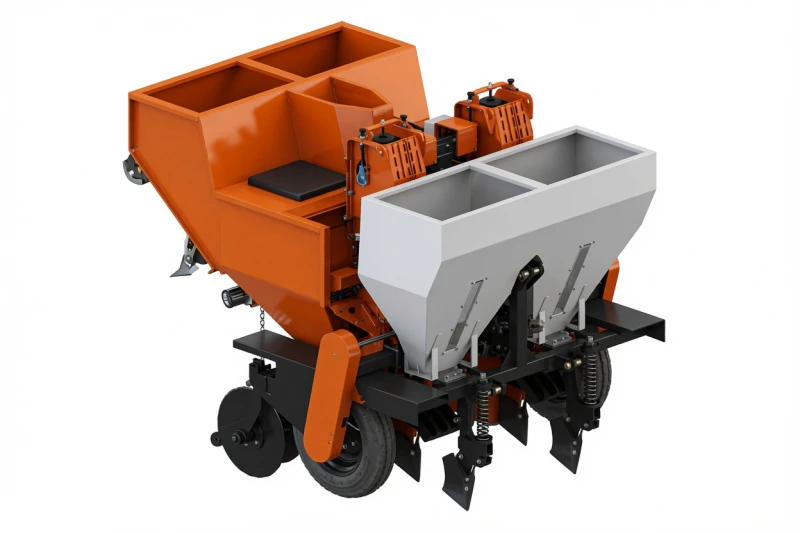
Your Market Determines Your Spacing. Your Equipment Must Match.
Every implement in the chain — from seedbed preparation to harvest — must operate at the same row spacing. All our equipment adjusts from 60 to 100 cm and is pre-configured at the factory to your specification. Contact us with your spacing requirement and we will deliver a matched, ready-to-plant system. Factory-direct pricing, worldwide delivery.
|
Equipment Quote Pre-configured to your spacing |
Spacing Advice Market + climate recommendation |
Dealer Inquiries Full potato equipment range |