Every Machine Your Potato Operation Needs — In the Right Sequence
Potato farming is the most equipment-intensive arable crop. From the moment raw land is cleared to the moment harvested tubers enter storage, a potato crop passes through eight distinct mechanized stages — each requiring specific implements designed for that exact task. Skip a stage, use the wrong machine, or get the sequence wrong, and the entire crop pays the price in reduced yield, quality, and profitability.
This guide maps every stage of the potato production cycle to the specific equipment needed, explains what each machine does and why, and identifies the key decision points where equipment choice directly impacts your bottom line. Whether you are planning a new potato operation from scratch, upgrading an existing farm’s equipment chain, or a dealer building a potato equipment product range — this is the complete reference.
Stage 1: Stone Management — Protecting Every Machine That Follows
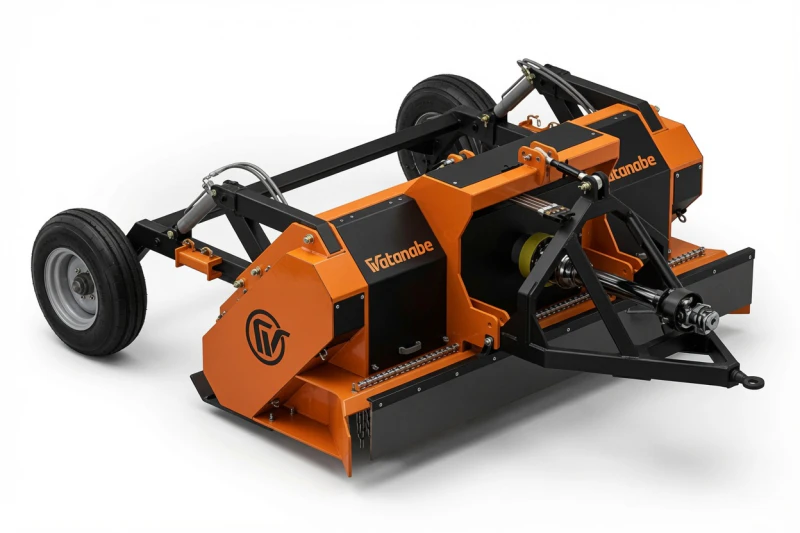
Potatoes are the most stone-sensitive crop in agriculture. Stones in the soil damage planter mechanisms during planting, obstruct root development during growing, and bruise tubers during harvest. Every subsequent stage in this guide works better, faster, and cheaper on stone-free ground. Stone management is not optional for serious potato production — it is the foundation the entire operation is built upon.
| Equipment | Function | Power | When to Use |
|---|---|---|---|
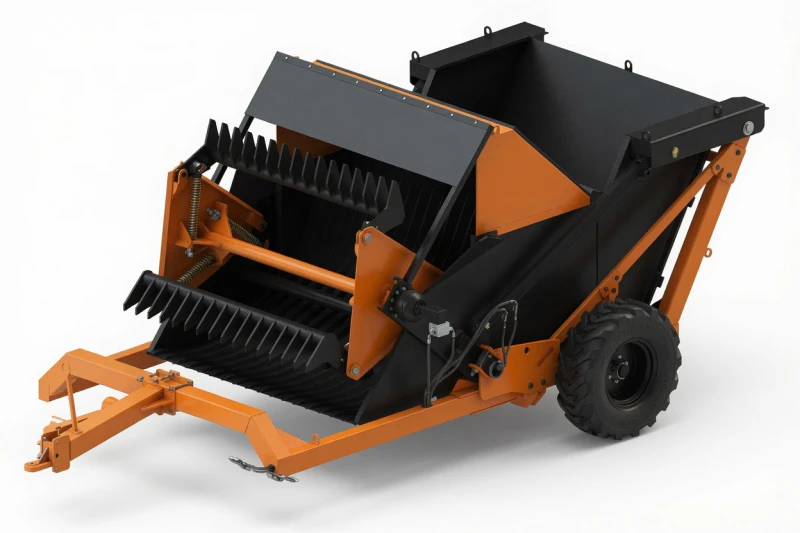
| EW-4000 Rock Rake | Windrow surface stones for collection | 75-100 hp | Light stones; pre-step before picking or crushing |
| CT-2100 Rock Picker | Collect and remove stones from field | 110 hp | Moderate stones; need physical removal |
| THOR 2.4 / 3.0 Stone Crusher | Permanently destroy stones in place | 180-230 hp | Best for potato land — permanent solution |
Potato Grower’s Recommendation: If you grow potatoes commercially and have 180+ hp available, invest in stone crushing. It permanently eliminates the single largest source of harvest damage, equipment breakdowns, and grading losses in potato production. The payback is typically 2 to 4 seasons through reduced damage alone.
Stage 2: Primary Tillage — Opening the Soil
After stone management, break up soil compaction and incorporate surface residues with mouldboard ploughing (25 to 30 cm) or deep cultivation. On stone-crushed land, ploughing distributes the beneficial crushed particles through the full plough depth, maximizing drainage improvement in the root zone. Plough in autumn where climate allows — winter weathering further breaks down clods and improves spring seedbed quality.
Stage 3: Seedbed Preparation — Creating the Perfect Tilth
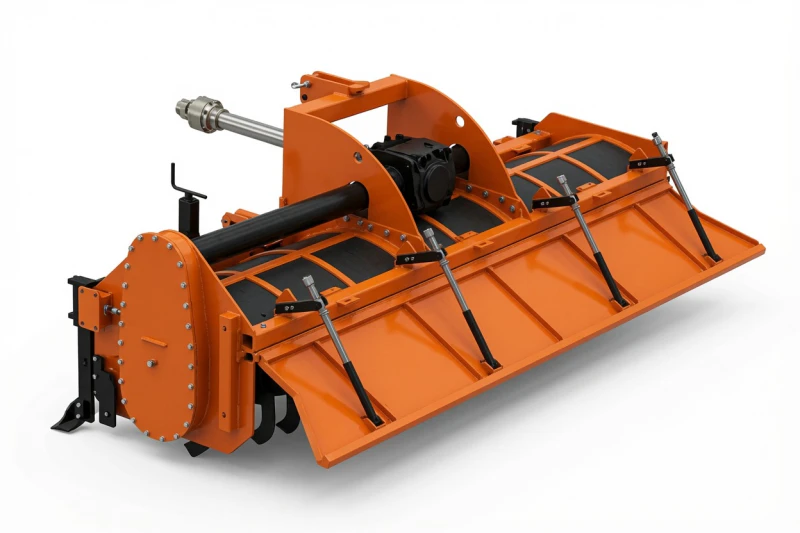
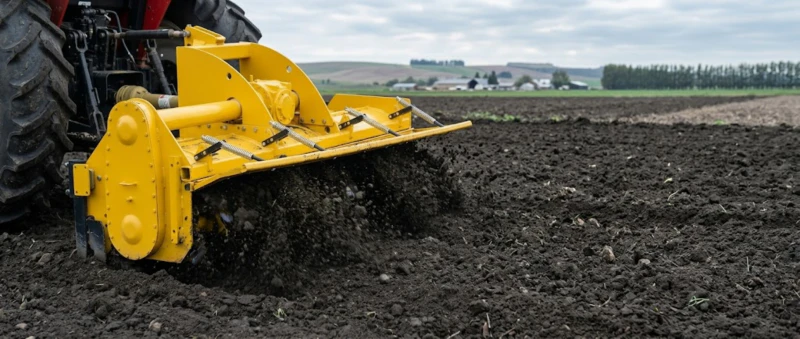
The ploughed ground must be refined into a fine, uniform tilth for ridge formation and planting. This is where the rotavator excels — its PTO-driven blades break down clods and create an even, friable surface ideal for potato ridge building.
| Equipment | Function | Power | Unique Advantage |
|---|---|---|---|
| PSW-3200 Rotavator | Fine seedbed + bury residual stones | 140 hp | 3.2 m width; stone burying dual function |
| PSW-3200B Rotavator | Seedbed + stone burying + fertilizer | 140 hp | Integrates 2,000 kg fertilizer bunker |
Stage 4: Fertilizer Application — Feeding the Crop
Potatoes are heavy feeders requiring substantial NPK, potassium, and magnesium inputs. Banded application — placing fertilizer in the root zone rather than broadcasting across the entire surface — delivers 20 to 40 percent higher nutrient efficiency, saving money on inputs and reducing environmental run-off.
| Equipment | Rows | Total Capacity | Power |
|---|---|---|---|
| ADB-380 Fertilizer Applicator | 3 | 1,050 kg | 75 hp |
| ADB-480 Fertilizer Applicator | 4 | 1,400 kg | 85 hp |
Stage 5: Ridge Formation — Shaping the Planting Bed
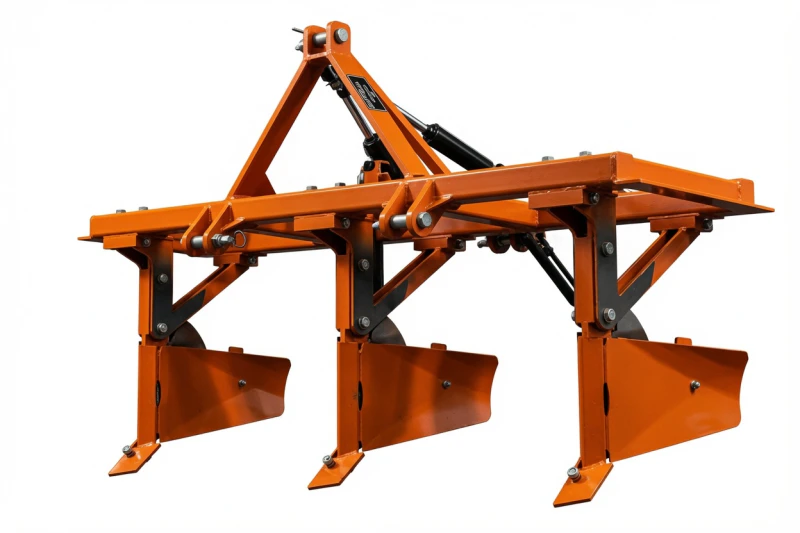
Potato ridges provide a raised, well-drained planting zone that protects developing tubers from greening (light exposure), improves drainage around the root zone, and establishes the row pattern for subsequent operations.
| Equipment | Rows | Speed | Power |
|---|---|---|---|
| R-380 Potato Furrower | 3 | 5-8 km/h | 75 hp |
| R-580 Potato Furrower | 5 | 5-8 km/h | 85 hp |
Streamline Option — 3-in-1: The ERA Series Rotary Cultivator (2/3/5-row) combines Stages 3, 4, and 5 into a single pass — secondary tillage, banded fertilizer application, and ridge formation from one machine. This replaces three implements and three field passes with one, dramatically reducing time, fuel, and compaction.
Stage 6: Planting — Precision Seed Placement
Modern potato planters place seed tubers at precise spacing and depth, apply fertilizer, and optionally treat with in-furrow insecticide — all in a single planting pass. The choice of planter depends on your farm scale, required features, and tractor power:
| Planter | Rows | Seed | Fertilizer | Insecticide | HP |
|---|---|---|---|---|---|
| PANTHER 2-Row | 2 | 700 kg | 680 kg | 200/300 L | 85 |
| PANTHER 3-Row | 3 | 750 kg | 600 kg | 300 L | 100 |
| PANTHER 4-Row | 4 | 1,200 kg | — | 300 L | 125 |
| PAI-2100 | 2 | 350 kg | 200 kg | 200/300 L | 75 |
| PAI-480-AR | 4 | 4,000 kg | 2,000+500 kg | 300/600 L | 140 |
Stage 7: Growing Season — Hilling and Crop Management
After emergence, potato plants need one or more hilling passes to mound additional soil around the growing stems. This covers developing tubers (preventing greening), improves drainage, and controls inter-row weeds. The same furrowers used in Stage 5 are used for hilling — the R-380 and R-580 Potato Furrowers operate at 5 to 8 km/h for fast, efficient hilling across large acreages.
Additional growing-season tasks include supplemental fertilizer application (side-dressing with the ADB-380/480), irrigation management, and pest and disease control (spraying). The in-furrow insecticide applied at planting (Stage 6) provides early-season protection, reducing or eliminating the need for follow-up insecticide applications.
Stage 8: Haulm Destruction — Preparing for Harvest
Ten to fourteen days before harvest, the potato haulm (foliage) must be killed or destroyed. This stops tuber growth, allows the skin to set and harden for harvest handling, and reduces green vine material that can clog harvesting equipment. Methods include chemical desiccation (spraying), mechanical flailing, or a combination of both. Skin set is critical — soft-skinned tubers suffer dramatically more damage during mechanical harvesting.
Stage 9: Harvest — The Most Critical Mechanized Stage
Harvesting is where every previous investment either pays off or is wasted. On properly prepared, stone-free ground with set-skin tubers, mechanical harvesting produces clean, undamaged potatoes ready for market. On stony, poorly prepared ground, harvest damage rates can reach 10 to 20 percent — wiping out profit margins entirely.
Three levels of harvest mechanization, from basic to fully automated:
|
Level 1: Mounted Potato Digger (AWB Series) AWB-1600 / A / B / C — 2-row, 3-point mounted, 75-95 hp. Digs and sieves 2 rows, deposits clean tubers in a windrow for hand or mechanical collection. Four models from entry-level (800 kg, 75 hp, no hydraulics) to professional (1,350 kg, 95 hp, 2 hydraulic valves). Working speed 3-5 km/h. The most affordable entry into mechanized potato harvesting. |
|
Level 2: Trailed Potato Digger (AWB Trailed Series) AWB-1600 AAR / BAR / CAR — 2-row, trailed (own chassis and wheels), 95 hp. Same dig-sieve-windrow function but at 5-10 km/h — up to double the speed of mounted diggers. The trailed chassis provides superior stability, zero rear-axle load, and smoother digging at high speed. Three models from standard to professional. |
|
Level 3: Elevator Harvester (CWB-2L) CWB-2L Potato Harvester — 2-row, trailed, 100 hp. The fully mechanized solution: digs, separates through multiple sieve stages, removes haulm, and loads clean potatoes directly into a trailer via a 3.9 m high-reach elevator. Zero manual picking required. One tractor, one operator, field-to-trailer in a single pass. |
The Complete Potato Equipment Map
| Stage | Operation | Equipment Options | Min. HP |
|---|---|---|---|
| 1 | Stone management | EW-4000 Rake / CT-2100 Picker / THOR Crusher | 75-230 |
| 2 | Primary tillage | Mouldboard plough / subsoiler | 100+ |
| 3 | Seedbed preparation | PSW-3200 Rotavator (or ERA 3-in-1) | 75-140 |
| 4 | Fertilizer application | ADB-380 / ADB-480 (or ERA / PSW-3200B built-in) | 75-85 |
| 5 | Ridge formation | R-380 / R-580 Furrower (or ERA built-in) | 75-85 |
| 6 | Planting | PANTHER (2/3/4-row) / PAI-2100 / PAI-480-AR | 75-140 |
| 7 | Hilling | R-380 / R-580 Furrower (same as Stage 5) | 75-85 |
| 8 | Haulm destruction | Flail mower / desiccant sprayer | 75+ |
| 9 | Harvest | AWB Mounted / AWB Trailed / CWB-2L Harvester | 75-100 |
Three Equipment Packages for Three Farm Scales
| Stage | Starter (10-30 ha, 75 hp) | Commercial (30-150 ha, 100-140 hp) | Industrial (150+ ha, 230+ hp) |
|---|---|---|---|
| Stones | EW-4000T Rake | CT-2100 Picker | THOR 3.0 Crusher |
| Seedbed + Fert + Ridge | ERA-2100 (3-in-1) | PSW-3200B + R-580 | PSW-3200 + ADB-480 + R-580 |
| Planting | PAI-2100 | PANTHER 3-Row | PAI-480-AR |
| Harvest | AWB-1600 Digger | AWB Trailed Digger | CWB-2L Harvester |
Frequently Asked Questions
|
Q1: What is the minimum tractor power to start a potato operation? 75 hp. With a 75 hp tractor, you can operate the EW-4000T rock rake, ERA-2100 rotary cultivator (3-in-1), PAI-2100 planter, R-380 furrower, ADB-380 fertilizer applicator, and AWB-1600 digger — a complete chain from soil prep to harvest. As you scale up, a second larger tractor (140-230 hp) adds stone crushing and higher-capacity implements. |
|
Q2: Can the ERA rotary cultivator really replace three separate machines? Yes. The ERA combines secondary tillage (rotary blades), banded fertilizer application (125 kg per row hoppers), and ridge formation (spring furrowers) in a single pass. It replaces a standalone rotavator, a separate fertilizer applicator, and a potato furrower — saving the purchase cost, storage, and operating time of three machines. |
|
Q3: What is the difference between a potato digger and a potato harvester? A digger lifts and sieves potatoes, then deposits them in a windrow on the soil surface for manual or mechanical collection. A harvester does all of that plus loads the potatoes directly into a trailer via an elevator — zero manual picking. The AWB series are diggers; the CWB-2L is a harvester. |
|
Q4: Is stone management really necessary for potatoes? On stony land, it is the single highest-impact investment you can make. Stones cause 10 to 20 percent more tuber damage at harvest, increase grading losses, accelerate equipment wear, and create uneven seedbeds that reduce yield uniformity. Every other piece of equipment in the chain works better and lasts longer on stone-free ground. |
|
Q5: Should I buy the PANTHER or PAI planter? The PANTHER series (2/3/4-row, 85-125 hp) is the mid-range all-rounder with integrated fertilizer on 2- and 3-row models. The PAI series spans from entry-level (PAI-2100: 2-row, 75 hp, 350 kg seed) to industrial-scale (PAI-480-AR: 4-row, 140 hp, 4,000 kg seed with dual fertilizer). Choose based on your scale: PANTHER for 30-150 ha, PAI-480-AR for 150+ ha. |
|
Q6: How many hectares per day can each harvesting level handle? AWB mounted digger: 4-6 ha/day (plus hand-picking time). AWB trailed digger: 8-12 ha/day (plus collection time). CWB-2L elevator harvester: 4-5 ha/day of fully harvested, trailer-loaded potatoes with zero manual picking. The CWB-2L has lower raw hectarage but eliminates the entire picking crew cost. |
|
Q7: What is the advantage of banded vs. broadcast fertilizer for potatoes? Banded application places fertilizer directly in the root zone — 20 to 40 percent more efficient than broadcasting. You achieve equal or better yield with less fertilizer, saving input costs and reducing environmental run-off. The ADB-380/480 applicators and ERA cultivator all provide banded application. |
|
Q8: Can I start small and expand my equipment over time? Absolutely. The “Starter” package (ERA-2100 + PAI-2100 + AWB-1600) runs on a single 75 hp tractor and covers 10-30 hectares. As acreage grows, add larger implements (R-580, PANTHER 3-Row, AWB Trailed) and eventually the CWB-2L harvester. Each upgrade is additive — nothing purchased earlier becomes obsolete. |
|
Q9: Do you supply the entire equipment chain? Yes. We manufacture every implement in this guide: rock rakes, rock pickers, stone crushers, rotavators, rotary cultivators, fertilizer applicators, potato furrowers, potato planters, potato diggers, and the potato harvester. One manufacturer, one quality standard, one point of contact, factory-direct pricing on the complete system. |
|
Q10: How do I get a customized equipment plan for my potato operation? Contact our potato equipment team with your total hectares, tractor fleet (models and HP), stone conditions, target yield, and budget range. We will design a complete stage-by-stage equipment plan with specific model recommendations and factory-direct pricing for every machine. |
Ready to Equip Your Potato Operation?
From the first stone crushed to the last tuber harvested, we supply every machine in the potato production chain. One manufacturer, one consistent quality standard, factory-direct pricing, and a dedicated team that understands potato farming from soil to storage.
|
Custom Equipment Plan Matched to your farm |
Complete System Quote Every machine, one price |
Dealer Opportunities Full potato range distribution |
Contact Us — Get Your Complete Potato Equipment Plan and Pricing