Dust Is Not Just an Annoyance. It Is a Health Hazard, a Crop Hazard, and a Cost.
On any farm, plantation, quarry, or rural operation with unpaved roads, dust is a constant companion during the dry season. Every truck, tractor, trailer, and vehicle that passes raises a cloud of fine particulate matter that drifts across adjacent fields, settles on crops, enters buildings, coats equipment, reduces visibility, and — most critically — is inhaled by every person and animal working nearby.
Dust is not cosmetic. It is a documented occupational health hazard (respiratory disease, silicosis), an agricultural production hazard (reduced photosynthesis, contaminated produce), and a financial cost (vehicle air filter replacement, equipment wear, crop quality downgrade). On operations where unpaved roads are used intensively — 20 to 100+ vehicle passes per day — the cumulative damage from dust is significant, measurable, and entirely preventable.
This guide compares the four common dust control methods, explains why three of them are temporary and why one — soil stabilization — is the only permanent solution, and provides the equipment specification for eliminating dust on your road network once and for all.
The Real Cost of Dust: What You Are Already Paying
|
Human Health Respirable dust particles (PM2.5 and PM10) penetrate deep into the lungs. Chronic exposure causes respiratory inflammation, reduced lung function, aggravated asthma, and — for soils containing crystalline silica — silicosis, a progressive, irreversible lung disease. Farm workers, truck drivers, and residents near unpaved roads are exposed daily during the dry season. This is a workplace health liability that dust control directly eliminates. |
|
Crop Contamination and Yield Loss Dust settles on leaf surfaces, blocking light and clogging stomata — the pores through which plants breathe and regulate water. Research shows that heavy dust deposition can reduce photosynthesis by 10 to 30 percent in crops within 50 to 100 meters of unpaved roads. For fruit, vegetable, and salad growers, visible dust contamination on produce requires additional washing (cost), causes downgrading (revenue loss), or leads to buyer rejection (total loss). |
|
Vehicle and Equipment Damage Dust is abrasive. It wears engine air filters (requiring replacement 2 to 5 times more frequently than on paved roads), infiltrates hydraulic systems, accelerates bearing and seal wear, and corrodes electrical connections. On a farm fleet of 5 to 10 vehicles operating daily on dusty roads, annual maintenance costs attributable to dust-related wear can exceed the one-time cost of stabilizing the worst road sections. |
|
Visibility and Safety Dust clouds from passing vehicles reduce visibility to near zero for following drivers. On single-lane farm roads, this is a collision hazard — oncoming vehicles are invisible through the dust cloud. Reducing speed to avoid dust clouds reduces transport productivity; not reducing speed risks accidents. |
|
Neighbor and Community Relations Dust from farm roads that drifts onto neighboring properties, homes, gardens, and public roads generates complaints, damages relationships, and in some jurisdictions creates legal liability. Operations near residential areas face increasing regulatory pressure to control dust emissions from unpaved surfaces. |
Four Dust Control Methods Compared: From Temporary to Permanent
| Method | How It Works | Duration | Repeat Cost | Road Strength? |
|---|---|---|---|---|
| Water spraying | Wets the surface to suppress dust | Hours (evaporates) | Daily — continuous | No |
| Calcium chloride | Absorbs moisture from air, keeps surface damp | Weeks to months | 2-4 times per year | No |
| Bitumen emulsion seal | Thin asphalt spray coat on surface | 6-18 months | Annual re-application | Surface only (no base strength) |
| Soil stabilization | Binder chemically bonds soil particles | 5-10+ years | One-time (re-treat every 5-10 yr) | Yes — full structural improvement |
Why Temporary Methods Fail — and Keep Costing You Money
|
Water Spraying: The Never-Ending Expense Water suppresses dust only while the surface is wet. In warm, dry conditions, a sprayed road surface dries within 1 to 4 hours. A 5 km road sprayed twice daily requires 40,000 to 80,000 liters of water per day, plus the fuel and labor to operate the water truck continuously. Over a 6-month dry season, the cumulative cost of water, fuel, truck wear, and driver time easily exceeds the one-time cost of stabilizing the worst sections. And next year, you start again from zero. |
|
Calcium Chloride: Better, But Still Temporary Calcium chloride (CaCl₂) is a hygroscopic salt that absorbs atmospheric moisture to keep the road surface damp. It lasts longer than water (weeks to months depending on climate and traffic), but it does not strengthen the road, it dissolves in heavy rain and must be reapplied, it is corrosive to vehicles and equipment, and it leaches into soil and waterways — raising environmental concerns. For a 5 km road, annual CaCl₂ costs (product + spreading + 2-4 re-applications) represent a permanent recurring expense with no lasting road improvement. |
|
Bitumen Emulsion: Surface Only A thin bitumen spray seals the surface to trap dust, but it does not penetrate or strengthen the underlying soil. Under heavy traffic, the thin seal cracks, peels, and breaks apart within 6 to 18 months — faster in hot climates. The broken seal produces bitumen fragments that contaminate the road surface and require cleanup before re-application. Each re-application adds another layer of cost without ever solving the underlying problem: weak, unstable soil. |
Why Soil Stabilization Eliminates Dust Permanently
Dust is generated when loose soil particles on the road surface are lifted by vehicle tires and wind. The reason unpaved roads produce dust is that the soil particles are not bonded to each other — they sit loosely on the surface, free to become airborne at the slightest disturbance.
Soil stabilization with lime or cement creates permanent chemical bonds between soil particles. Lime triggers ion exchange and pozzolanic cementation in clay particles. Cement forms calcium silicate hydrate bonds between all particle types. In both cases, the previously loose particles are locked into a rigid or semi-rigid matrix that cannot be separated by tire action or wind.
The result is a bound surface that behaves like a low-grade pavement: smooth, solid, and dust-free — not because it is wet (water spraying) or coated (bitumen), but because the soil itself has been permanently transformed at the particle level. No re-application is needed. No seasonal treatment. The road stays dust-free until the stabilized layer eventually wears through after 5 to 10+ years of traffic — at which point a single re-treatment refreshes it.
The Dust Elimination Process: Two Machines, One Day
|
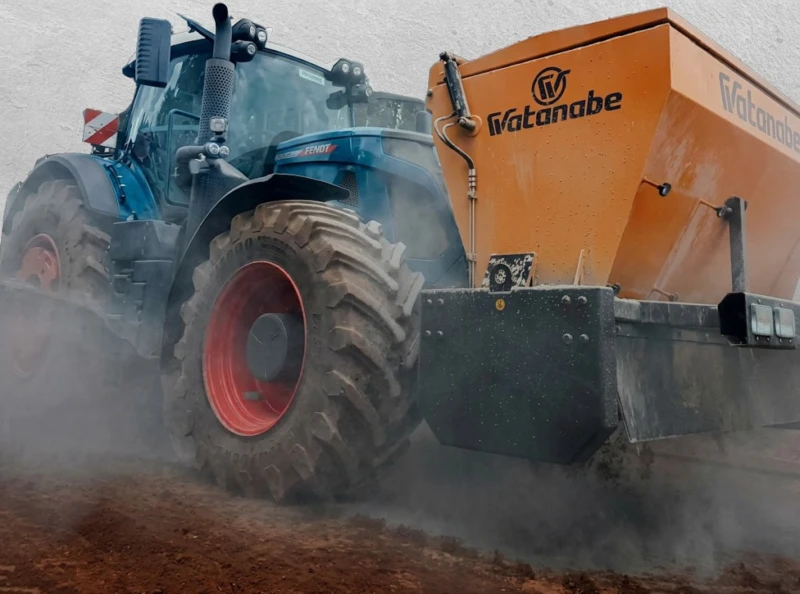
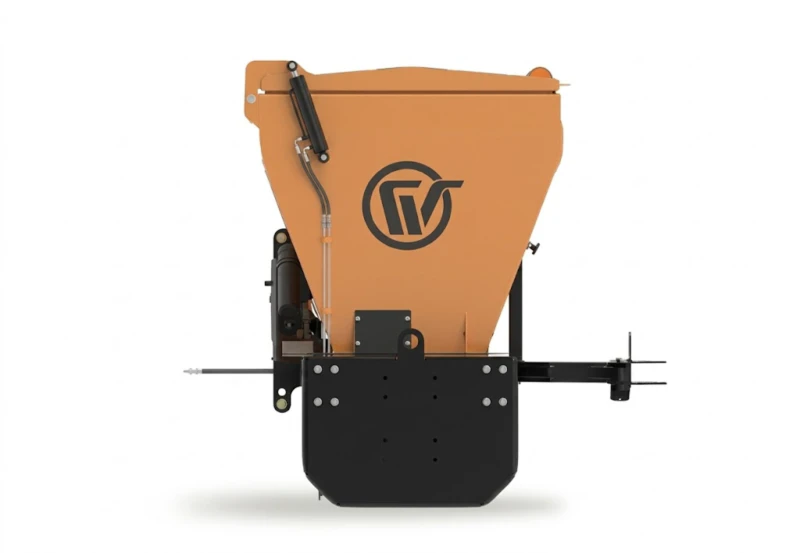
1. Spread binder → DCW 2.2 Binder Spreader Distribute lime or cement uniformly across the dusty road surface. The DCW 2.2’s 2,200 kg hopper and calibrated metering ensure consistent coverage — the foundation of a uniform, dust-free result. |
|
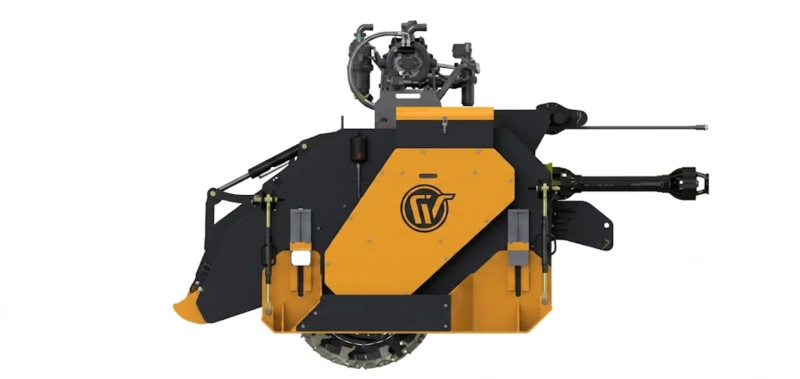
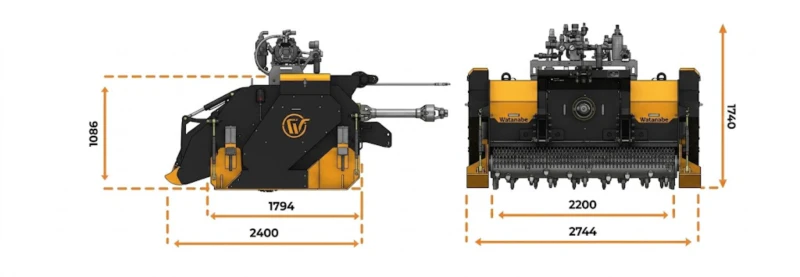
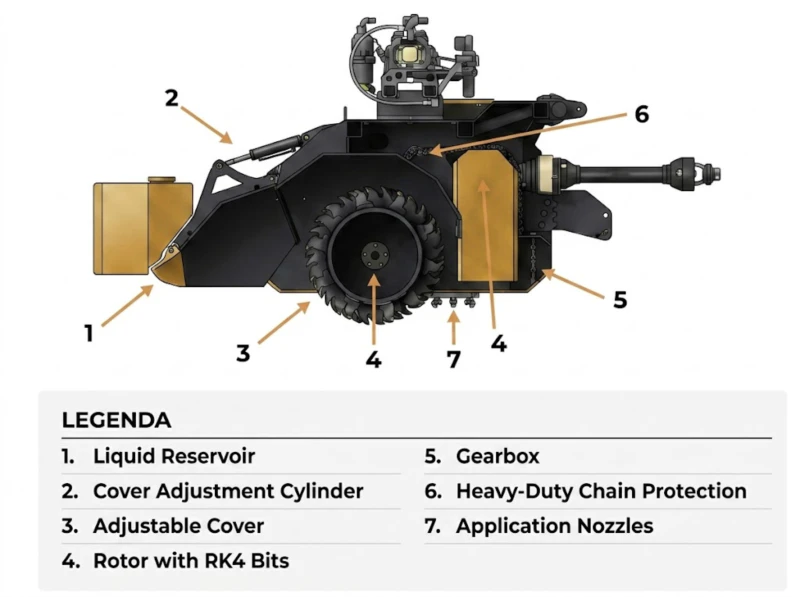
2. Mix into soil → THOR ST Soil Stabilizer The THOR ST mixes the binder into the soil to 25 to 40 cm depth, creating a homogeneous stabilized layer. The tungsten carbide rotor pulverizes clods and stones while blending — every particle contacts the binder. |
|
3. Grade → Standard grader or blade Shape the mixed material into a crowned profile for drainage. The grading step creates the smooth, even surface that remains dust-free under traffic. |
|
4. Compact → Vibratory roller Compact to maximum density. The compacted, bonded surface is immediately dust-free — and stays that way for years. Cure cement-stabilized roads for 3 to 7 days with light watering for maximum durability. |
For the complete step-by-step operational guide, see: The Complete Rural Road Construction Workflow: Spread, Mix, Grade, Compact.
ROI: Stabilization vs. Ongoing Dust Suppression Over 10 Years
| Cost Over 10 Years (5 km road) | Water Spraying | Calcium Chloride | Soil Stabilization |
|---|---|---|---|
| Initial treatment | Zero | Product + spreading | Binder + DCW + THOR ST |
| Annual repeat cost | High (water + fuel + labor × 6 months) | Moderate (2-4 applications/yr) | Near zero (minor maintenance) |
| Re-treatment (Year 5-7) | N/A (ongoing) | N/A (ongoing) | One re-mix (binder + THOR ST pass) |
| Road strength improvement? | None | None | Yes — structural improvement |
| Wet-weather access? | No (road still mud in rain) | No | Yes — all-weather access |
| 10-year total cost trajectory | Escalating every year | Constant every year | Front-loaded then near zero |
The tipping point: On most operations, the total cost of water spraying or CaCl₂ over 3 to 5 years exceeds the one-time cost of soil stabilization. Every year after that, stabilization costs near zero while the alternatives continue accumulating. At year 10, stabilization has typically cost 40 to 60 percent less in total — and delivered a structurally improved, all-weather road that the alternatives never provide.
Where to Start: Prioritizing Road Sections for Dust Elimination
If your budget does not allow stabilizing the entire road network at once, prioritize these sections first — they deliver the highest immediate return on dust elimination investment:
|
1. Roads adjacent to crops, orchards, or greenhouses These produce the highest cost per meter of dust — crop contamination, yield reduction, and produce downgrading from dust deposition. Stabilize these first to protect revenue. |
|
2. Roads near residences, offices, and livestock housing Health exposure is highest where people and animals spend the most time. Dust entering buildings degrades indoor air quality, damages electronics and equipment, and creates chronic respiratory risk. |
|
3. Main haul roads with the highest daily traffic Dust generation is proportional to traffic volume. The busiest road produces the most dust per meter per day and benefits most from permanent elimination. On many operations, 80 percent of total dust comes from 20 percent of the road network — the main haul route. |
|
4. Road sections near property boundaries Dust that crosses your property boundary becomes your neighbor’s problem — and potentially your legal liability. Prioritize boundary-adjacent sections to maintain community relations and regulatory compliance. |
Frequently Asked Questions
|
Q1: Does stabilization really stop ALL dust? On the stabilized surface itself: yes. A properly stabilized road produces zero dust — the particles are chemically bonded and cannot become airborne. Dust from unstabilized shoulders or adjacent bare ground may still be present; extending the stabilized width by 0.5 to 1 m beyond the traffic lane addresses this. For complete dust elimination, stabilize the full road surface including shoulders. |
|
Q2: Which binder is best for dust control? Both lime and cement eliminate dust permanently. The choice depends on soil type, not dust severity. See our guide: Lime vs Cement Stabilization: How to Choose. For pure dust control on a road that does not need heavy-traffic structural strength, lime at lower dosage rates (2-3 percent) is often the most cost-effective option. |
|
Q3: How soon after stabilization is the road dust-free? Immediately after compaction. The bonded, compacted surface does not release particles. For cement stabilization, the road becomes progressively harder over the first 7 to 28 days as cement curing completes, but dust elimination is immediate from the moment of compaction. |
|
Q4: Can I stabilize just the dustiest sections instead of the entire road? Absolutely. Section-by-section treatment is the most practical approach for budget-constrained operations. Stabilize the highest-priority sections first (near crops, residences, or highest traffic) and add remaining sections as budget allows. Each stabilized section immediately eliminates dust for that portion of the road — the benefit is incremental and immediate. |
|
Q5: Is stabilization environmentally better than CaCl₂? Yes. Lime and cement are inert once reacted with the soil — they do not leach, dissolve, or migrate into waterways. Calcium chloride is a soluble salt that washes off during rain and accumulates in roadside soil and water — raising chloride levels that can damage vegetation, contaminate groundwater, and corrode infrastructure. Stabilization is the environmentally preferable long-term solution. |
|
Q6: Can the DCW 2.2 also spread CaCl₂ for interim dust control? The DCW 2.2 is designed for powdered binders (lime, cement). Calcium chloride is available in flake or pellet form that the DCW 2.2 can distribute, but CaCl₂ provides only temporary dust suppression — not permanent stabilization. For interim control while planning a stabilization project, CaCl₂ via the DCW 2.2 is a practical short-term option. |
|
Q7: Do you supply all the equipment needed? We supply the DCW 2.2 Binder Spreader and THOR ST Soil Stabilizer — the two machines that perform the binder spreading and soil mixing steps. Grading and compaction are performed by standard equipment (grader and roller) that most operations already own or can readily hire. |
|
Q8: How do I get a quote for dust elimination equipment? Contact our team with your total road length, soil type, daily traffic volume, and dust-related problems (crop damage, health concerns, neighbor complaints). We will recommend the right equipment configuration and binder approach, and provide factory-direct pricing for the complete dust elimination system. |
Stop Suppressing Dust. Start Eliminating It.
Water spraying suppresses dust for hours. Calcium chloride suppresses it for weeks. Soil stabilization eliminates it for years — and improves the road’s structural strength at the same time. Two machines, one treatment, permanent results. DCW 2.2 + THOR ST, factory-direct pricing, worldwide delivery.
|
Dust Elimination Quote DCW 2.2 + THOR ST system |
Road Assessment Priority sections identified |
Contractor Equipment Dust control service fleet |