The Repair Bill You Accept as “Normal” Is Anything But Normal
Every farmer on stony ground knows the sound: the sudden metallic crack of a plough point hitting rock, the grinding shudder through the tractor seat when a cultivator tine strikes a buried boulder, the sickening snap of a shear bolt letting go on the PTO shaft. These events are so routine on stony farms that most operators have stopped questioning them. Bent tines are straightened and reused. Broken plough points are replaced as a consumable. Shear bolts are bought in bulk. The annual repair budget absorbs it all, and farming continues.
But “routine” does not mean “acceptable.” When you add up every bent tine, every snapped bolt, every cracked casting, every premature bearing failure, every emergency workshop visit, every hour of field downtime, and every replacement part ordered mid-season at rush pricing — the annual cost of stone-related equipment damage on a typical 100-hectare stony farm is staggering. Studies across European farming operations estimate this hidden cost at 15 to 40 percent of annual tillage and harvesting equipment maintenance budgets.
This article quantifies the damage stones cause to specific equipment components, explains the four prevention strategies available, and calculates the return on investment of each — proving that preventing stone damage is dramatically cheaper than repairing it, year after year.
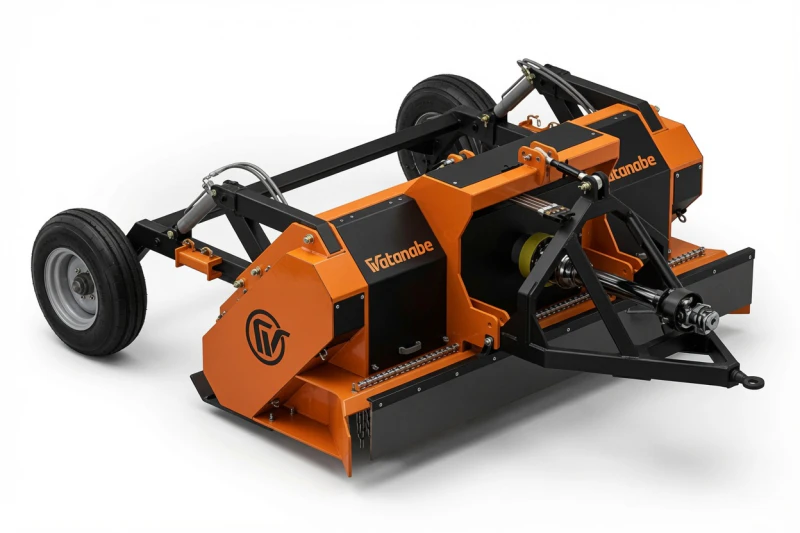
The Damage Catalogue: What Stones Do to Your Equipment
Stone damage is not limited to obvious breakage. It affects virtually every ground-engaging implement on the farm, often in ways that are invisible until a component fails catastrophically. Here is the complete picture:
|
Ploughs and Subsoilers Immediate damage: Bent or snapped mouldboard plough points. Cracked landsides. Deformed subsoiler legs. Sheared mounting bolts. Accelerated wear: Plough shares wear 2 to 3 times faster on stony ground than on stone-free soil. Share replacement frequency doubles or triples. Collateral damage: Repeated stone impacts stress the plough frame, headstock, and three-point hitch pins, causing fatigue cracks that eventually lead to catastrophic structural failure. |
|
Cultivators and Harrows Immediate damage: Bent or broken tines and sweeps. Spring-loaded tines lose tension from repeated overload. Rigid tines snap at the mounting point. Accelerated wear: Tine points and sweeps that should last 500+ hectares wear out in 100 to 200 hectares on stony ground. Operational impact: Bent tines create uneven cultivation depth, leading to inconsistent seedbed quality, uneven emergence, and ultimately lower yields. |
|
Seed Drills and Planters Immediate damage: Broken coulter discs and opener shoes. Damaged seed-metering mechanisms from vibration and shock. Cup-belt jams in potato planters. Operational impact: Stones deflect coulters and openers, creating uneven seed placement depth. Skips and doubles increase. Plant population is reduced and irregular, directly lowering yield potential. |
|
Potato Harvesters and Diggers Immediate damage: Bent or broken digging shares. Damaged sieve web rods. Jammed elevator chains. Crop damage: Stones in the ridge bruise and cut tubers during harvest, increasing grading losses by 10 to 20 percent. Downtime: A single large stone jamming a harvester can cause 30 to 60 minutes of field downtime — multiplied across a harvest season, this lost time is enormously expensive. |
|
Rotary Equipment (PTO-Driven) Immediate damage: Broken rotary blades and flails. Sheared PTO shaft bolts. Damaged gearbox bearings from shock loading. Safety risk: Stone ejection from rotary mowers and mulchers is a serious hazard — stones can be thrown 50+ meters at lethal velocity. Accelerated wear: Blade and flail life is reduced by 50 to 70 percent on stony ground. |
Adding It Up: The True Annual Cost of Stone Damage
Most farmers track individual repair events but rarely aggregate them into an annual total. When the numbers are compiled, the result is consistently surprising:
| Cost Category | Typical Annual Impact (100 ha stony farm) |
|---|---|
| Replacement parts (points, tines, blades, bolts, bearings) | Significant |
| Emergency repair labor (in-field and workshop) | Significant |
| Field downtime (lost productive hours during critical windows) | High (often the largest hidden cost) |
| Premature implement replacement (shortened machine life) | Moderate (amortized annually) |
| Yield loss from uneven seedbeds and damaged harvested crop | Significant (5 to 15 percent revenue reduction) |
| Estimated total annual cost | 15 to 40 percent of tillage/harvest maintenance budget |
Critically, this cost recurs every single year. It is not a one-time event — it is a permanent annual drain that compounds over the lifetime of the farm. Every year you farm stony ground without addressing the stones, you pay this invisible tax.
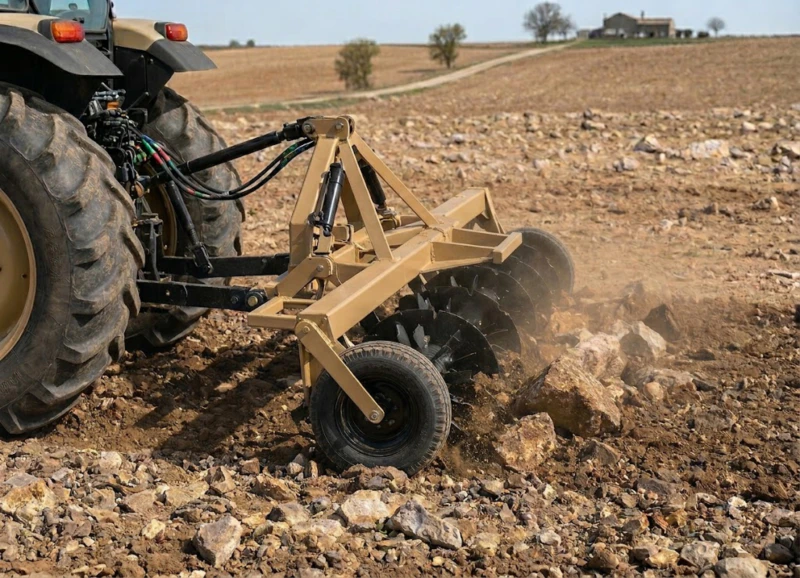
Four Strategies to Reduce Stone Damage — Ranked by Effectiveness
Each strategy addresses the stone damage problem at a different level — from minimizing impact when stones are hit to permanently eliminating the stones so impacts never occur.
|
Strategy 1: Equipment Hardening (Lowest Effectiveness) Approach: Use implements with stone-protection features: spring-loaded tines that trip over obstructions, auto-reset ploughs, overload shear bolts on PTO shafts, hardened or carbide-tipped wear parts, and stone-detection sensors on harvesters. Effectiveness: Reduces the severity of individual stone impacts but does not reduce the frequency. The stones are still there, still being hit on every pass. Wear rates remain high. Downtime is reduced but not eliminated. This is a damage-mitigation strategy, not a damage-prevention strategy. Cost-effectiveness: Low. Higher upfront cost for hardened implements, ongoing replacement of protection components (springs, shear bolts), and the underlying stone damage continues unabated. |
|
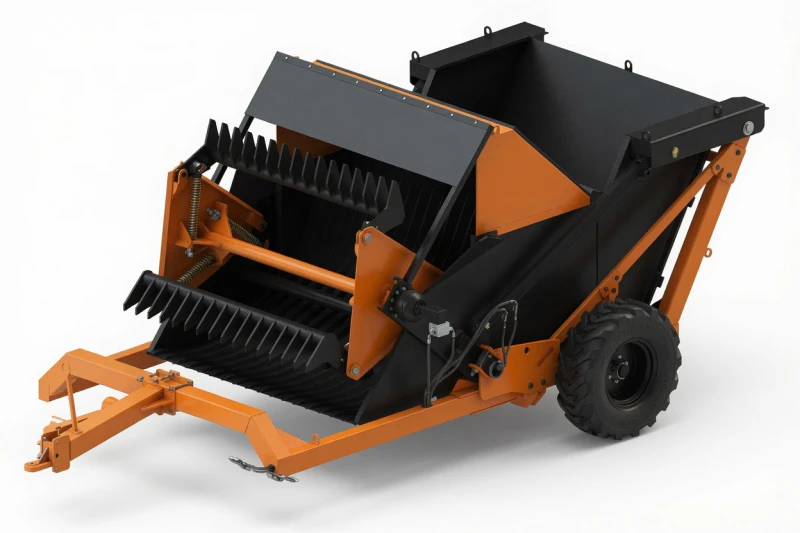
Strategy 2: Rock Raking and Picking (Moderate Effectiveness) Approach: Clear surface stones before each tillage season using a rock rake (EW-4000) to windrow stones, then a rock picker (CT-2100) to collect and remove them. Effectiveness: Significantly reduces stone impacts during the current season. Surface stones are physically removed. However, new stones emerge every year through frost heave and ploughing, requiring the raking and picking to be repeated annually or biannually. Subsurface stones below picking depth remain and continue to cause damage when hit by deep-working implements. Cost-effectiveness: Moderate. The annual raking and picking cost is offset by reduced repair bills and improved crop quality. However, the cost recurs indefinitely. |
|
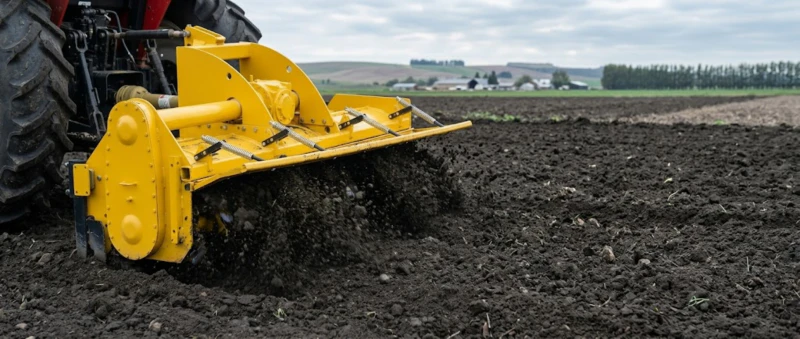
Strategy 3: Stone Burying With Rotavator (Good Effectiveness) Approach: Use a stone-burying rotavator (PSW-3200) to push surface and shallow-subsurface stones below the cultivation and harvesting depth. Implements then operate in a stone-free zone above the buried stone layer. Effectiveness: Very effective for the current season — tillage and harvesting equipment operate in stone-free soil. However, deep ploughing or subsoiling in subsequent years can bring buried stones back to the surface. The protection is real but not permanent. Cost-effectiveness: Good. The rotavator combines stone burying with seedbed preparation (dual function), making the incremental cost of stone management low. Needs repeating if you deep-plough, but effective for farms that maintain shallow tillage systems. |
|
Strategy 4: Stone Crushing (Maximum Effectiveness — Permanent) Approach: Use a stone crusher (THOR 2.4 or 3.0) to permanently pulverize all surface and subsurface stones into particles under 50 mm. The stones physically cease to exist as obstacles at any depth. Effectiveness: Complete and permanent. After crushing, there are no stones to hit — at any depth, in any season, regardless of tillage practice. Equipment damage from stones drops to essentially zero. Plough points last their full designed life. Tines stay straight. Harvesters operate without jams. Shear bolts stop breaking. Cost-effectiveness: Highest long-term value. The one-time crushing cost is typically recovered within 2 to 4 seasons through eliminated repair bills, avoided downtime, and improved crop quality. Every subsequent year is pure savings. |
Return on Investment: Prevention vs. Perpetual Repair
| Approach | Year 1 | Year 5 | Year 10 |
|---|---|---|---|
| Do Nothing (accept damage) | Full damage cost | 5 years of damage cost | 10 years of damage cost |
| Annual Raking + Picking | Service cost + reduced damage | 5 years of service cost | 10 years of service cost |
| Stone Burying (rotavator) | Purchase + operate | Purchase + 3-5 treatments | Purchase + 5-10 treatments |
| Stone Crushing (THOR) | Crush cost (highest year-1 spend) | Zero additional cost | Zero additional cost |
The pattern is unmistakable: doing nothing is the most expensive option over any time horizon beyond 2 years. Raking and picking reduce costs but create a permanent recurring expense. Stone burying is effective but needs periodic retreatment. Stone crushing has the highest year-1 cost but zero cost in every subsequent year — making it the lowest total cost over any ownership period beyond 3 to 4 years.
Practical Implementation: Where to Start
|
Step 1: Quantify your current stone damage costs Review your last 3 years of repair invoices and parts orders. Categorize stone-related items: plough points, tines, bolts, blades, bearings, emergency callouts. Include estimated downtime hours at your hourly operating cost. The total will likely surprise you — and provide the business case for investment. |
|
Step 2: Assess your stone severity Walk your worst fields and dig test holes. Determine stone size distribution and density. This tells you whether raking, picking, burying, or crushing is the appropriate response. Light surface stones may justify raking; heavy subsurface stones demand crushing. |
|
Step 3: Match the solution to your tractor power Rock raking requires 75 hp. Picking requires 110 hp. Stone burying requires 140 hp. Stone crushing requires 180 to 230 hp. If your fleet tops out at 140 hp, the rotavator is your best available tool. If you have 180+ hp or can hire a contractor, the crusher delivers the permanent solution. |
|
Step 4: Prioritize your worst fields first You do not have to treat the entire farm at once. Start with the fields that cause the most equipment damage and grow the highest-value crops. Treat those fields first, measure the repair cost reduction, and reinvest the savings into treating the next-worst fields. This self-funding approach makes stone management affordable for any budget. |
Frequently Asked Questions
|
Q1: How much does stone damage really cost per year? On a typical 100-hectare stony farm, stone-related equipment damage typically accounts for 15 to 40 percent of annual tillage and harvesting maintenance costs. This includes parts, labor, downtime, and accelerated implement replacement. The percentage is higher on heavily stony land and on farms growing root crops where harvesting equipment is also affected. |
|
Q2: Which implement suffers the most stone damage? Ploughs and subsoilers typically suffer the highest direct damage cost (broken points, bent legs, cracked castings). Potato harvesters suffer the highest indirect cost (crop damage from stones in the ridge). Rotary implements (PTO mowers, mulchers) suffer the highest safety risk from stone ejection. |
|
Q3: Do spring-loaded tines solve the stone problem? Spring-loaded tines reduce breakage when stones are hit but do not prevent the hit from occurring. The tine trips, the stone remains, and the next implement in the field hits the same stone. Springs are a damage-reduction feature, not a stone-management solution. They reduce the worst breakages but do not address the root cause. |
|
Q4: If I crush stones, will my plough points still wear? Yes, but at the normal designed wear rate — not the accelerated rate caused by stone impacts. On crushed, stone-free land, plough points typically last 2 to 3 times longer than on stony ground. The abrasive soil still wears metal gradually, but the sudden impacts that cause acute damage are eliminated. |
|
Q5: Is it worth treating rented land? If you are farming the land for 3+ years, the annual equipment damage savings alone typically justify at least raking and picking. For leases of 5+ years, stone crushing can deliver a positive return on investment through eliminated repair costs and improved crop yields. Even on rented land, protecting your own equipment from stone damage has immediate financial value. |
|
Q6: Can I just slow down on stony ground? Reducing speed reduces impact severity but also reduces productivity. If you halve your ploughing speed to protect equipment, you double the time and fuel cost per hectare — and still hit every stone, just at lower velocity. Slowing down is a temporary coping mechanism, not an economic solution. |
|
Q7: I have 75 hp. What is my best option? The EW-4000T Rock Rake (75 hp PTO) is your most accessible starting point. Windrow surface stones before each tillage season, then collect by hand or front-loader. This is the lowest-cost intervention that delivers measurable damage reduction. For more complete treatment, hire a contractor with a stone crusher for a one-time permanent solution. |
|
Q8: How do I convince my farm manager or landlord to invest in stone management? Compile your actual stone-related repair costs for the last 3 years. Present the total alongside the one-time cost of stone crushing. The comparison makes the business case clear: continuing to repair is more expensive than preventing the damage permanently. Add yield improvement projections for an even stronger argument. |
|
Q9: Do you supply all four types of stone management equipment? Yes. We manufacture rock rakes (EW-4000), rock pickers (CT-2100), stone-burying rotavators (PSW-3200), and stone crushers (THOR 2.4 and 3.0) — covering every prevention strategy at every budget level and tractor power class. |
|
Q10: How do I get a recommendation and quote? Contact our team with your stone severity, current annual repair cost estimate, tractor power, and farm size. We will recommend the most cost-effective prevention strategy and provide factory-direct pricing. |
Stop Repairing. Start Preventing.
Every season you continue farming stony ground without stone management, you pay an avoidable repair tax. The stone management equipment that eliminates this cost exists, fits your tractor, and is available at factory-direct pricing. The only question is how many more repair bills you want to absorb before making the investment.
|
Free Damage Cost Analysis Send your repair data |
Equipment Recommendation Matched to your situation |
Factory-Direct Pricing All stone management models |