They Picked the Same Stones Every Year for 20 Years. Then They Stopped.
For decades, European farmers on stony ground have relied on a familiar annual ritual: after ploughing, drive the rock picker or rock rake across the field, collect the stones that have surfaced, dump them in a pile at the field edge, and return to farming until next year — when the same process repeats, because a fresh crop of stones has been brought to the surface by frost heave, deep tillage, and soil settlement.
This cycle is so deeply embedded in farming culture that many growers accept it as a permanent feature of stony land — a recurring cost that cannot be avoided, only managed. But across Europe, a growing number of these same farmers are breaking the cycle. They are replacing their annual picking operation with a one-time stone crushing treatment that permanently destroys the stones to a depth of 25 to 40 cm — and never picking again.
This article examines why the switch is accelerating, what is driving it, and what the farmers who have already switched report about the results.
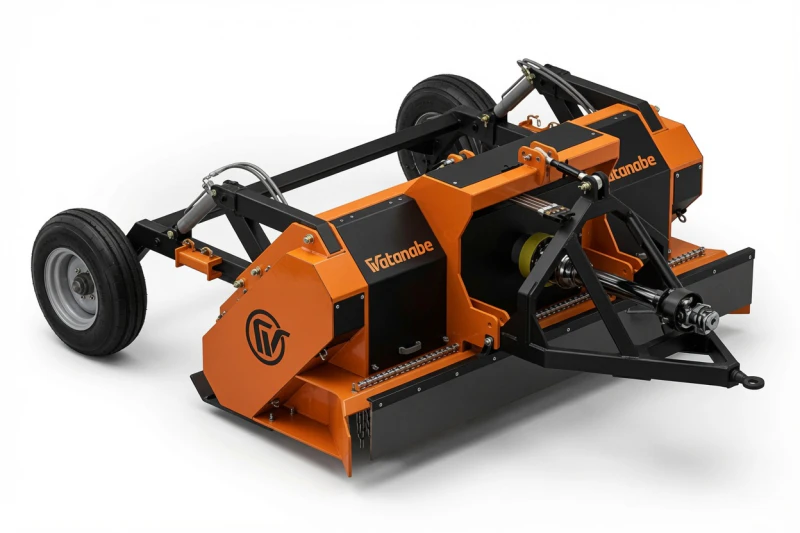
The Frustration That Drives the Switch
Farmers who pick stones annually know the problem intimately. The frustration builds over years — and eventually reaches a tipping point:
|
“I picked this field last spring. Where did these stones come from?” Frost heave pushes stones upward through the soil profile every winter. Deep ploughing turns up stones from below the picking depth. Soil settlement after heavy rain exposes stones that were buried just below the surface. A rock picker operating at 10 to 15 cm depth cannot remove stones residing at 20 to 40 cm — they remain in the soil, moving upward year by year. The supply of stones from below is effectively infinite; picking removes only the current crop of surface stones while the next crop is already migrating upward. |
|
“The stone pile at the field edge is the size of a house — and growing.” Twenty years of annual picking produces a massive stone pile that occupies productive land, creates a weed harbour, and has no economic value. In some European regions, disposing of agricultural stone is subject to waste management regulations — dumping is restricted, and licensed disposal costs money. The pile grows but never shrinks. |
|
“Picking costs me a full working day every spring — and the stones are back by autumn.” A rock picker on a 50-hectare field takes 5 to 10 working days annually — consuming tractor hours, fuel, and operator time during the busiest period of the agricultural calendar (spring preparation). This annual cost is not a maintenance event — it is a permanent operational overhead that delivers no lasting improvement. The field is never “done” because the problem renews itself every year. |
|
“My harvester still hits stones that the picker missed.” Rock pickers collect stones from the surface and shallow soil — typically the top 10 to 15 cm. Potato ridges extend to 20 to 30 cm depth. Stones between 15 and 30 cm remain in the ridge zone, unaffected by the picker, where they bruise tubers at harvest and damage sieve webs. The picker solved the surface problem but left the ridge-zone problem untouched. |
Rock Picking vs. Stone Crushing: The Complete Comparison
| Factor | Rock Picker (CT-2100 type) | Stone Crusher (THOR 2.4/3.0) |
|---|---|---|
| What happens to the stone | Collected and removed from field | Pulverized into fragments in the soil |
| Treatment depth | 10-15 cm (surface only) | Up to 40 cm (full ridge zone) |
| Permanence | Temporary — repeat every season | Permanent — one-time, 10-20+ years |
| Deep stones addressed | No — only surface stones collected | Yes — crushed at full working depth |
| Stone disposal required | Yes — dump pile or licensed disposal | No — fragments remain in soil (beneficial) |
| Annual operating cost | Recurring every year (fuel + time + disposal) | Zero after first treatment |
| Harvest bruising solved | Partially — ridge-zone stones remain | Yes — all stones in ridge zone destroyed |
| Soil structure impact | Removes mineral content from field | Adds mineral fragments — improves drainage |
| Tractor HP needed | 95 hp | 180-250 hp |
| Spring workload impact | Adds 5-10 days to spring programme | Frees 5-10 days permanently (done pre-season) |
For the full technical comparison including rock rakes, see: Rock Rake vs. Rock Picker vs. Stone Crusher: Which One Do You Need?
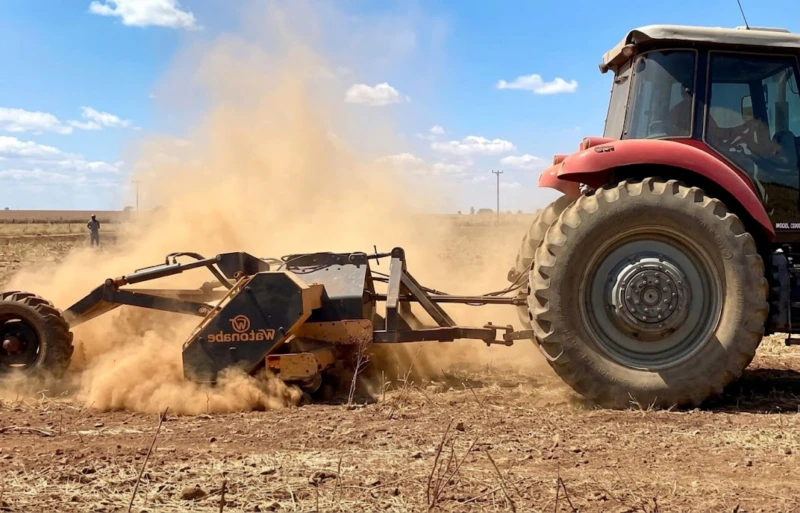
The 10-Year Economic Case: Picking vs. Crushing
The economic comparison is not “picking cost per year vs. crushing cost per year” — it is “10 years of picking cost vs. one crushing cost.” This reframing is what changes minds:
| Cost Component (50 ha, 10 years) | Annual Picking | One-Time Crushing |
|---|---|---|
| Treatment events | 10 (once per year × 10 years) | 1 (once, lasts 10-20+ years) |
| Tractor hours (total) | 500-1,000 hours (50-100 hr/yr × 10) | 60-120 hours (one-time) |
| Fuel (total, 10 years) | 10x annual fuel cost | 1x (crushing uses more fuel/hr but only once) |
| Operator days (total) | 50-100 days | 8-15 days |
| Stone disposal cost | Ongoing (growing pile or licensed disposal) | Zero (fragments stay in soil) |
| Ridge-zone stones at harvest | Still present (annual bruising cost) | Eliminated (bruising cost = zero) |
| Equipment damage from stones | Ongoing (annual repair budget) | Eliminated (equipment lasts 2-5x longer) |
| 10-year total cost of stone management | High (recurring × 10 + bruising + damage) | Lower (one-time + zero recurring) |
The tipping point: Farmers report that the one-time crushing cost for their field was equivalent to 2 to 4 years of annual picking cost. After year 4, every subsequent year is pure saving. The fields they crushed 10 years ago are still stone-free — and they have not picked those fields since. See: The Hidden Cost of Stony Farmland.
What Farmers Report After Switching
|
Spring workload reduction The 5 to 10 days previously spent picking stones every spring are now available for productive operations — planting, fertilizing, spraying. On many farms, eliminating the picking pass allows the entire spring programme to start 1 to 2 weeks earlier, improving planting timeliness and extending the growing season. |
|
Harvest quality transformation Bruising rates drop dramatically on crushed fields. Growers report moving from 8 to 15 percent bruise-related downgrade to under 2 percent — a revenue recovery that alone can exceed the crushing cost. The CWB-2L harvester runs faster on stone-free ground because the operator no longer needs to slow down to protect sieves from stone impacts. |
|
Equipment longevity Rotavator blades, planter cups, digger shares, and harvester sieve webs all last 2 to 5 times longer on crushed fields. The annual equipment repair and replacement budget drops by 40 to 60 percent. Machines that previously needed mid-season blade replacement now run the entire season on one set. See: Tungsten Carbide vs. Hardened Steel. |
|
Improved soil structure The crushed rock fragments (typically under 50 mm) remain in the soil and contribute to improved drainage, aeration, and reduced compaction — particularly in heavy clay soils where the coarse mineral fragments create preferential drainage channels. Farmers on clay report that crushed fields are workable 2 to 5 days earlier after rainfall than adjacent uncrushed fields with the same clay content. |
|
Planting precision improvement Without stones to jam the cup-belt mechanism, the PANTHER and PAI planters achieve skip rates under 1 percent consistently — compared to 3 to 8 percent on unpicked or partially picked fields. The yield gain from improved planting accuracy alone (5 to 8 percent higher plant population = 5 to 8 percent more yield) is a significant financial benefit beyond the stone cost elimination. |
.webp "After Crushing: No More Annual Picking, No More Stone Piles, No More Bruised Harvest")
When Rock Picking Still Makes Sense
Rock picking is not obsolete — it remains the correct choice in specific circumstances:
|
Surface-only stones with no subsurface supply If your stones are exclusively surface debris (dumped, washed in, or from a one-time event) with no subsurface stone layer, a single picking pass may be all that is needed. The CT-2100 rock picker or EW-4000 rock rake removes them, and if no new stones surface the following year, the job is done. |
|
Very large boulders that exceed crusher capacity Boulders larger than 500 mm diameter may need to be picked or broken before the THOR can process them. For fields with scattered large boulders in otherwise clean soil, picking the boulders is more practical than crushing the entire field. The rock picker collects the boulders; the crusher is reserved for fields with pervasive medium-density stone profiles. |
|
Non-potato crops on lightly stony ground Cereals and grass are far less sensitive to stones than potatoes. If the stony field will never grow root crops, annual picking may be adequate for the lower stone-sensitivity of surface crops. Crushing is most justified on fields destined for potato, vegetable, or root crop production where stones cause harvest bruising and planter problems. |
Frequently Asked Questions
|
Q1: Do I need a 250 HP tractor to crush? I only have 100 HP. The THOR 2.4 requires 180+ HP and the THOR 3.0 requires 250+ HP — larger than most farm tractors. The solution: hire a contractor with the appropriate tractor and THOR for a one-time treatment. You do not need to own the crusher — you need the result. After crushing, all your existing 100 HP equipment works better on stone-free ground. |
|
Q2: Can I sell my rock picker after crushing? Yes — and many farmers do. After crushing, the picker sits unused because there are no stones to pick. The resale value of the picker partially offsets the crushing cost. Some farmers keep the picker for use on non-crushed fields or lease it to neighbours who have not yet switched. |
|
Q3: What about the crushed fragments — do they cause problems? Fragments under 50 mm pass through harvester sieve webs without damaging tubers. They are too small to jam planters, too light to bruise tubers, and too fine to affect tillage quality. On the contrary, they improve soil drainage and add mineral content. The fragments are a benefit, not a problem. |
|
Q4: Is this trend limited to Europe? No. The switch from picking to crushing is occurring wherever mechanized potato farming operates on stony ground — including Turkey, North Africa, the Middle East, South America, and Australasia. European farmers led the adoption because of high labour costs, strict quality standards, and established picker tradition that made the contrast with crushing most visible. But the economic logic applies everywhere. |
|
Q5: How do I get started? Contact our team with your field area, stone density, predominant rock type, and current stone management method. We will provide a THOR crushing quote (purchase or contractor referral), calculate the payback versus your current annual picking cost, and help you plan the transition from picking to crushing. Factory-direct pricing, worldwide delivery. |
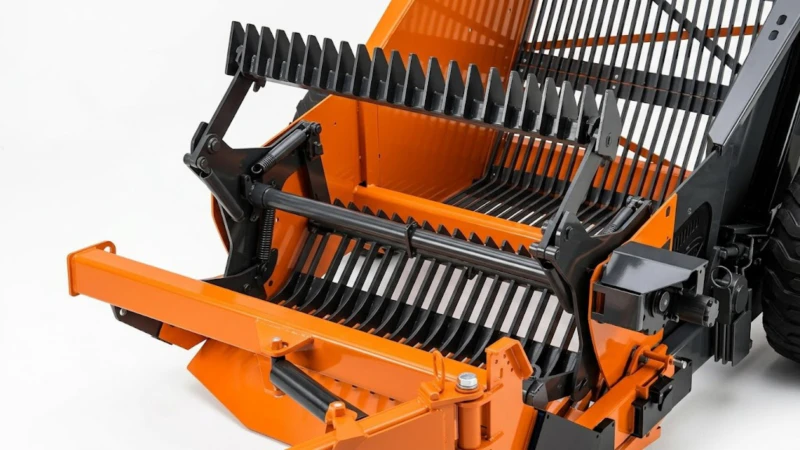
Stop Managing Stones. Start Eliminating Them.
If you have picked the same field for more than 3 years, the economics already favour crushing. One treatment with the THOR 2.4 or THOR 3.0 eliminates 10+ years of annual picking cost, permanently removes ridge-zone stones that pickers cannot reach, and delivers harvest quality, equipment longevity, and spring workload benefits that repeat every season — forever. Factory-direct pricing, worldwide delivery, contractor referral available.
|
THOR Quote Purchase or contractor hire |
Picking vs Crushing Analysis Your 10-year cost comparison |
Dealer / Contractor Crushing service in your region |