The Teeth on Your Machine Determine How Long It Works — and How Much It Costs to Run
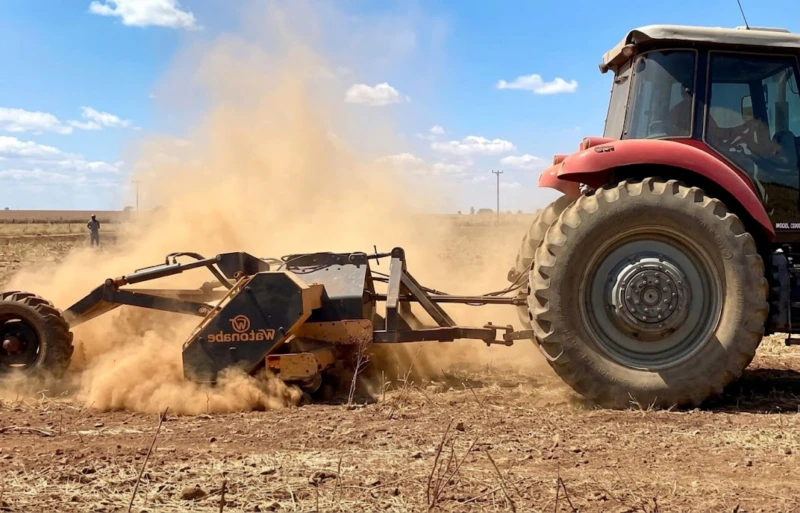
Every stone crusher, rotavator, and soil stabilizer relies on replaceable cutting tools — the teeth, picks, or hammers mounted on the rotating drum that make contact with soil, rock, and debris. These tools are consumable items: they wear down with use and must be replaced periodically. The material these tools are made from determines three things that directly affect your operating economics: how long they last (tool life per hectare), how well they cut (sharpness retention under abrasion), and how often you stop (replacement frequency and downtime).
Two materials dominate the market: hardened steel and tungsten carbide. Steel tools cost less per piece. Carbide tools last far longer. The question every operator faces is whether the higher purchase price of carbide tools is justified by their longer service life — or whether cheaper steel tools replaced more frequently deliver better overall economics.
This guide presents the material science, the comparative data, and the total-cost calculation that answers this question definitively for stone crushing, rotavating, and soil stabilization applications.
Material Science: What Makes Them Different
|
Hardened Steel Composition: Carbon steel or alloy steel (typically containing chromium, manganese, or molybdenum) heat-treated to increase surface hardness. Hardness range: 45 to 60 HRC (Rockwell C scale). Strengths: Tough — absorbs impact without fracturing. Relatively inexpensive to manufacture. Easy to shape, sharpen, and weld. Good for moderate abrasion environments where toughness (resistance to breakage) matters more than hardness (resistance to wear). Weakness: Wears relatively quickly under high abrasion — the cutting edge rounds off, reducing effectiveness. On hard, abrasive rock (granite, flint, quartzite), steel tools can lose their edge within hours of continuous operation. |
Tungsten Carbide Composition: Tungsten carbide (WC) particles bound in a cobalt matrix — a cemented carbide or “hard metal.” Hardness range: 86 to 93 HRA (Rockwell A scale), equivalent to approximately 1,200 to 1,800 HV (Vickers) — roughly 2 to 3 times harder than the hardest steel. Strengths: Extreme hardness and abrasion resistance. Maintains a sharp cutting edge 3 to 5 times longer than steel under the same conditions. Resists heat deformation at the high temperatures generated by continuous rock impact. The professional standard for heavy-duty crushing and stabilization. Weakness: More brittle than steel — can chip or fracture on extreme impact with very large, hard objects (thick steel debris, massive boulders). Higher cost per piece (typically 2 to 4 times the price of a steel equivalent). |
Head-to-Head Comparison
| Factor | Hardened Steel | Tungsten Carbide |
|---|---|---|
| Hardness | 45-60 HRC | 86-93 HRA (2-3x harder) |
| Abrasion resistance | Moderate | Excellent (3-5x longer life) |
| Impact toughness | High (absorbs shock) | Moderate (can chip on extreme impact) |
| Edge retention | Poor (rounds quickly) | Excellent (stays sharp) |
| Heat resistance | Softens at high temp | Stable to 800°C+ |
| Tool life on medium stone | 20-60 hectares | 80-250+ hectares |
| Tool life on hard stone (granite, flint) | 10-30 hectares | 50-150+ hectares |
| Price per tool | Lower (1x) | Higher (2-4x) |
| Replacement frequency | Frequent (high downtime) | Infrequent (low downtime) |
| Cost per hectare (tools only) | Higher (cheap per piece × many changes) | Lower (expensive per piece × few changes) |
The Paradox: Tungsten carbide tools cost 2 to 4 times more per piece but last 3 to 5 times longer. The per-hectare cost of carbide is lower than steel in virtually every scenario — and the gap widens on harder rock types where steel tools wear fastest. Carbide is the more expensive tool that produces the cheaper operation.
The Real Cost: Per-Piece Price vs. Per-Hectare Cost
Per-piece price is what you see on the invoice. Per-hectare cost is what determines your actual operating economics. The difference between the two is the number of hectares each tool covers before replacement:
| Scenario (medium-hard limestone) | Hardened Steel | Tungsten Carbide |
|---|---|---|
| Price per tool | 1x (baseline) | 3x |
| Hectares per tool set | 40 ha | 160 ha |
| Tool sets needed for 500 ha | 12.5 sets | 3.1 sets |
| Total tool cost for 500 ha | 12.5x | 9.3x (25% cheaper) |
| Replacement stops for 500 ha | 12 stops (12-24 hours lost) | 3 stops (3-6 hours lost) |
| Total cost (tools + downtime) | Higher | Lower |
On hard stone (granite, flint), the advantage is even more dramatic: steel tools may last only 10 to 30 hectares, requiring replacements every 1 to 2 days of continuous operation. Carbide tools on the same rock last 50 to 150+ hectares — meaning the machine runs for weeks between stops rather than days. For contractors charging per hectare, downtime is lost revenue; for farm operators, downtime delays the project and risks missing the planting or preparation window.
The Downtime Factor: The Cost You Cannot See on the Invoice
Every tool replacement stop costs 1 to 2 hours of machine downtime — the time to stop, inspect, remove worn tools, install new tools, and resume work. But the true cost is wider than the replacement time:
| Machine idle cost | A 250 hp tractor sitting idle with a stone crusher attached costs fuel (idling or shut down and restart), operator wages (standing by during replacement), and depreciation (the machine earns nothing while stopped). For contractor operations, idle time directly reduces daily billing. |
| Logistics cost | Spare tools must be on-site. Running out of spare tools mid-field means transporting tools from the workshop to the field — potentially hours of delay if the field is remote. With carbide tools lasting 3 to 5 times longer, the number of spare sets to stock and transport drops proportionally. |
| Operator fatigue | Frequent tool changes are physically demanding — each tool is bolted to the drum, requiring wrench work in confined, dirty conditions. An operator who changes tools 12 times in a week is more fatigued, less productive, and more injury-prone than one who changes tools 3 times in the same period. |
.webp "Carbide Advantage: Sharp Edges Last 3-5x Longer, Fewer Stops, More Output")
Recommendation by Application
|
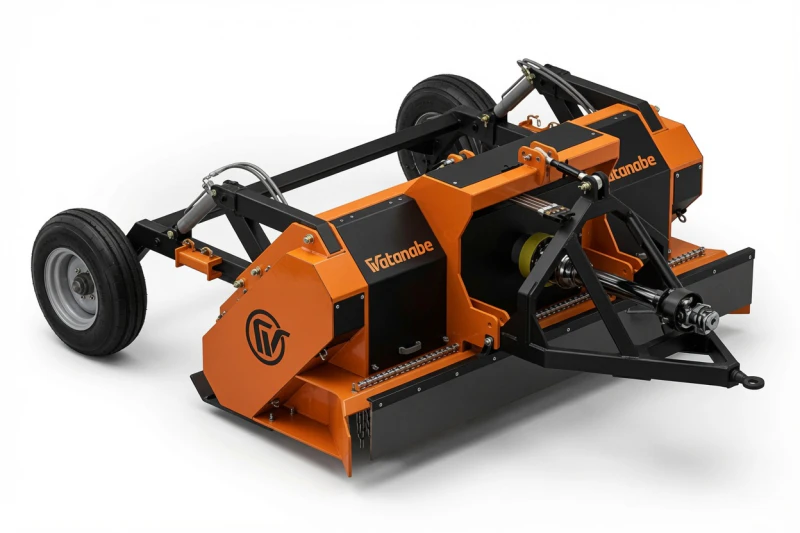
Stone Crushing (THOR 2.4 / 3.0) → Tungsten Carbide (Standard) Stone crushing is the most abrasive application in agriculture. Tools strike hard rock at high speed thousands of times per minute. Steel tools in this application wear at the fastest rate of any use case — often requiring daily replacement on hard stone. Carbide is not optional for professional stone crushing; it is the baseline standard. The THOR stone crusher range ships with tungsten carbide tools as standard equipment. |
|
Soil Stabilization (THOR ST) → Tungsten Carbide (Standard) Soil stabilizers mix binder into soil at high speed, often encountering embedded stones and gravel. The rotor tools must maintain their cutting geometry to produce consistent mixing depth and quality. Dull tools produce shallower, less homogeneous mixing — resulting in weaker road quality. The THOR ST uses tungsten carbide as standard for consistent mixing quality across the full project life. |
|
Rotavating (PSW-3200 Series) → Carbide Preferred, Steel Acceptable on Soft Ground Rotavators operate in soil rather than rock, so abrasion rates are lower than stone crushing. On soft, stone-free soil, hardened steel blades provide adequate life at lower cost. On stony soil or sandy soil with high quartz content (extremely abrasive), carbide tools deliver dramatically longer life and are strongly recommended. The PSW-3200 series supports both tool types — discuss your soil conditions with our team for the optimal choice. |
When Hardened Steel Is the Better Choice
Steel tools are not obsolete — they are the correct choice in specific circumstances:
|
Very soft stone (chalk, soft limestone, weathered shale) On stone types with low abrasion resistance, steel tools wear slowly enough that their lower per-piece cost results in lower per-hectare cost than carbide. If your stone is soft enough that steel tools last 80+ hectares per set, carbide’s longevity advantage does not offset its higher price. |
|
Environments with high impact risk (heavy metal debris) Construction demolition sites or former industrial land may contain thick steel reinforcing bar, buried metal objects, or large dense debris. Carbide tools can chip on these extreme impacts. Steel tools deform rather than fracture — bending rather than breaking. For debris-heavy sites, steel may be the safer (and cheaper) initial choice until the worst debris is cleared, then switch to carbide for the final passes. |
|
One-time, small-area jobs If you are crushing a single 5-hectare field and will not use the machine again for years, a set of steel tools may complete the job without requiring replacement — making the lower per-piece cost the economical choice for the single task. Carbide’s long-life advantage matters most over cumulative hectares; on a single small job, the difference may be negligible. |
Tool Material Across Our Product Range
| उत्पाद | Standard Tool Material | Rationale |
|---|---|---|
| THOR 2.4 / 3.0 Stone Crusher | Tungsten Carbide | Maximum abrasion — carbide is essential for professional stone crushing |
| THOR ST Soil Stabilizer | Tungsten Carbide | Consistent edge retention for uniform mixing quality over long road projects |
| PSW-3200 Series Rotavator | Hardened Steel (carbide optional) | Soil-only operation — steel adequate on clean soil; carbide recommended on stony/sandy ground |
Frequently Asked Questions
|
Q1: Can I switch from steel to carbide tools on the same machine? In most cases, yes — the tool holder (the bolted mount on the drum) is the same for both materials. The tool body shape and bolt pattern are standardized. Contact our parts team with your machine model to confirm compatibility and order the correct carbide tool part number. |
|
Q2: How do I know when tools need replacing? Inspect tools at the start and end of each working day. Replace when the cutting tip is worn to less than 50 percent of its original height, when the tool shows visible cracking or chipping, or when crushing/mixing quality visibly declines (larger output fragments, incomplete mixing depth). Do not wait for complete tool failure — a broken tool damages the holder and adjacent tools. |
|
Q3: Can carbide tools be sharpened or re-tipped? Carbide tools cannot be easily sharpened in the field due to the extreme hardness. Some specialized re-tipping services can braze new carbide tips onto worn tool bodies, extending their life further. However, the cost of re-tipping versus new replacement varies by region. For most operations, purchasing new carbide tools is more practical and reliable than re-tipping. |
|
Q4: Does the THOR come with carbide as standard or is it an upgrade? The THOR 2.4, THOR 3.0, and THOR ST ship with tungsten carbide tools as standard equipment — not an option or upgrade. We consider carbide the only professional choice for these applications. The standard price includes a full set of carbide tools fitted to the drum. |
|
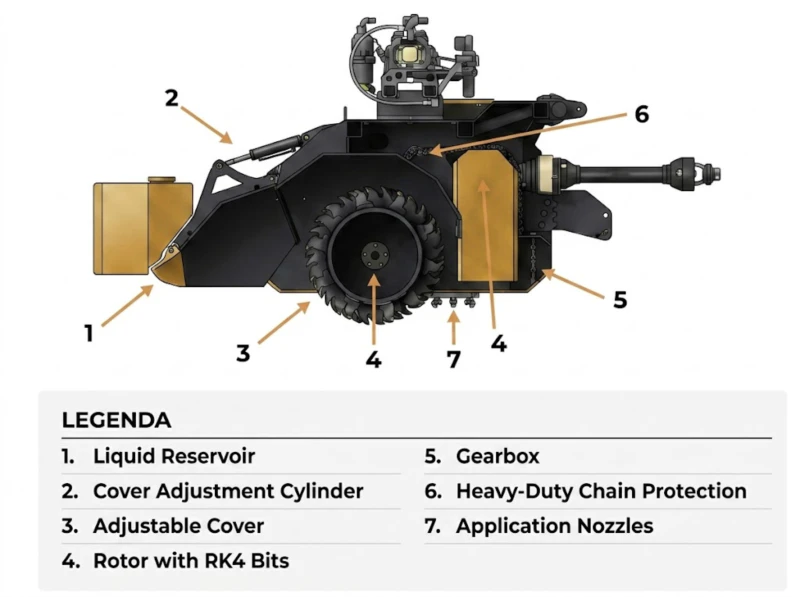
Q5: How many tools are on a THOR drum? The exact number depends on the model and drum configuration. Typical counts range from 24 to 60+ tools per drum, arranged in a spiral pattern for progressive engagement with the soil and rock. Each tool is individually replaceable — you replace only the worn tools, not the entire set, unless multiple tools are worn simultaneously. |
|
Q6: Where do I order replacement tools? Contact our parts department with your machine model and serial number. We supply original tungsten carbide and hardened steel replacement tools at factory-direct pricing, shipped worldwide. We recommend ordering one spare set with the machine to ensure continuity during extended crushing campaigns. |
Cheaper Per Piece Is Not Cheaper Per Hectare
Tungsten carbide tools cost more to buy but less to run. They last 3 to 5 times longer, maintain cutting quality throughout their life, and reduce downtime by 60 to 75 percent. On the THOR stone crusher and THOR ST stabilizer, carbide is standard — because we build machines for professional operations where per-hectare economics matter more than per-piece price. Factory-direct pricing on machines and replacement tools, worldwide delivery.
|
Machine Quote THOR / THOR ST with carbide |
Replacement Tools Carbide & steel — factory-direct |
Dealer / Parts Inquiry Full product and parts range |