You Cannot Control Potato Prices. You Can Control Potato Costs.
Potato market prices fluctuate with supply, demand, weather, and trade conditions — forces no individual farmer controls. What you can control is the cost of producing each tonne. Every euro, dollar, or rand saved per tonne of production is a euro, dollar, or rand added to your margin — regardless of where the market price lands. In seasons of high prices, lower costs mean larger profits. In seasons of low prices, lower costs mean survival while competitors operating at higher cost per tonne are squeezed out.
The five cost reduction strategies in this guide are not theoretical. They are proven, equipment-enabled changes that farms implement in a single season and benefit from permanently. Each one addresses a specific cost category — labor, fertilizer, equipment damage, harvest loss, and field-pass inefficiency — and each one is achievable with equipment already available in our range.
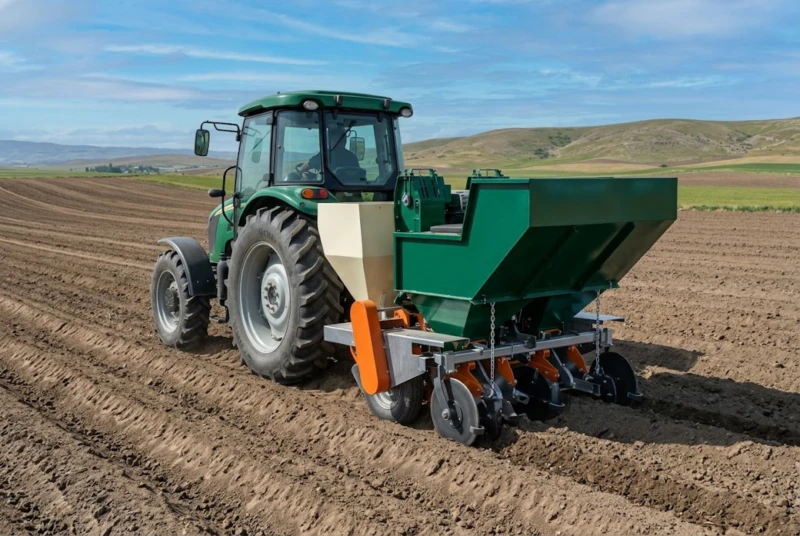
Strategy 1: Replace Manual Labor With Mechanization — Save 70-90% on Labor
Labor is the single largest variable cost on most potato farms — particularly for planting and harvest, which are the most labor-intensive operations. A manual planting crew of 10 to 15 people covering 0.5 to 1.0 hectare per day costs 15 to 25 person-days per hectare across the season. A mechanized planting and harvest chain reduces this to 1 to 3 person-days per hectare — a 70 to 90 percent reduction in labor cost.
| Operation | Manual (person-days/ha) | Mechanized | Equipment |
|---|---|---|---|
| Planting | 8-15 | 0.2-0.3 | PAI-2100 or PANTHER planter |
| Harvest (dig + collect) | 10-20 | 0.2-0.5 (CWB-2L) | CWB-2L harvester (zero crew) |
| Seedbed preparation | 3-5 | 0.2-0.3 | ERA cultivator (3-in-1) |
| Total season | 20-40 person-days/ha | 1-3 person-days/ha |
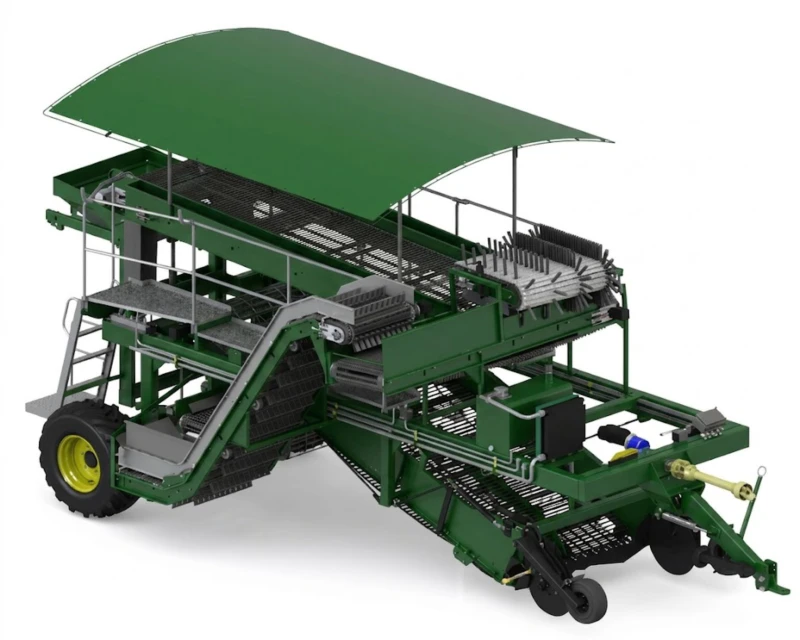
The biggest single labor saving comes from the CWB-2L elevator harvester, which eliminates the entire picking crew — the largest seasonal labor cost on most potato farms. One tractor, one operator, field to trailer. For the full analysis, see: Potato Digger vs. Potato Harvester.
Strategy 2: Switch From Broadcast to Banded Fertilizer — Save 20-40% on Inputs
Broadcasting fertilizer across the entire field surface is the simplest application method — and the most wasteful. Up to 50 percent of broadcast fertilizer lands in the inter-row space where no potato roots exist. That fertilizer contributes nothing to yield. It leaches into groundwater, feeds weeds, and costs money that could have been invested in product the crop actually uses.
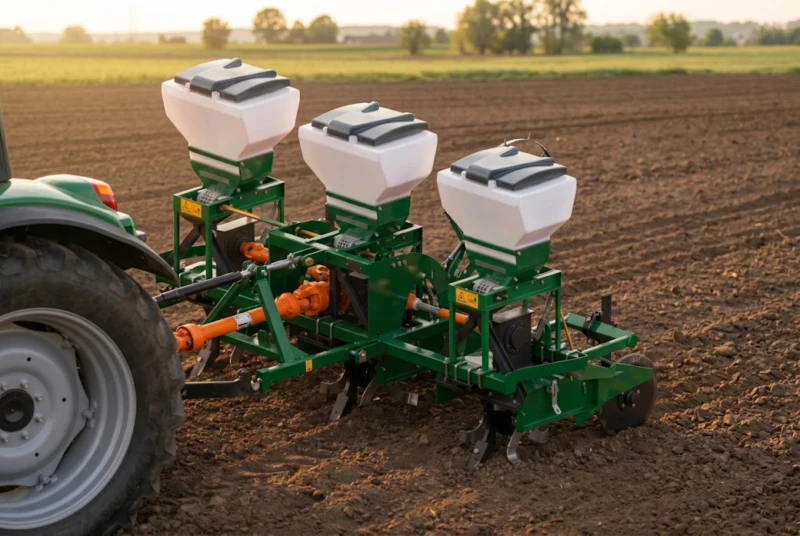
Banded application places 100 percent of the fertilizer in the root zone — a concentrated band 5 to 10 cm from the seed tuber where every gram is accessible to the developing root system. The same yield (or higher) is achieved with 20 to 40 percent less total fertilizer — because none is wasted on empty ground.
| Equipment for banding | ERA cultivator (base dressing during seedbed prep), ADB-380/480 (dedicated banding), PANTHER/PAI planters (starter dressing at planting), PAI-480-AR (dual-band from one machine). |
| Saving on 100 ha at 1,000 kg/ha NPK | Broadcast: 100,000 kg total. Banded: 60,000-80,000 kg for the same or better yield — saving 20,000-40,000 kg of fertilizer. At any fertilizer price, this is substantial. |
For the full comparison, see: Banded Fertilizer vs. Broadcast Spreading for Potatoes.
Strategy 3: Crush Stones Before Planting — Eliminate Equipment Damage and Harvest Bruising
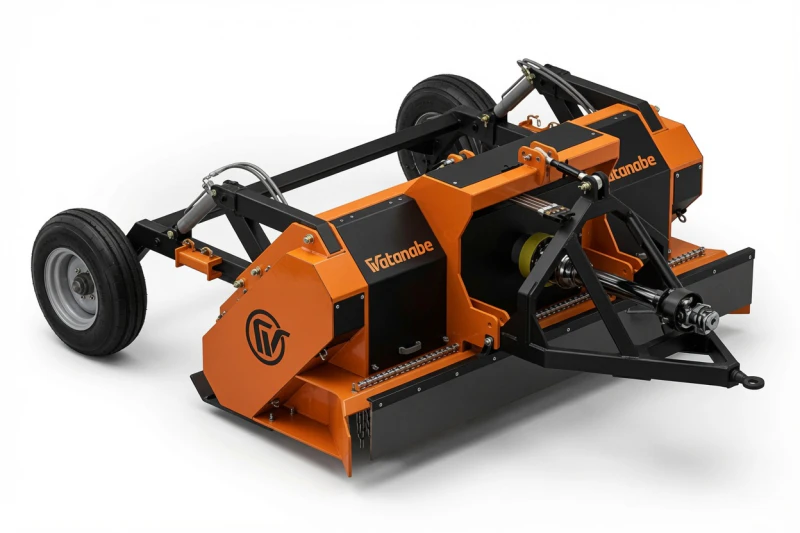
On stony land, stones are the most expensive hidden cost in potato production. They damage tillage equipment (broken blades, bent shares), jam planter cup-belts (causing skips and doubles), bruise tubers at harvest (downgrading ware to processing), and contaminate harvested loads (requiring grading-line removal and causing processor rejection).
| Equipment damage avoided | Rotavator blades, planter cups, digger shares, harvester sieves — all last 2 to 5 times longer on stone-free ground. Annual repair and replacement costs on stony land often exceed the one-time cost of crushing. |
| Harvest bruising eliminated | Stone-to-tuber impacts during harvest cause 50 to 70 percent of all mechanical bruising. Crushing eliminates this source permanently. More ware-grade, less downgrading, higher revenue per tonne. |
| Treatment | THOR 2.4 or 3.0 Stone Crusher — one-time treatment, permanent results. Hire a contractor for single fields; purchase for ongoing needs. |
For the full analysis, see: The Hidden Cost of Stony Farmland (coming soon) and How to Reduce Potato Harvest Losses Below 3%.
Strategy 4: Reduce Harvest Losses From 12% to Under 3% — Recover Revenue You Already Grew
The industry average for potato harvest losses is 8 to 12 percent — meaning 8 to 12 percent of your standing yield never reaches the market in saleable condition. On a 40 t/ha crop across 100 hectares, 12 percent loss is 480 tonnes of potatoes grown, paid for, and then destroyed at the last stage. Reducing this to 3 percent recovers 360 tonnes — revenue that was produced but never captured.
| Loss Source | Uncontrolled | Optimized | Key Equipment |
|---|---|---|---|
| Mechanical damage (bruising) | 3-8% | <1% | THOR crusher + skin set |
| Tubers left in ground | 1-5% | <0.5% | Uniform ridges (R-380/ERA) |
| Greening + weather | 0.5-8% | ~0% | CWB-2L (direct to trailer) |
| Total | 8-20% | <3% |
For the complete loss-reduction roadmap, see: How to Reduce Potato Harvest Losses Below 3%.
Strategy 5: Eliminate Redundant Field Passes With 3-in-1 Equipment — Save Fuel, Time, and Compaction
Every tractor pass across a field costs fuel, operator time, and soil compaction. Traditional potato seedbed preparation requires three separate passes — rotavating (tillage), fertilizer application, and ridge formation — with three hookup/unhitch cycles, three fuel fills, and three passes of wheel traffic compressing the soil you just loosened.
The ERA Rotary Cultivator performs all three operations in a single pass: rotary tillage, banded fertilizer application, and ridge formation. One machine replaces three. One pass replaces three. One fuel fill replaces three. Soil compaction from repeat traffic is reduced by 67 percent.
| Saving | 3 Separate Machines | ERA 3-in-1 |
|---|---|---|
| Field passes | 3 | 1 |
| Fuel consumption | 3x | 1x (save 50-60%) |
| Time | 3 days per field | 1 day per field |
| Wheel compaction | 3x pass coverage | 1x pass (67% less compaction) |
| Machines to buy/maintain | 3 (rotavator + applicator + furrower) | 1 (ERA only) |
For the full ERA analysis, see: One-Pass Potato Bed Preparation: How the ERA Cultivator Replaces 3 Machines.
Combined Impact: All 5 Strategies Together
| Strategy | Cost Category | Saving |
|---|---|---|
| 1. Mechanize planting + harvest | Labor | 70-90% |
| 2. Banded fertilizer | Fertilizer inputs | 20-40% |
| 3. Stone crushing | Equipment damage + downgrading | Permanent elimination |
| 4. Harvest loss reduction | Lost revenue | +360 t/100 ha recovered |
| 5. ERA 3-in-1 passes | Fuel + time + compaction | 50-60% on seedbed prep |
Implemented individually, each strategy delivers measurable savings. Implemented together, they fundamentally transform the cost structure of potato production — reducing cost per tonne by 30 to 50 percent while simultaneously increasing marketable yield. The combined effect is a wider profit margin in every market condition.
Implementation Priority: Which Strategy First?
|
Fastest payback: Strategy 1 — Mechanized planting (PAI-2100) The planter delivers both labor savings and yield increase (15-30 percent from precision planting) from the first season. On most farms, the yield increase alone pays for the planter within 1 to 2 seasons before counting labor savings. |
|
Highest efficiency gain: Strategy 5 — ERA 3-in-1 Replaces three machines with one and saves two-thirds of seedbed preparation passes. The ERA costs less than any two of the three machines it replaces — immediate capital saving plus ongoing operational savings. |
|
Largest single saving: Strategy 1 — CWB-2L harvester (eliminate crew) For farms over 50 hectares where the annual picking crew cost exceeds the harvester’s annual depreciation, the CWB-2L delivers the largest absolute saving of any single equipment investment — and the saving recurs permanently. |
|
Permanent, one-time: Strategy 3 — THOR stone crushing The only strategy that eliminates a cost category permanently with a single treatment. Equipment damage, harvest bruising, and stone contamination are gone for 10 to 20+ years from one crushing pass. Hire a contractor if purchase is not justified. |
Frequently Asked Questions
|
Q1: Can I implement these on a small farm (under 30 ha)? Yes. Strategies 1, 2, and 5 are accessible starting from 10 hectares with 75 hp equipment: PAI-2100 planter, ERA-2100 cultivator, AWB-1600 digger. Strategy 3 (stone crushing) can be hired as a contractor service. Strategy 4 (CWB-2L harvester) becomes economical at 50+ hectares. See: Smallholder Potato Farming: Affordable Mechanization From 75 HP. |
|
Q2: What is the total investment for all 5 strategies? You do not need to invest in all five simultaneously. The staged approach — planter first, ERA second, digger/harvester third, stone crushing when justified — lets each investment generate revenue that funds the next. Contact us for a staged investment plan and factory-direct pricing on any combination. |
|
Q3: Which strategy saves the most money per year? It depends on your current cost structure. If labor is your largest cost (most developing-market farms), Strategy 1 (mechanization) delivers the biggest annual saving. If fertilizer is your largest cost (many European farms), Strategy 2 (banding) saves the most. If harvest quality is your weakness, Strategy 4 (loss reduction) recovers the most revenue. The soil test and a cost analysis of your current operation identify which strategy delivers the fastest, largest return for your specific situation. |
|
Q4: Do you supply all the equipment mentioned? Yes. Every product referenced in this guide — stone crushers, rotavators, ERA cultivators, fertilizer applicators, furrowers, planters, diggers, and harvesters — is manufactured by us and available at factory-direct pricing with worldwide delivery. One manufacturer, one quality standard, one support team for your entire cost-reduction equipment chain. |
|
Q5: How do I get started? Contact our team with your hectarage, current equipment, biggest cost pain points, and tractor power. We will identify which strategies deliver the fastest payback for your operation and provide a prioritized equipment recommendation with factory-direct pricing. |
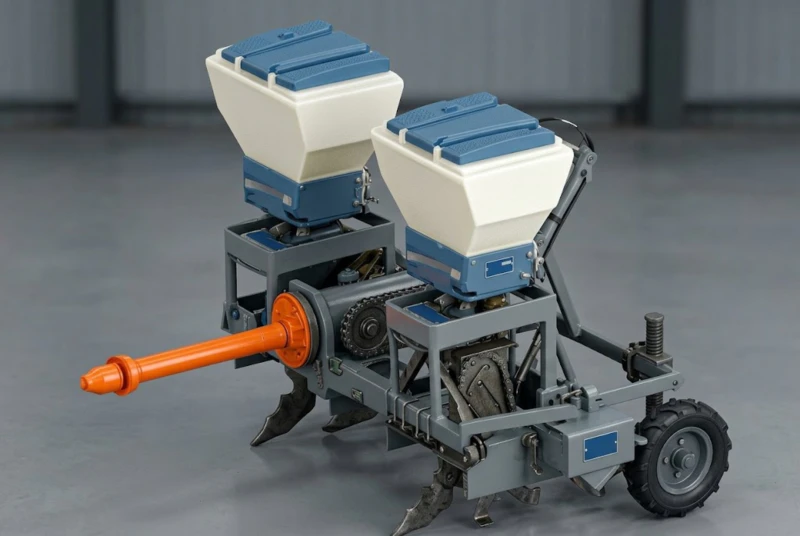
Lower Cost Per Tonne = Higher Profit in Every Market
You cannot control potato prices. You can control production costs — and these five strategies give you the equipment to do it. Start with one, fund the next from the savings, and build toward a cost structure that delivers profit in any market condition. Factory-direct pricing on every machine, worldwide delivery.
|
Cost Reduction Plan Prioritized for your farm |
Equipment Quote Any product, any combination |
Dealer Inquiries Full product range |