Three Machines, Three Philosophies — One Stony Field
You know your land has a stone problem. Tillage equipment wears out too fast. Seedbeds are uneven. Harvest losses are higher than they should be. You have decided to invest in stone management equipment — but now you face the real question: do you need a rock rake, a rock picker, or a stone crusher?
These three machines look similar in catalogues and are often grouped together at trade shows, but they solve the stone problem in fundamentally different ways. Choosing the wrong one wastes your investment and leaves the problem half-solved. Choosing the right one transforms your land productivity for years — or permanently.
This guide cuts through the confusion. We compare the three machines side by side across every factor that matters to a buyer — what each machine actually does, what it costs, how much power it needs, how fast it works, whether the solution is permanent, and which farm situations each machine is best suited for. By the end, you will know exactly which machine your operation needs.
What Each Machine Actually Does — In Plain Language
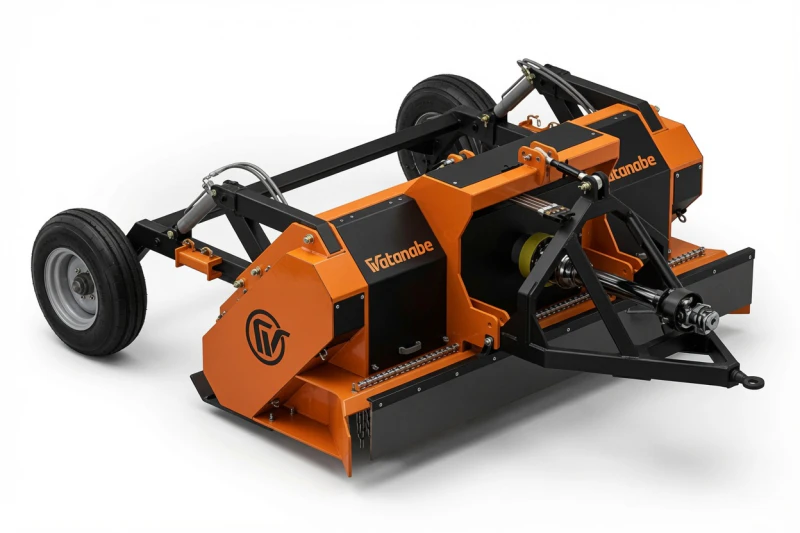
Before comparing specifications, it is essential to understand the fundamental difference in what each machine does to the stones. They do not do the same thing at different scales. They solve the problem in three completely different ways.
|
Rock Rake = GATHER A rock rake combs through the topsoil with heavy tines, sweeping scattered surface stones into concentrated windrows (long, narrow piles). The stones are not removed from the field — they are reorganized into rows for easier collection by a separate machine or by hand. Think of it as a giant comb that tidies the stones but does not take them away. |
|
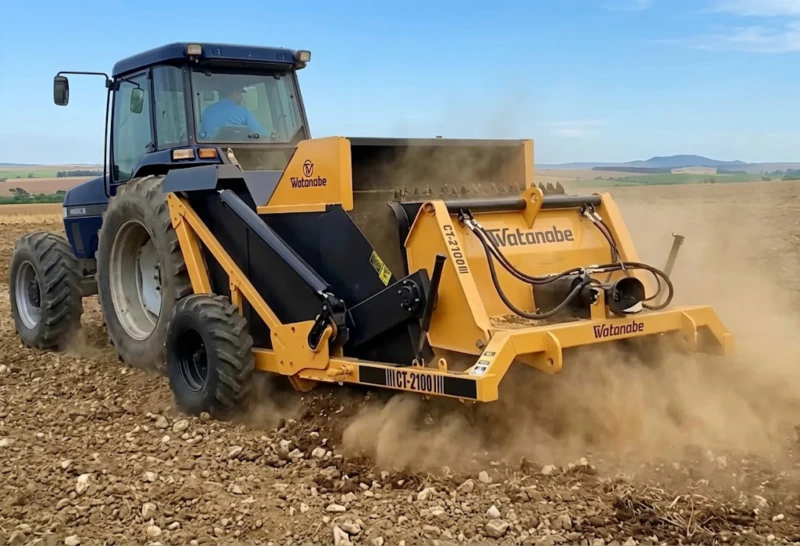
Rock Picker = COLLECT A rock picker lifts stones from the soil, separates them from fine soil on a vibrating screen, and collects them into an onboard bunker. When the bunker is full, the operator dumps the stones at the field edge. The stones are physically removed from the field. Think of it as a vacuum cleaner for rocks — it finds them, picks them up, and carries them away. |
|
Stone Crusher = DESTROY A stone crusher pulverizes rocks in place using a high-speed rotor with tungsten carbide hammers. Stones up to 400 mm are smashed into particles smaller than 50 mm and mixed back into the soil. The stones permanently cease to exist as obstacles. Think of it as a blender for rocks — it turns stones into gravel that becomes part of the soil. |
Key Insight: The rock rake does not solve the stone problem — it makes the solving easier. The rock picker solves it temporarily (until new stones surface). The stone crusher solves it permanently. Understanding this hierarchy is the foundation of a correct equipment decision.
Rock Rake — The Preparation Specialist
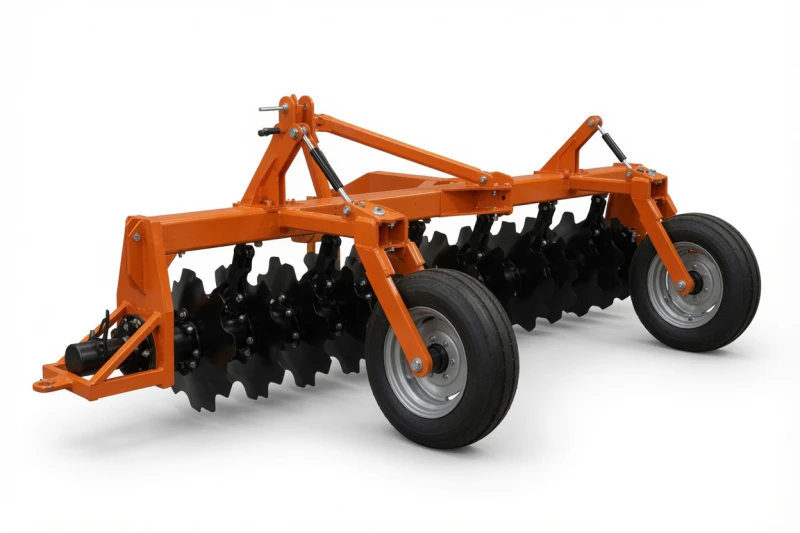
The rock rake is the lightest, simplest, and most affordable of the three machines. It uses rows of curved steel tines mounted on a toolbar to comb through the top 15 to 25 cm of soil at 5 to 10 km/h, pushing stones sideways and forward into windrows. It does not lift, collect, or crush anything — it simply concentrates scattered stones into organized rows.
| Rock Rake — Quick Profile | |
|---|---|
| What It Does | Gathers surface stones into windrows for later collection |
| Typical Power | 75 to 100 hp |
| Working Speed | 5 to 10 km/h (fastest of the three) |
| Machine Weight | 400 to 600 kg |
| Investment Level | Lowest of the three |
| Permanence | Temporary — stones remain on field until collected |
You need a rock rake if: You want to speed up a subsequent picking or crushing operation by pre-concentrating scattered stones. You are doing light stone clearance on relatively clean land. You need a fast, low-cost first pass before a more thorough treatment. You are preparing landscaping, sports turf, or construction sites where stones will be manually removed after windrowing.
You do NOT need a rock rake if: You need stones completely removed or destroyed. You have very heavy stone density that exceeds the rake’s capacity. You want a standalone, complete solution.
Our Model: The EW-4000 Rock Rake (3.6 m, hydraulic, 100 hp) and EW-4000T (3.6 m, PTO, 75 hp).
Rock Picker — The Removal Specialist
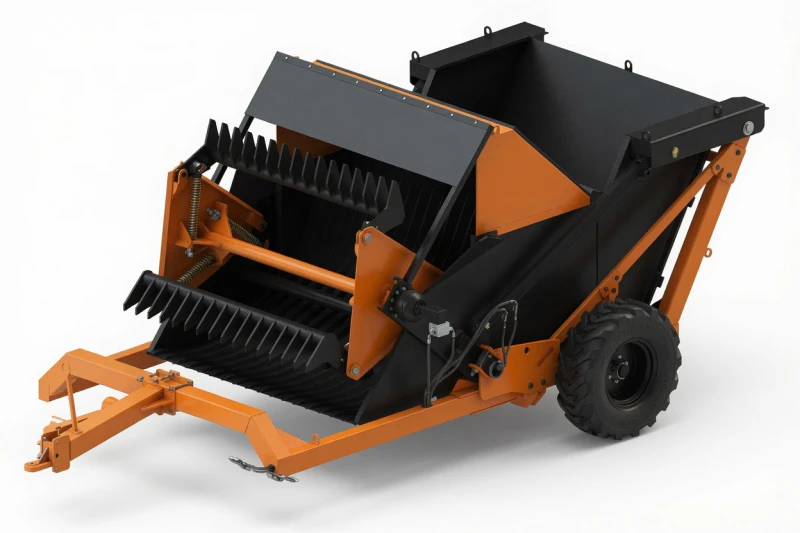
The rock picker is the mid-range option — more capable than a rake, more affordable than a crusher. It uses digging shares to lift soil and stones, vibrating screens to separate rocks from fine soil, and a collection bunker to hold the stones for dumping at the field edge. It physically removes the stones from the field.
| Rock Picker — Quick Profile | |
|---|---|
| What It Does | Lifts, separates, collects, and dumps stones from the field |
| Typical Power | 100 to 130 hp |
| Working Speed | 3 to 5 km/h |
| Machine Weight | 1,500 to 3,000 kg |
| Investment Level | Medium |
| Permanence | Semi-permanent — surface cleared, but new stones rise annually |
You need a rock picker if: You want stones physically removed from the field. You plan to use collected stones for farm tracks, drainage, or sale as aggregate. You have an established seasonal picking program and want to mechanize it. You cannot justify the higher power requirement of a crusher. Your tractor is in the 100 to 130 hp range.
You do NOT need a rock picker if: You want a permanent, one-time solution (stones will resurface via frost heave). You have no use for collected stones and want to avoid haulage costs. You have 180+ hp available and prefer to crush once rather than pick every year.
Our Model: The CT-2100 Rock Picker (2.5 m3 bunker, 110 hp).
Stone Crusher — The Permanent Solution
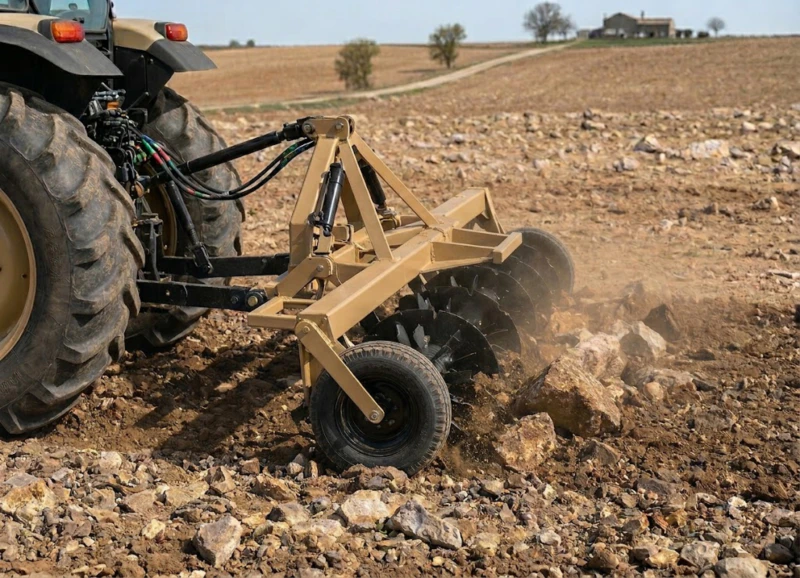
The سنگ شکن is the most powerful and most permanent of the three options. Its PTO-driven rotor, equipped with tungsten carbide hammers spinning at high speed, smashes surface and subsurface stones into fragments smaller than 50 mm. The crushed material stays in the soil, improving its drainage and structural properties. Nothing needs to be hauled, dumped, or disposed of. The stones are gone — permanently.
| Stone Crusher — Quick Profile | |
|---|---|
| What It Does | Pulverizes stones in place into particles below 50 mm |
| Typical Power | 180 to 230+ hp |
| Working Speed | 3 km/h |
| Machine Weight | 2,300 to 2,800 kg |
| Investment Level | Highest upfront — lowest lifetime cost |
| Permanence | Permanent — stones can never return |
You need a stone crusher if: You are tired of picking stones every year and want to solve the problem once. You have 180+ hp. You want to improve soil drainage and structure simultaneously. You farm high-value crops (potatoes, vegetables) where stone damage is costly. You are reclaiming new land, preparing road subgrade, or rehabilitating mine sites. You want the lowest total cost of ownership over 10+ years.
You do NOT need a stone crusher if: You need collected stone for other purposes (aggregate, tracks). Your tractor is below 180 hp with no upgrade planned. You have very light, occasional stone issues that a rake or picker handles adequately. Your budget is limited to a single season’s solution.
Our Models: The THOR 2.4 Stone Crusher (2.4 m, 180 hp) and THOR 3.0 Stone Crusher (3.0 m, 230 hp).
The Complete Head-to-Head Comparison
| Factor | Rock Rake | Rock Picker | Stone Crusher |
|---|---|---|---|
| Action | Gather into rows | Collect and remove | Destroy permanently |
| Permanence | Temporary | Semi-permanent | Permanent |
| Repeat Needed? | Every season | Every 1-3 years | Never |
| Min. Tractor HP | 75 | 110 | 180-230 |
| Working Speed | 5-10 km/h | 3-5 km/h | 3 km/h |
| Stone Disposal | Required (manual) | Required (dump) | None |
| Haulage Cost | Yes | Yes | Zero |
| Soil Improvement | None | None | Drainage + structure |
| Max. Stone Size | Unlimited (surface) | ~500 mm | ~400 mm |
| Upfront Cost | Lowest | Medium | Highest |
| 10-Year Total Cost | High (recurring) | High (recurring + haul) | Lowest (one-time) |
The 10-Year Cost Reality: Why the “Cheapest” Machine Is Often the Most Expensive
The most common mistake buyers make is comparing upfront purchase price. In stone management, the purchase price is only a fraction of the total lifetime cost. The recurring costs — annual operating hours, fuel, wear parts, haulage, disposal, and the opportunity cost of repeatedly treating the same field — are what determine the true cost of ownership.
Consider a hypothetical 100-hectare farm with moderate stone density:
| Cost Component (10 Years) | Rock Rake + Manual Pick | Rock Picker | Stone Crusher |
|---|---|---|---|
| Machine Purchase | Low | Medium | Higher |
| Number of Treatments | 10 (annual) | 5 (biennial) | 1 (one-time) |
| Fuel Over 10 Years | High (10 passes) | Medium (5 passes) | One pass only |
| Haulage and Disposal | 10 seasons of hauling | 5 seasons of hauling | Zero |
| Manual Labor | Significant (hand picking) | Minimal | Zero |
| 10-Year Ranking | Most expensive | Middle | Least expensive |
The pattern is clear: the machine with the lowest purchase price has the highest lifetime cost because the treatment must be repeated. The machine with the highest purchase price has the lowest lifetime cost because the treatment is permanent. This is the fundamental economic argument for stone crushing — and it becomes more compelling the longer you own the land.
Quick Decision Flowchart
Answer these four questions to identify your machine:
|
Question 1: Do you need stones physically removed from the field? YES (for aggregate, tracks, or sale) = Rock Picker. NO (you just want them gone) = continue. |
|
Question 2: Do you have 180+ hp available? YES = Stone Crusher (permanent, lowest lifetime cost). NO = continue. |
|
Question 3: Do you have 100+ hp and want stones removed from the field? YES = Rock Picker. NO = continue. |
|
Question 4: Do you need a fast, affordable first-pass concentration? YES = Rock Rake (then follow with a picker or crusher for complete treatment). |
Frequently Asked Questions
|
Q1: Can a rock rake replace a rock picker? No. A rake concentrates stones into windrows but does not remove them. You still need a separate operation (picking, loader, or hand collection) to take the stones off the field. A rake is best used as a pre-step to make picking or crushing faster and more efficient. |
|
Q2: Why not just use a stone crusher for everything? A crusher requires 180+ hp. If your farm only has 75 to 130 hp tractors and no upgrade is planned, a rake or picker is the practical choice. Also, if you want to collect stones for another use (building tracks, selling aggregate), a picker is the better option because a crusher eliminates the stones entirely. |
|
Q3: Can I use a rock rake and stone crusher together? Yes, and this is one of the most efficient combined workflows. The rake concentrates scattered stones into windrows at high speed (5-10 km/h), then the crusher processes only the concentrated windrows rather than the entire field area — dramatically reducing the total crushing time and hammer wear. |
|
Q4: Do stones really come back after picking? Yes. Frost heave (freeze-thaw cycles) pushes deeper stones upward to the surface every winter. Ploughing also turns up stones from below the previous picking depth. Most farms that pick stones must repeat the operation every 1 to 3 years indefinitely. This is the fundamental limitation of picking versus crushing. |
|
Q5: Which machine is fastest per hectare? The rock rake is fastest in a single pass (5-10 km/h, covering 2-3 ha/h). The rock picker covers 0.5-1.0 ha/h. The stone crusher covers 0.7-0.9 ha/h. However, the rake requires a second operation to remove windrows, so total time per hectare for a complete solution depends on the combined workflow. |
|
Q6: What about stone burying with a rotavator? Stone burying (using a rotavator such as our PSW-3200) is a fourth approach that pushes stones below the cultivated layer. It is ideal for potato and vegetable growers who need a clean seedbed. However, buried stones can resurface with deep ploughing. For a full comparison of all four methods, see our guide: How to Clear Stones From Agricultural Land: 4 Methods Compared. |
|
Q7: I have a small farm with 75 hp. Which is my best option? The EW-4000T Rock Rake (75 hp PTO) is the most accessible starting point. Use it to windrow stones, then hire a contractor with a picker or crusher for the removal/crushing step. This gives you the best possible result without requiring a larger tractor. |
|
Q8: I grow potatoes. Which machine do I need? For potato growers, the stone crusher is the strongest recommendation. Stones in the ridge zone damage tubers during harvest, increasing grading losses and reducing marketable yield. A crusher permanently eliminates this problem. If crusher power is unavailable, a stone-burying rotavator (PSW-3200) is the next best option for clearing the planting zone. |
|
Q9: Can I buy all three from the same manufacturer? Yes. We manufacture and export the complete range: rock rakes (EW-4000), rock pickers (CT-2100), stone crushers (THOR 2.4 and 3.0), and stone-burying rotavators (PSW-3200). Buying from a single manufacturer simplifies procurement, ensures compatibility, and provides a single point of contact for support. |
|
Q10: How do I get a recommendation for my specific situation? Contact our engineering team with details of your farm: stone size and density, soil type, crop plan, total hectares, tractor power, and budget. We will recommend the best single machine or combined workflow, provide comparative pricing, and arrange worldwide delivery. |
Ready to Choose? Get Expert Advice and Pricing.
Tell us about your stone problem and we will tell you exactly which machine — or combination — solves it most effectively. Free consultation, no obligation, factory-direct pricing on every model in our stone management range.
|
Free Consultation Which machine fits your farm? |
Compare All Models Side-by-side pricing |
Dealer Inquiries Full range distribution |