The Binder You Choose Determines Whether the Road Succeeds or Fails
Soil stabilization transforms weak, unstable soil into a durable road surface by mixing it with a chemical binder. But the word “binder” covers two fundamentally different materials — lime and cement — that work through different chemical mechanisms, suit different soil types, and produce different results. Choosing the wrong binder for your soil is like choosing the wrong medicine for a disease: the treatment fails, the money is wasted, and the problem returns.
This is not a question of quality or cost — both lime and cement are proven, professional-grade binders used worldwide for road construction. It is a question of soil chemistry. Clay-heavy soils need one treatment. Silty and sandy soils need another. Some soils benefit from both in sequence. The soil itself dictates the binder — not personal preference, not supplier availability, not price.
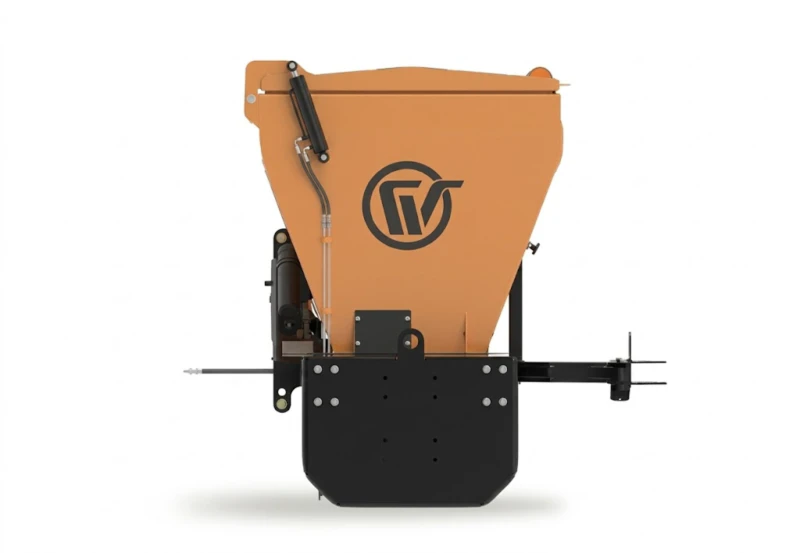
This guide explains the science behind each binder, provides a clear soil-to-binder matching table, and covers the practical considerations for applying each one with the DCW 2.2 Binder Spreader and THOR ST Soil Stabilizer.
How Each Binder Works: Two Different Chemical Mechanisms
|
Lime (Quicklime / Hydrated Lime) Chemical action: Lime reacts with the clay minerals in the soil through a process called pozzolanic reaction. Calcium ions from the lime exchange with sodium and potassium ions in the clay crystal structure, causing clay particles to flocculate (clump together) and reducing the soil’s plasticity. Over time (weeks to months), a slower pozzolanic cementation develops, progressively increasing strength. What it does to soil: Reduces plasticity, reduces swelling/shrinkage, dries wet clay, improves workability, and provides gradual strength gain. Lime transforms sticky, unworkable clay into a crumbly, stable material that can be compacted into a firm road base. Best for: Clay soils with a Plasticity Index (PI) above 10. The higher the clay content, the more effective lime becomes. Lime is the only binder that fundamentally changes clay behavior — cement cannot do this. |
Cement (Portland Cement) Chemical action: Cement hydrates when mixed with moist soil, forming calcium silicate hydrate (C-S-H) crystite bonds between soil particles. This is essentially the same reaction that makes concrete hard — but at lower cement-to-soil ratios, it creates a stabilized soil rather than a rigid slab. Strength gain is rapid: measurable within 24 to 72 hours, reaching design strength within 7 to 28 days. What it does to soil: Adds cohesion, increases bearing strength (CBR), creates a rigid-to-semi-rigid bound layer, and provides rapid strength development. Cement bonds soil particles into a rock-like matrix that resists deformation under load. Best for: Silty, sandy, and granular soils with low to moderate clay content (PI below 15). Soils that already have reasonable particle size distribution but lack the cohesion to support traffic loads. Cement adds the missing cohesion and strength. |
Complete Head-to-Head Comparison
| Factor | Lime | Cement |
|---|---|---|
| Primary mechanism | Clay modification + slow cementation | Hydration bonding (rapid cementation) |
| Best soil type | Clay soils (PI > 10) | Silt/sand/granular (PI < 15) |
| Effect on plasticity | Dramatic reduction (core benefit) | Minor effect |
| Effect on wet clay | Dries and stabilizes immediately | Poor — clay interferes with hydration |
| Strength gain speed | Slow (weeks to months) | Fast (24-72 hours initial, 7-28 days full) |
| Ultimate CBR achievable | 20-60% | 40-120+% |
| Typical dosage rate | 2-6% by weight of dry soil | 3-8% by weight of dry soil |
| Working time after mixing | Generous (hours to days) | Limited (2-4 hours — must compact quickly) |
| Swell / shrink control | Excellent (core benefit for expansive clay) | Moderate |
| Moisture sensitivity | Works well in wet conditions | Needs controlled moisture (too wet = weak) |
| Cost per tonne (binder) | Generally lower | Generally higher |
| Sulphate resistance | Poor (sulphate soils can swell) | Good (sulphate-resistant types available) |
The Soil-to-Binder Matching Table
This is the decision table. Identify your soil type (a simple field assessment or basic lab test), then read across to the recommended binder:
| Soil Description | PI | Binder | Why |
|---|---|---|---|
| Heavy clay (sticky when wet, cracks when dry) | 20+ | Lime | Only lime reduces plasticity enough to make clay workable |
| Medium clay (moderately sticky) | 10-20 | Lime first, then cement | Lime modifies clay; cement adds strength after modification |
| Silty clay (slightly sticky, silky feel) | 8-15 | Cement (or lime + cement) | Low enough clay for cement to work; lime optional pre-treatment |
| Silt (smooth, non-sticky, weak when wet) | Under 8 | Cement | Cement adds the cohesion silt lacks; no clay to modify |
| Sandy soil (gritty, free-draining) | Under 5 | Cement | Cement bonds sand particles into a rigid matrix |
| Gravel / laterite (stony, well-graded) | Variable | Cement (low dose, 3-4%) | Already strong — cement binds particles for top-layer durability |
| Organic / peaty soil | N/A | Neither (remove and replace) | Organic acids inhibit both lime and cement reactions |
The Dual Treatment: Lime First, Then Cement
For medium-clay soils (PI 10 to 20) — the most common rural road soil type worldwide — the optimal approach is a two-stage treatment:
|
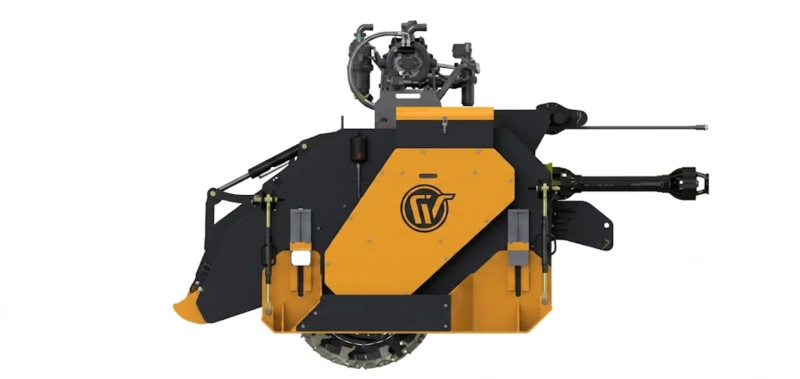
Stage 1: Lime Treatment (Day 1) Spread 2 to 4 percent lime with the DCW 2.2. Mix into soil with the THOR ST. Leave for 1 to 7 days (the “mellowing period”) to allow the lime to react with clay minerals, reducing plasticity and drying the soil. The clay transforms from sticky and plastic into crumbly and workable. |
|
Stage 2: Cement Treatment (Day 2-8) After the mellowing period, spread 3 to 5 percent cement with the DCW 2.2. Re-mix with the THOR ST. The lime-modified soil now has low enough plasticity for cement hydration to work effectively. The cement bonds the modified soil particles into a strong, rigid base. Grade and compact within 2 to 4 hours of cement mixing. Design strength is reached in 7 to 28 days. |
Why two stages work better than either alone: Lime alone on medium clay provides workability and moderate strength (CBR 20 to 40 percent) but cannot achieve the high CBR values needed for heavy traffic. Cement alone on medium clay often fails because the clay’s plasticity interferes with cement hydration, producing a weak, crumbly result. The dual treatment delivers both clay modification (lime) and structural strength (cement) — CBR values of 60 to 100+ percent that neither binder achieves alone on this soil type.
Practical Application Tips for Each Binder
|
Lime Application Tips Quicklime vs hydrated lime: Quicklime (CaO) reacts more aggressively and generates heat — better for very wet clay because it dries the soil faster. Hydrated lime (Ca(OH)₂) is safer to handle and easier to spread. Both work; quicklime is more efficient per kilogram. Dust control during spreading: Lime dust is an irritant. Spread on calm days. The DCW 2.2’s low-drop spreading system minimizes dust generation compared to manual bag spreading or elevated conveyor spreaders. Mellowing time: Allow 1 to 7 days after lime mixing before final compaction or cement application. This gives the pozzolanic reaction time to modify the clay. Skipping or shortening the mellow period reduces effectiveness. |
Cement Application Tips Work fast after mixing: Cement begins hydrating immediately on contact with moist soil. You have 2 to 4 hours to complete mixing, grading, and compaction. Plan the day so the roller follows the THOR ST within 1 to 2 hours of mixing. Do not leave mixed cement-soil uncompacted overnight. Moisture control: Cement-stabilized soil should be near Optimum Moisture Content (OMC) at the time of compaction — typically 10 to 15 percent. Too wet: weak bonds. Too dry: inadequate hydration. Add water if needed during mixing. Curing: After compaction, keep the stabilized surface moist for 3 to 7 days (light water spraying or covering with damp fabric). Curing allows the cement reaction to continue without drying out, maximizing final strength. |
Frequently Asked Questions
|
Q1: How do I know my soil’s Plasticity Index (PI)? A basic geotechnical lab test (Atterberg limits) determines PI. Most soil testing labs offer this for a low cost. Alternatively, a simple field test gives an indication: if wet soil is very sticky and can be rolled into a thin thread without crumbling, it has high PI (clay — use lime). If it crumbles easily or feels gritty, it has low PI (silt/sand — use cement). For critical projects, always get a lab test. |
|
Q2: Can I use cement on heavy clay? It is not recommended as the sole binder. Heavy clay (PI above 20) has high plasticity that interferes with cement hydration. The clay absorbs water that cement needs for its chemical reaction, producing weak, inconsistent results. On heavy clay, use lime first to reduce plasticity, then add cement for strength (the dual treatment). Lime alone is also effective on heavy clay for moderate-traffic roads. |
|
Q3: Can I use lime on sandy soil? Lime has minimal effect on sandy soil because there are no clay minerals for the pozzolanic reaction to work on. Sandy soil needs cement, which bonds the sand particles together into a cohesive matrix. Using lime on sand wastes money and produces negligible improvement. |
|
Q4: What about calcium chloride? Calcium chloride is used primarily for dust suppression on gravel roads — it absorbs moisture from the air and keeps the surface damp. It does not provide structural stabilization like lime or cement. For permanent road improvement, lime or cement (or both) are the correct choice. Calcium chloride can be a useful short-term measure while planning a full stabilization treatment. |
|
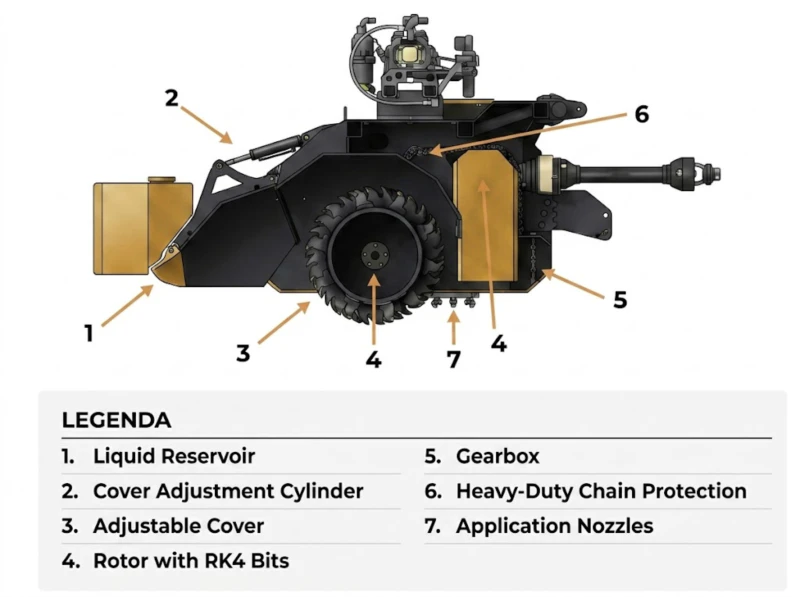
Q5: Does the THOR ST handle both binders equally well? Yes. The THOR ST’s rotating drum with tungsten carbide tools mixes any powdered binder — lime, cement, or combinations — into any soil type to the full treatment depth. The mixing action is identical regardless of binder. The DCW 2.2 spreader likewise handles both lime and cement powder from the same 2,200 kg hopper. |
|
Q6: How much binder do I need per kilometer of road? For a 3 m wide road stabilized to 30 cm depth at 5 percent binder by dry weight of soil (typical for cement on silt): approximately 50 to 70 tonnes of binder per kilometer. At 3 percent lime on clay: approximately 30 to 45 tonnes per kilometer. Actual quantities depend on soil density, treatment depth, and target dosage rate. We can help calculate precise quantities for your project. |
|
Q7: What if my road has different soil types along its length? This is common on rural roads crossing different terrain. The solution is to change the binder to match each soil section. The DCW 2.2 can switch between lime and cement loads at each section boundary — simply empty, refill with the other binder, and continue. The THOR ST mixes whichever binder was spread. Section-by-section treatment is standard practice. |
|
Q8: How do I get a binder recommendation for my road project? Contact our team with your soil type (or a lab test report if available), road length, intended traffic load, and climate. We will recommend the binder type and dosage rate, and provide factory-direct pricing for the DCW 2.2 + THOR ST stabilization system. |
The Right Binder on the Right Soil = A Road That Lasts
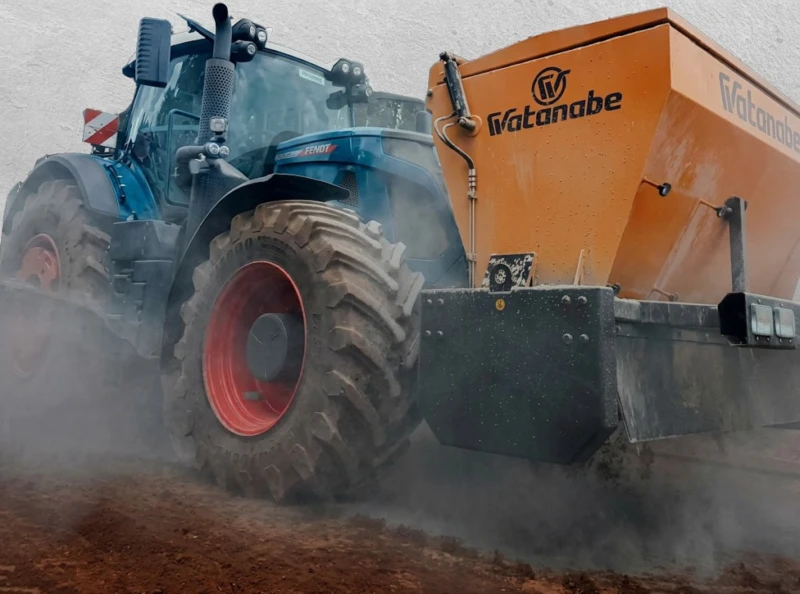
Lime and cement are both proven, effective binders — but only when matched to the correct soil type. Using the wrong one wastes money and produces a road that fails. Use the soil-to-binder table in this guide, confirm with a soil test, and apply with the DCW 2.2 + THOR ST system for uniform, full-depth mixing. Factory-direct pricing, worldwide delivery.
|
Equipment Quote DCW 2.2 + THOR ST system |
Binder Recommendation Matched to your soil test |
Contractor Inquiries Stabilization service equipment |