The Road Problem That Every Rural Operation Faces — and the Solution Most Have Never Heard Of
If you manage a farm, plantation, mine, quarry, forestry operation, or any rural enterprise that relies on unpaved roads, you know the problem: your roads deteriorate. Rain turns them to mud. Dry weather turns them to dust. Heavy vehicles create ruts. Potholes multiply. Grading provides temporary relief that lasts weeks, not months. Gravel washes away. And the cycle repeats — costing you money, time, and vehicle damage every season, every year, with no permanent improvement.
The conventional solution — importing gravel or building an asphalt surface — is prohibitively expensive for most rural road networks. A farm with 5 to 20 km of internal haul roads cannot justify the per-kilometer cost of conventional road construction. So the roads stay unpaved, and the annual cycle of deterioration, repair, deterioration continues indefinitely.
Soil stabilization breaks this cycle. It transforms the existing soil — the material already under your wheels — into a durable, load-bearing road surface by mixing it with a binding agent (lime, cement, or calcium chloride) that chemically alters the soil’s properties. No imported gravel. No asphalt plant. No heavy construction equipment convoys. The result is a solid, dust-free, all-weather road surface at 60 to 80 percent lower cost than conventional alternatives — built with two machines that a single tractor can power.
How Soil Stabilization Works
Soil stabilization improves the engineering properties of existing soil — its bearing capacity, resistance to water, cohesion, and durability — by introducing a chemical binder that reacts with the soil particles to create a stronger, more stable material. The process does not replace the soil; it upgrades it in place.
|
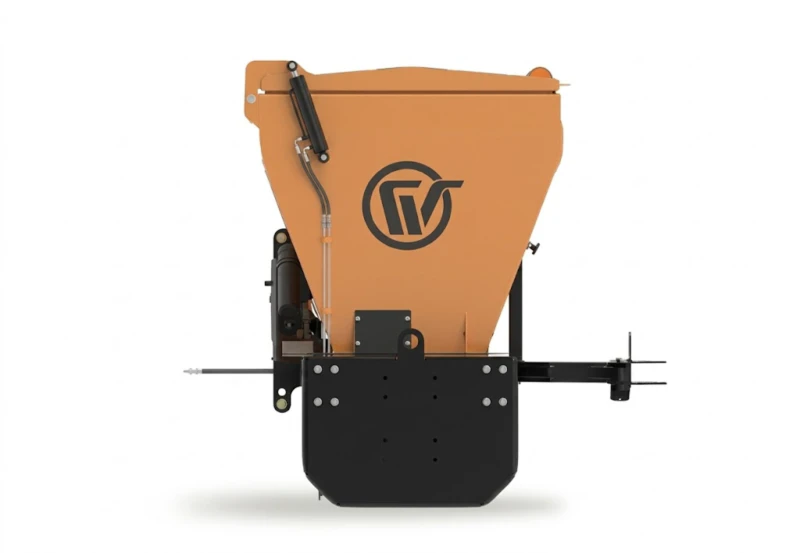
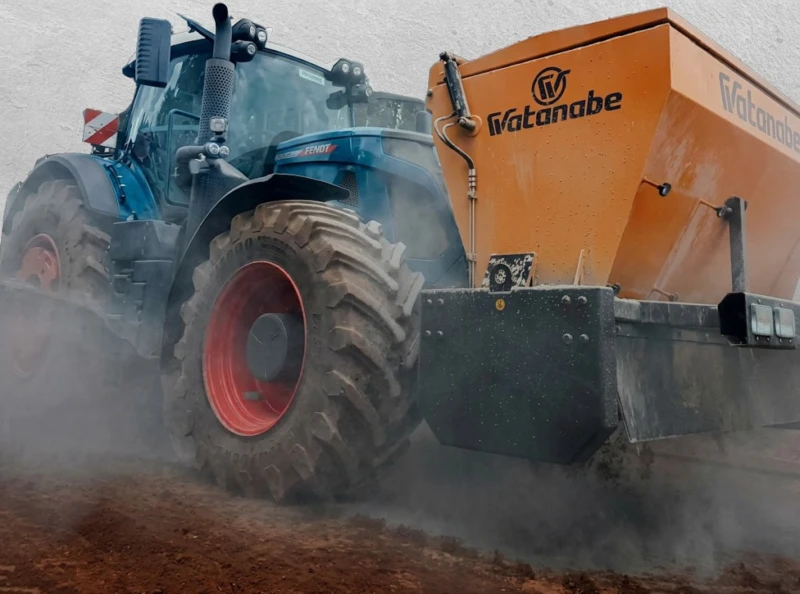
Step 1: Spread the Binder The DCW 2.2 Binder Spreader distributes a precise, uniform layer of powdered lime, cement, or other binder across the road surface. The DCW 2.2’s 2,200 kg hopper capacity and adjustable metering system ensure consistent application rates across the entire road width — critical for uniform road quality. Manual bag spreading cannot achieve this consistency. |
|
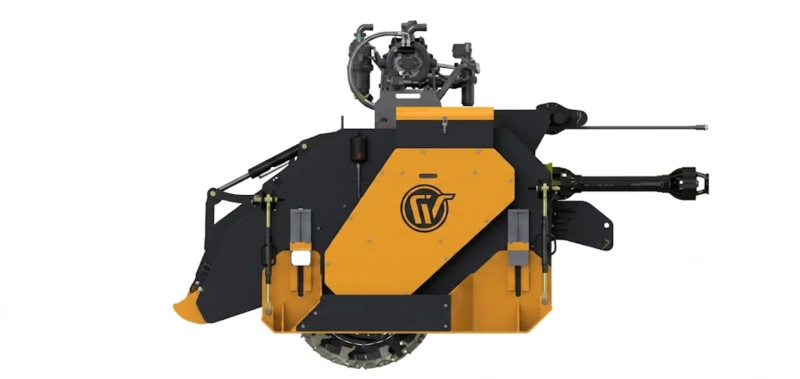
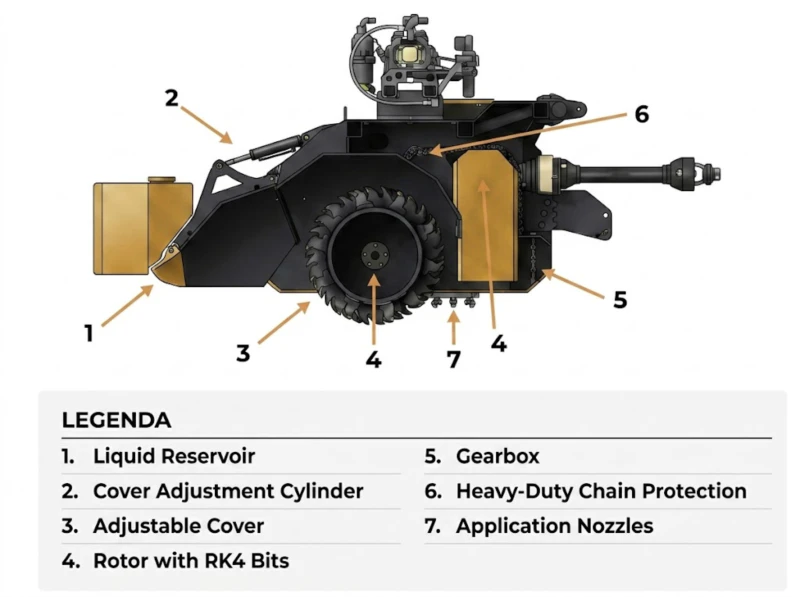
Step 2: Mix and Stabilize The THOR ST Soil Stabilizer passes over the spread binder, mixing it uniformly into the existing soil to a depth of up to 40 cm. The high-speed rotating drum with tungsten carbide tools pulverizes soil clods and blends the binder into every particle. The result is a homogeneous soil-binder mixture throughout the treatment depth — not a thin surface layer that cracks and peels. |
|
Step 3: Grade and Shape A standard grader or the tractor itself with a blade attachment shapes the mixed material into the correct road profile: crown for drainage, correct cross-fall, and smooth surface. The stabilized material is workable for 2 to 4 hours after mixing (depending on binder type), providing adequate time for grading and shaping. |
|
Step 4: Compact A vibratory roller compacts the shaped surface to maximum density. Compaction is essential — it eliminates voids, increases density, and accelerates the chemical reaction between binder and soil. Within 24 to 72 hours (cement) or 7 to 14 days (lime), the stabilized layer reaches its design strength and is ready for traffic. |
The Cost Comparison: Why Stabilization Saves 60-80%
| Cost Factor | Asphalt Road | Gravel Road | Soil Stabilization |
|---|---|---|---|
| Material source | Imported asphalt mix | Imported gravel/aggregate | Existing soil + binder only |
| Material transport cost | Very high (heavy, long distance) | High (heavy, quarry distance) | Low (binder only — light, compact) |
| Heavy equipment needed | Paver, roller, trucks, plant | Trucks, grader, roller | Tractor + DCW 2.2 + THOR ST + roller |
| Specialized labor | Asphalt crew (specialist) | Truck drivers + grader operator | One tractor operator |
| Construction speed | Slow (complex process) | Moderate | Fast (spread → mix → grade → compact in 1 day) |
| Durability | Highest (10-20 years) | Low (re-gravel every 1-3 years) | Good (5-10+ years, retreatable) |
| Dust control | Complete | None — dust remains | Complete — bound surface |
| Cost per km (indicative) | Highest (100%) | Medium (40-60%) | Lowest (20-40%) |
The cost advantage comes from eliminating the two most expensive elements of conventional road construction: material import and heavy equipment mobilization. With soil stabilization, the primary material is already on-site (the soil itself). The only imported material is the binder — which is light, compact, and inexpensive relative to gravel or asphalt. The equipment is tractor-mounted, not heavy construction machinery. The entire process can be completed by a farm’s existing tractor fleet with two additional implements.
Where Soil Stabilization Delivers the Highest ROI
|
Farm Haul Roads Internal roads connecting fields to storage, storage to loading, and loading to public roads. These carry heavy grain trailers, potato trucks, and equipment transporters — loads that destroy unimproved dirt roads within a single wet season. Stabilization creates a surface that handles these loads year-round without rutting, mud, or seasonal closure. |
|
Plantation Access Roads Timber, palm oil, rubber, and sugar cane operations with extensive road networks that must remain passable during the wet harvest season. A single impassable road can strand an entire harvest. Stabilization provides all-weather access at a fraction of the cost of gravelling hundreds of kilometers of plantation roads. |
|
Rural Municipal Roads Local government road networks connecting villages, farms, and market towns. Municipal budgets rarely stretch to asphalt. Soil stabilization delivers a paved-quality surface that serves the community at 20 to 40 percent of the asphalt cost — enabling more kilometers of improved road per budget dollar. |
|
Mining and Quarry Access Heavy truck routes to extraction sites that carry extreme axle loads. Stabilization with cement creates a base layer with CBR values of 80+ percent — sufficient for the heaviest loaded trucks. Dust suppression alone justifies the investment in many mining environments where dust is a health and visibility hazard. |
|
Livestock Farm Yards and Laneways Cow tracks, feeding aprons, and yard surfaces that become muddy slippage hazards during wet weather. Stabilization creates a firm, non-slip surface that reduces lameness risk, improves hygiene, and remains usable year-round. Pairs naturally with compost barn operations where vehicle access to the barn must be maintained in all weather. |
The Equipment: Two Machines That Work Together
|
DCW 2.2 Binder Spreader Role: Distributes powdered lime, cement, or calcium chloride across the road surface in a precise, uniform layer before the stabilizer mixes it into the soil. Capacity: 2,200 kg hopper — enough to cover approximately 200 to 400 linear meters of 3 m wide road per fill at typical application rates (3-6% binder by weight). Key feature: Adjustable metering chain and hydraulic gate control ensure consistent application rate across the entire spreading width. Manual bag spreading cannot match this consistency. Power: Tractor-mounted, hydraulic drive. Compatible with the same tractor that pulls the THOR ST. |
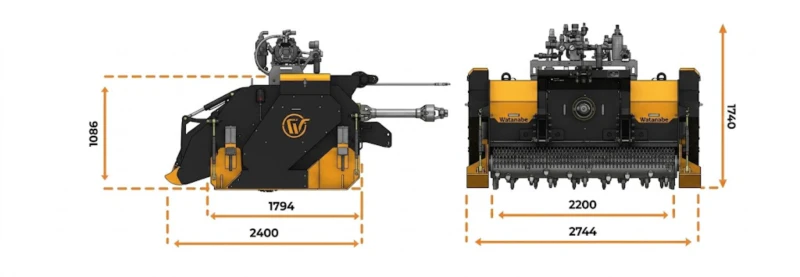
THOR ST Soil Stabilizer Role: Mixes the spread binder into the existing soil to a depth of up to 40 cm, creating a homogeneous soil-binder mixture throughout the treatment depth. Working width: Up to 2.3 m — covers a standard single-lane road in a single pass or a wider road in two offset passes. Key feature: Tungsten carbide tools on the rotating drum pulverize soil clods and rocks while blending the binder. Handles clay, silt, sand, and stony soils — the full range of rural soil types. Power: PTO-driven, 180+ hp tractor. The same rotor technology proven in our THOR stone crusher range, adapted for road stabilization. |
Before and After: What Changes on a Stabilized Road
| Factor | Before (Untreated Soil) | After (Stabilized) |
|---|---|---|
| Wet-weather condition | Mud, ruts, impassable | Solid, trafficable, no ruts |
| Dry-weather condition | Dust clouds, washboard | Dust-free, smooth |
| Bearing capacity (CBR) | 2-8% (weak) | 40-120+% (strong — depending on binder) |
| Heavy vehicle access | Seasonal — wet months closed | Year-round — all weather |
| Maintenance frequency | Monthly grading, annual gravel | Minimal — re-treatment every 5-10+ years |
| Vehicle operating cost | High (fuel, tires, suspension damage) | Reduced 30-50% (smooth, stable surface) |
| Transport speed | 10-20 km/h (limited by surface) | 40-60 km/h (road-quality surface) |
The Hidden Costs of Bad Roads That Stabilization Eliminates
The per-kilometer construction cost of road stabilization is the visible saving. But the ongoing operational savings — often larger than the construction cost itself — are what make the investment transformative:
|
Vehicle damage Rutted, potholed roads destroy tires, shock absorbers, springs, and chassis components. On a farm running 5 to 10 vehicles over rough internal roads daily, annual repair costs from road-induced damage can exceed the one-time cost of stabilizing the worst sections. A smooth stabilized surface reduces vehicle maintenance costs by 30 to 50 percent. |
|
Fuel waste Trucks and tractors on soft, rutted surfaces consume 25 to 40 percent more fuel than on firm, smooth roads — higher rolling resistance, lower gear selection, and slower speeds mean the engine works harder for less distance. Stabilized roads restore fuel efficiency to near-paved levels. |
|
Lost production days When rain closes unpaved roads, harvest stops. Product cannot move from field to storage. Inputs cannot reach the farm. Every closed road day is a lost production day. Stabilized roads eliminate weather-related closures — the road handles rain as well as dry conditions. |
|
Product quality loss Rough roads damage fragile cargo: potatoes bruise, fruit is crushed, milk containers are jolted and contaminated. A smooth stabilized surface dramatically reduces in-transit damage and contamination — improving the quality and value of products arriving at market, processor, or collection point. |
|
Recurring grading and gravel costs Unimproved roads require monthly or quarterly grading and periodic gravel replenishment. Over 10 years, these recurring maintenance costs often exceed the one-time cost of soil stabilization — and the road never actually improves. Stabilization is a one-time investment that produces a lasting result with minimal ongoing maintenance. |
Frequently Asked Questions
|
Q1: What types of soil can be stabilized? Most soil types respond well to stabilization: clay, silt, sandy clay, silty clay, and even some sandy soils. Highly organic soils (peat) and pure sands are less suitable. The THOR ST handles the full range of rural soil types including stony ground — its tungsten carbide tools crush stones during the mixing process. |
|
Q2: Lime or cement — which binder should I use? Lime is best for clay-heavy soils (reduces plasticity, improves workability). Cement is best for silty and sandy soils (adds cohesion and strength). Some projects use both: lime first to condition the soil, then cement for strength. See our detailed guide: Lime vs Cement Stabilization: How to Choose. |
|
Q3: How long does a stabilized road last? A properly constructed and compacted stabilized road typically lasts 5 to 10+ years before re-treatment is needed. Re-treatment is straightforward: spread additional binder and re-mix with the THOR ST. Each re-treatment refreshes and strengthens the existing stabilized layer rather than starting from scratch. |
|
Q4: How many kilometers per day can I stabilize? Depending on road width and soil conditions, the DCW 2.2 + THOR ST combination can spread, mix, and prepare 500 to 1,000 linear meters per day (excluding grading and compaction, which follow immediately). A 10-kilometer farm road network can be fully stabilized in 10 to 20 working days. |
|
Q5: Do I need both the DCW 2.2 and the THOR ST? For professional results: yes. The DCW 2.2 ensures uniform binder distribution (critical for consistent road quality). The THOR ST mixes it into the soil to full depth. Skipping the mechanical spreader and hand-spreading binder from bags produces uneven distribution, inconsistent road quality, and higher labor cost. The two machines are a matched system. |
|
Q6: Can I use the equipment for other purposes? The THOR ST doubles as a soil reclaimer for construction sites, subgrade preparation, and land rehabilitation projects. The DCW 2.2 can spread agricultural lime for soil pH correction and field liming — making it a dual-purpose machine for farms that also stabilize roads. Both machines serve multiple roles within a rural operation. |
|
Q7: Can a contractor do this instead of buying equipment? Yes — soil stabilization is commonly offered as a per-kilometer contractor service. For one-time projects (a single road), hiring is usually more economical. For ongoing rural road management (multiple roads, re-treatments every few years, plus agricultural lime spreading), owning the equipment provides better long-term economics and scheduling independence. |
|
Q8: How do I get a quote for road stabilization equipment? Contact our team with the total road kilometers to treat, soil type, current road condition, and tractor power. We will recommend the right THOR ST model, confirm DCW 2.2 compatibility, and provide factory-direct pricing for the complete road stabilization system. |
Stop Paying to Fix Roads That Never Get Better
Every year you spend on grading, gravelling, and repairing unpaved roads is money that produces no lasting improvement. Soil stabilization converts that recurring cost into a one-time investment that delivers a durable, all-weather, dust-free road surface for 5 to 10+ years — at 60 to 80 percent less than conventional road construction. Two machines. One tractor operator. Permanent results. Factory-direct pricing, worldwide delivery.
|
THOR ST + DCW 2.2 Quote Complete stabilization system |
Road Assessment Soil type and binder recommendation |
Contractor Inquiries Equipment for road stabilization services |