.webp)
DCW 2.2 Binder Spreader
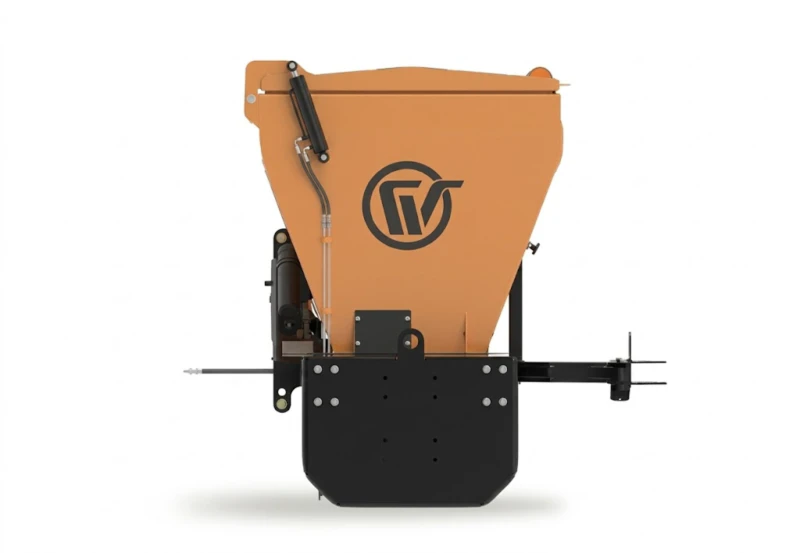
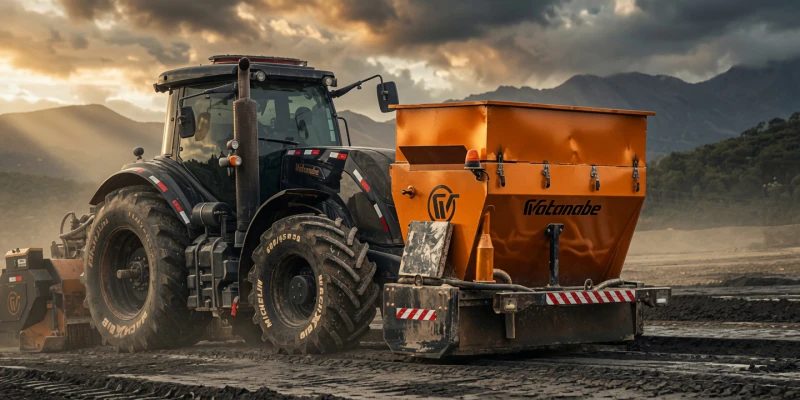
DCW 2.2 Binder Spreader – front-mounted lime & cement distributor with dual rollers and digital rate control. 1 m or 2 m width. Single-pass soil stabilization!
◆ Product Overview
The DCW 2.2 Binder Spreader is a precision front-mounted machine designed to distribute lime, cement, calcium oxide, fly ash, and other hydraulic binders uniformly onto the ground surface ahead of soil stabilization, soil mixing, and ground improvement operations. Mounted at the front of the tractor, the DCW 2.2 spreads binding agents in the same forward pass as the rear-mounted soil stabilizer or reclaimer — combining distribution and mixing in a single operation for maximum efficiency.
Equipped with two independent internal metering rollers, the DCW 2.2 offers selectable application widths of 1 meter or 2 meters depending on the project requirement. An integrated in-cab digital control system with a tractor-mounted display allows the operator to set and adjust application rates in real time — delivering precisely metered, uniform binder distribution that eliminates the inconsistency and waste of conventional manual bag-spreading methods.
With a 2,140 mm working width, 1,300 kg mandatory weight, and compact dimensions (2,680 x 1,780 x 1,740 mm), the DCW 2.2 is designed for road construction, civil engineering, ground improvement, and agricultural soil remediation projects where precision binder application is critical to achieving target soil strength and bearing capacity.
Industries Served: Road Construction & Highway Engineering, Civil Engineering & Ground Improvement, Airport & Railway Subgrade Treatment, Agricultural Soil Remediation, Industrial Site Preparation, Landfill Capping & Environmental Remediation.
Core Advantages at a Glance: Front-mounted for single-pass stabilization | Dual rollers: selectable 1 m or 2 m width | In-cab digital rate control | Eliminates manual bag spreading | Uniform distribution with minimal waste | 1,300 kg with 2,140 mm working width.
◆ Technical Specifications – DCW 2.2 Binder Spreader
| Parameter | DCW 2.2 |
|---|---|
| Dimensions | |
| Width | 1,780 mm |
| Length | 2,680 mm |
| Height | 1,740 mm |
| Working Parameters | |
| Working Width | 2,140 mm (selectable 1 m or 2 m via dual rollers) |
| Mandatory Weight | 1,300 kg |
| Metering Rollers | 2 independent internal rollers |
| Control System | Integrated in-cab digital display |
| Mounting Position | Front-mounted (tractor front linkage) |
| Binder Materials | Lime, cement, calcium oxide, fly ash, powdered binders |
◆ How the DCW 2.2 Binder Spreader Works
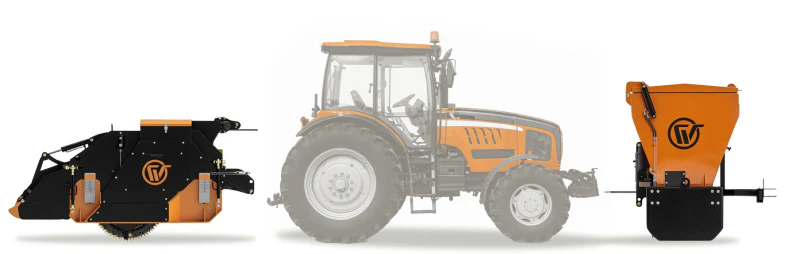
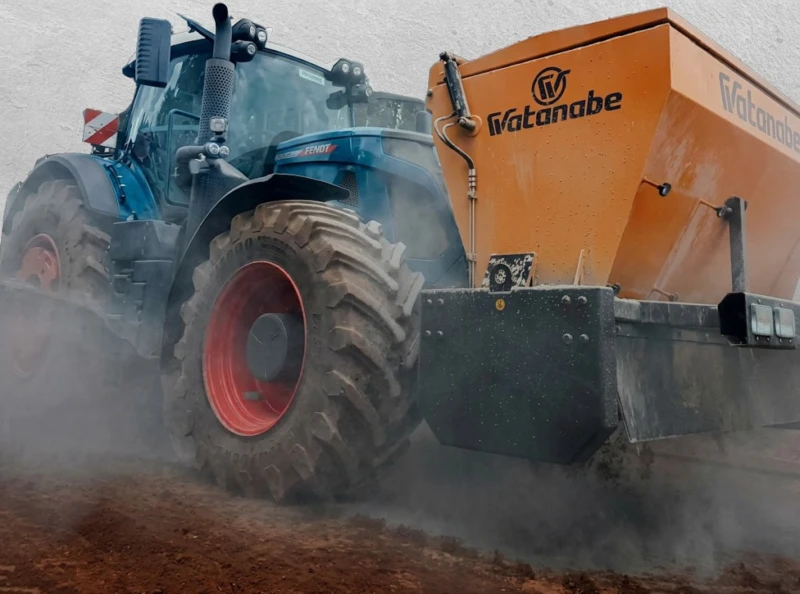
The DCW 2.2 is mounted on the front linkage of the tractor. As the tractor drives forward, the spreader deposits a precisely metered layer of dry binder (lime, cement, or other powder) onto the ground surface directly ahead of the tractor’s path. A rear-mounted soil stabilizer, reclaimer, or rotary mixer then passes over the same ground immediately, mixing the fresh binder into the soil in the same forward pass.
This front-spread, rear-mix workflow eliminates the traditional two-pass process (spread first, mix second) — saving time, fuel, and reducing exposure of loose binder to wind dispersal.
Structural Composition:
| Hopper & Storage | A sealed steel hopper stores the dry binder material (lime, cement, fly ash) and feeds it by gravity to the metering rollers below. The sealed design prevents moisture ingress and wind loss during transport and operation. The hopper is designed for rapid refilling by bulk bag, front-loader, or pneumatic transfer from a silo truck. |
| Dual Metering Rollers | Two independent internal metering rollers control the binder flow rate with high precision. Each roller serves approximately half of the working width. The operator can engage one roller (1 m coverage) or both rollers (2 m coverage) depending on project requirements. This dual-roller design provides width flexibility without changing mechanical parts. |
| Digital Control System | An integrated control unit with a tractor-mounted display allows the operator to set the target application rate (kg per square meter) from the cab. The system automatically adjusts roller speed relative to ground speed, maintaining a consistent rate regardless of tractor speed variation. Real-time rate display and totalizer functions enable precise job documentation. |
| Distribution Outlet | Metered binder exits through a controlled outlet at the base of the machine and is deposited in a uniform curtain onto the ground surface. A wind-protection shroud minimizes airborne dust dispersal during application — critical for operator health, environmental compliance, and avoiding binder waste. |
| Front Mounting Frame | Heavy-duty mounting bracket compatible with standard tractor front linkage systems. The 1,300 kg machine weight acts as front counterbalance when a heavy rear-mounted stabilizer is attached, improving tractor stability and weight distribution. |
◆ Core Advantages of the DCW 2.2 Binder Spreader
|
Front-Mounted Single-Pass Operation Mounted on the tractor’s front linkage, the DCW 2.2 spreads binder ahead of a rear-mounted soil stabilizer in a single forward pass. This eliminates the traditional two-pass workflow (spread first, return and mix), cutting project time roughly in half while reducing fuel consumption and minimizing the time loose binder is exposed to wind. |
In-Cab Digital Rate Control The integrated control system with a tractor-mounted display puts precise application rate management at the operator’s fingertips. Set the target rate in kg per square meter; the system automatically compensates for ground speed changes. This GPS-compatible digital precision is impossible with manual bag-spreading and eliminates human dosing error. |
|
Dual Rollers — Selectable 1 m or 2 m Width Two independent metering rollers allow the operator to select 1 m or 2 m application width without stopping or changing parts. Use full 2 m width for open road corridors, or switch to 1 m for narrow trenches, edges, patch repairs, and confined spaces. This eliminates the need for two separate machines for different application widths. |
Eliminates Manual Bag Spreading Manual bag spreading is slow, labor-intensive, physically demanding, dusty, inconsistent, and wasteful. Workers tear open 25 kg bags, scatter contents by hand, and hope for even coverage. The DCW 2.2 replaces this entire process with a single operator applying binder at precisely controlled rates from the tractor cab — faster, safer, more accurate, and with dramatically less dust exposure. |
|
Uniform Application — Consistent Soil Strength Soil stabilization quality depends directly on uniform binder distribution. Uneven spreading produces zones of under-treatment (weak spots) and over-treatment (wasted binder). The DCW 2.2’s metered roller system delivers consistent coverage across the full working width, ensuring the treated soil achieves uniform strength, bearing capacity, and durability — meeting engineering specifications reliably. |
Reduced Binder Waste and Dust The enclosed hopper, metered roller dispensing, and wind-protection outlet minimize airborne dust during application. Less binder lost to wind means lower material costs and better compliance with workplace health and environmental regulations. Precise rate control also eliminates over-application waste — every kilogram of binder goes into the ground, not into the air. |
◆ Structure and Material Craftsmanship
Hopper: Welded steel construction with reinforced walls to handle the weight and abrasive nature of dry binder materials. Internal surfaces are smooth to promote consistent material flow and prevent bridging. Sealed lid prevents moisture contamination that would cause lime or cement to harden inside the hopper.
Metering Rollers: Two precision-machined steel rollers with calibrated pocket or flute geometry that meters a consistent volume of binder per revolution. Roller speed is independently controlled via the digital system, allowing asymmetric application if needed (e.g., heavier dosing on one side).
Control Electronics: Industrial-grade control unit with weatherproof in-cab display. The system reads ground speed (via wheel sensor or GPS), calculates the required roller speed for the target application rate, and adjusts automatically in real time. Operators can set rates in kg/m2, monitor cumulative application totals, and log job data.
Frame: Heavy-gauge structural steel with standard front-linkage mounting points. The compact dimensions (2,680 x 1,780 x 1,740 mm) ensure compatibility with the front lift of common construction and agricultural tractors without obstructing forward visibility.
Surface Finish: All components shot-blasted and powder-coated for industrial-grade corrosion resistance in construction site environments.
◆ Application Scenarios
|
Road Construction — Subgrade and Base Stabilization The primary application: spreading lime or cement onto road subgrade or base layers before mixing with a soil stabilizer to achieve target CBR (California Bearing Ratio) and unconfined compressive strength. The DCW 2.2’s precision metering ensures the specified binder content (typically 2-6% by weight) is applied uniformly, directly determining the structural quality of the finished road. |
|
Ground Improvement — Soft Soil Treatment For construction on clay, silt, or waterlogged soils, lime stabilization transforms unworkable ground into a solid, trafficable platform. The DCW 2.2 applies quicklime or hydrated lime at controlled rates, which reacts with clay minerals to reduce plasticity, lower moisture content, and increase bearing capacity — enabling construction to proceed without costly soil removal and replacement. |
|
Airport Runways and Railway Subgrade Airport and railway projects demand the highest uniformity standards for subgrade treatment. The DCW 2.2’s digital rate control and metered roller precision meet these standards consistently — ensuring every square meter of the treated area receives exactly the specified binder content for certified structural performance. |
|
Agricultural Soil Remediation Acidic agricultural soils are remediated by applying lime to raise pH and improve nutrient availability. The DCW 2.2 provides far more uniform and controllable application than traditional broadcast lime spreaders, enabling precise pH correction across the field. Combined with a rear-mounted rotavator or soil mixer, lime is incorporated in a single pass. |
|
Environmental Remediation and Landfill Works Contaminated site remediation and landfill capping projects use cement or lime stabilization to encapsulate contaminants and create impermeable cap layers. The DCW 2.2’s enclosed, low-dust delivery system is especially valuable in these sensitive environments where minimizing airborne particulates is both an environmental and worker-safety requirement. |
◆ Selection Guide — DCW 2.2 vs. Manual Bag Spreading
| Criteria | DCW 2.2 | Manual Bag Spreading |
|---|---|---|
| Application Uniformity | Metered, digitally controlled | Variable, operator-dependent |
| Labor Required | 1 operator (in-cab) | 4-10+ workers per shift |
| Dust Exposure | Minimal (enclosed system) | Severe (open bags, wind) |
| Speed | Continuous at tractor speed | Slow, stop-and-spread |
| Binder Waste | Near zero (metered) | 10-30% typical loss |
| Rate Documentation | Digital logging, auditable | Estimated bag counts only |
◆ DCW 2.2 vs. Competing Binder Spreaders
Disclaimer: We reference competing products solely for customer comparison. All brand names are trademarks of their respective owners.
| Comparison | DCW 2.2 | Typical Competitors |
|---|---|---|
| Selectable Width | 1 m or 2 m (dual roller) | Usually fixed width |
| Digital Control | Integrated in-cab display | Varies, often manual gate |
| Mounting | Front-mounted (single-pass) | Self-propelled or trailed |
| Lead Time | 15-25 days | Varies |
| Price-Performance | Significantly better value | Premium pricing |
◆ Frequently Asked Questions
|
Q1: What binder materials can the DCW 2.2 spread? Quicklime (calcium oxide), hydrated lime (calcium hydroxide), Portland cement, fly ash, slag cement, and other dry powdered hydraulic binders. The metering rollers handle different powder densities and granule sizes. Tell us your specific material for calibration confirmation. |
|
Q2: How does the digital control system work? The operator enters the target application rate (kg/m2) on the in-cab display. The system reads ground speed from a wheel sensor or GPS input, calculates the required roller speed, and adjusts automatically and continuously. If the tractor speeds up or slows down, the roller speed adjusts to maintain the set rate. The display shows live rate, cumulative total, and area covered. |
|
Q3: Why is front-mounting better than a separate spreading pass? Front-mounting allows binder distribution and soil mixing in a single forward pass. This halves project time, reduces fuel consumption, eliminates a second pass of equipment over the ground, and minimizes the time loose binder sits on the surface exposed to wind dispersal. The net result is faster, cheaper, and more precise stabilization. |
|
Q4: What application rates can the DCW 2.2 achieve? The metering system covers the typical range required for soil stabilization: approximately 5 to 50 kg/m2 depending on binder type, soil condition, and engineering specification. Precise minimum and maximum rates depend on the specific binder material density. Contact us with your project specification for confirmation. |
|
Q5: Can I use only one roller for narrow applications? Yes. The two internal rollers operate independently. Engage one roller for approximately 1 m width coverage, or both for full 2 m width. This is controlled from the in-cab display and does not require stopping or leaving the tractor. |
|
Q6: What tractors are compatible? The DCW 2.2 mounts on standard tractor front linkage systems. The tractor must have a front linkage rated for at least 1,300 kg lift capacity. Compatible tractors typically range from 100 to 300+ hp depending on what rear implement is paired with the spreader. Contact us with your tractor model for compatibility confirmation. |
|
Q7: Does the DCW 2.2 help with dust regulations? Yes. The enclosed hopper, metered roller dispensing, and wind-protection outlet system generate significantly less airborne dust than manual bag spreading or open-gate spreaders. This helps meet workplace health and safety regulations for airborne particulate exposure and supports environmental compliance on sensitive sites. |
|
Q8: Can the DCW 2.2 be used for agricultural lime spreading? Yes. For precision agricultural liming — correcting soil pH on high-value crop land — the DCW 2.2 provides far more uniform and controllable application than conventional broadcast spreaders. Combined with a rear-mounted rotavator or soil mixer, lime is incorporated in a single pass for immediate soil reaction. |
|
Q9: Do you ship the DCW 2.2 internationally? Yes, we export worldwide. Production takes 15-25 days. We handle all export documentation and offer CIF or FOB pricing. Please contact our team for a quotation. |
|
Q10: What maintenance does the DCW 2.2 require? After each use: empty and clean the hopper to remove residual binder (lime and cement are hygroscopic and will harden if exposed to moisture). Inspect metering roller surfaces and calibration. Check distribution outlet for blockages. Inspect all mounting bolts, linkage pins, and electronic connections. Grease all pivot and bearing points. Store under cover with hopper lid sealed. |
◆ Partner With Us
Whether you are a road construction contractor upgrading from manual bag spreading, a civil engineering firm equipping a soil stabilization fleet, or a dealer sourcing precision binder distribution equipment — we are ready to work with you. As the manufacturer behind agriculturalstonecrusher.com, we deliver factory-direct pricing and dedicated after-sales support for our complete product range.
|
Request a Quote Factory-direct pricing |
Become a Dealer Exclusive territory opportunities |
Technical Consultation Binder rate and project advice |