From Dirt Track to All-Weather Road in Four Steps and One Day
Soil stabilization is a straightforward, repeatable process that transforms an existing dirt, mud, or gravel road into a durable, all-weather surface. The workflow consists of four sequential steps — spread, mix, grade, compact — each performed by a specific machine in a specific order. Skip a step or change the sequence and the result suffers. Follow the workflow correctly and the result is a road that handles heavy traffic, rain, and years of use without the cycle of deterioration and re-grading that characterizes untreated roads.
This guide walks through every step in operational detail: what machine to use, what settings to apply, what to watch for, and what mistakes to avoid. Whether you are a farmer stabilizing your own haul roads, a contractor offering stabilization services, or a municipal engineer building rural infrastructure, this is the operational reference for turning the workflow into a finished road.
Before You Start: Pre-Work Assessment
Successful stabilization begins before any machine enters the site. These pre-work steps prevent costly surprises during the operation:
|
1. Test the soil Take samples from 3 to 5 points along the road at 15 to 30 cm depth. A basic lab test (Atterberg limits, particle size distribution) determines the soil type and Plasticity Index — the two numbers that dictate the binder choice. See our guide: Lime vs Cement Stabilization: How to Choose. |
|
2. Calculate binder quantity Road width × treatment depth × road length × soil density × binder percentage = total binder tonnage. A typical calculation: 3 m wide × 0.30 m deep × 1,000 m long × 1,800 kg/m³ soil density × 5% cement = 81 tonnes of cement per kilometer. Order binder before work begins — running out mid-project stops everything. |
|
3. Clear the road surface Remove vegetation, loose debris, large rocks (over 150 mm), and any standing water. The THOR ST can handle embedded stones up to moderate size (its tungsten carbide tools crush them during mixing), but surface debris interferes with uniform binder spreading. A quick grader pass to level the worst ruts and potholes creates a more consistent starting surface. |
|
4. Check soil moisture The soil should be near Optimum Moisture Content (OMC) for compaction — typically 10 to 15 percent for most soils. Too dry: the binder cannot react properly and compaction is difficult. Too wet: the stabilized layer will be weak. If the soil is very dry, pre-wet with a water truck 12 to 24 hours before treatment. If very wet, wait for drying or use lime first (lime dries wet clay immediately). |
|
5. Check the weather Do not stabilize if heavy rain is forecast within 24 hours of compaction. Light rain after compaction is acceptable (aids cement curing). Heavy rain on freshly mixed, uncompacted soil washes away binder and destroys the treatment. For cement stabilization, plan the work so that spreading, mixing, grading, and compaction are all completed within a single dry-weather window. |
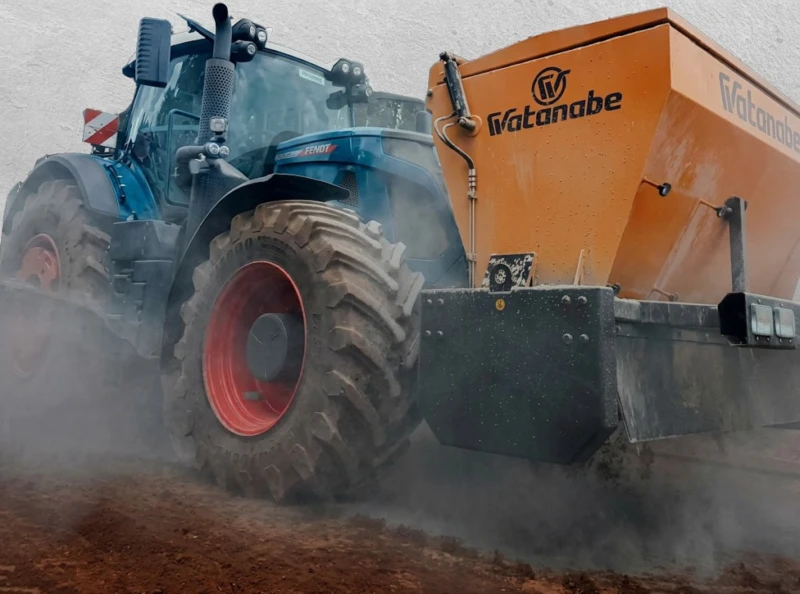
Step 1: Spread the Binder — DCW 2.2 Binder Spreader
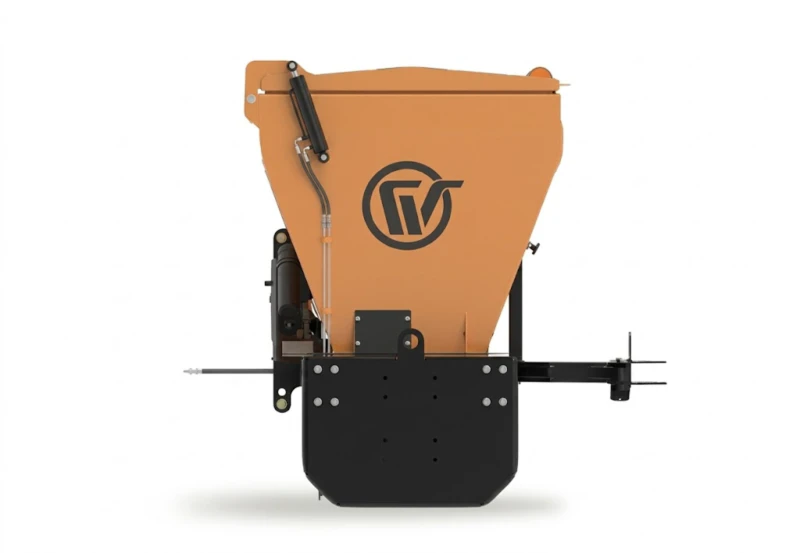
| Equipment | DCW 2.2 Binder Spreader — 2,200 kg hopper, hydraulic metering, adjustable spread width |
| Purpose | Distribute a precise, uniform layer of powdered binder (lime or cement) across the road surface before mixing |
| Speed | 3 to 6 km/h, depending on application rate and spread width |
| Coverage per fill | 200 to 400 linear meters of 3 m wide road at typical dosage rates (3-6% by weight) |
Operational protocol: Load the DCW 2.2 hopper with bagged or bulk binder. Set the metering gate to achieve the target application rate (kg/m²) — calculated from the dosage percentage, treatment depth, and soil density. Drive at constant speed along the road centerline. The hydraulic metering chain and gate deliver a uniform binder curtain across the full spread width. Overlap passes by 10 to 15 cm on multi-pass roads to avoid untreated strips.
Critical point: Binder distribution uniformity is the single most important quality factor in the entire workflow. Uneven spreading produces sections of over-dosed road (hard, brittle) alongside sections of under-dosed road (weak, soft). The DCW 2.2’s mechanical metering achieves consistency that manual bag spreading cannot replicate — this is why mechanical spreading is the professional standard.
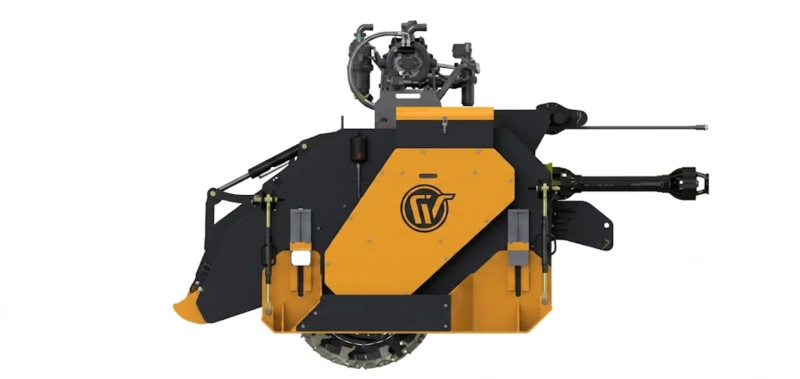
Step 2: Mix Into the Soil — THOR ST Soil Stabilizer
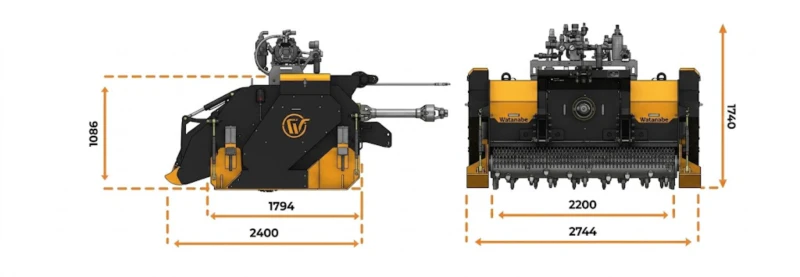
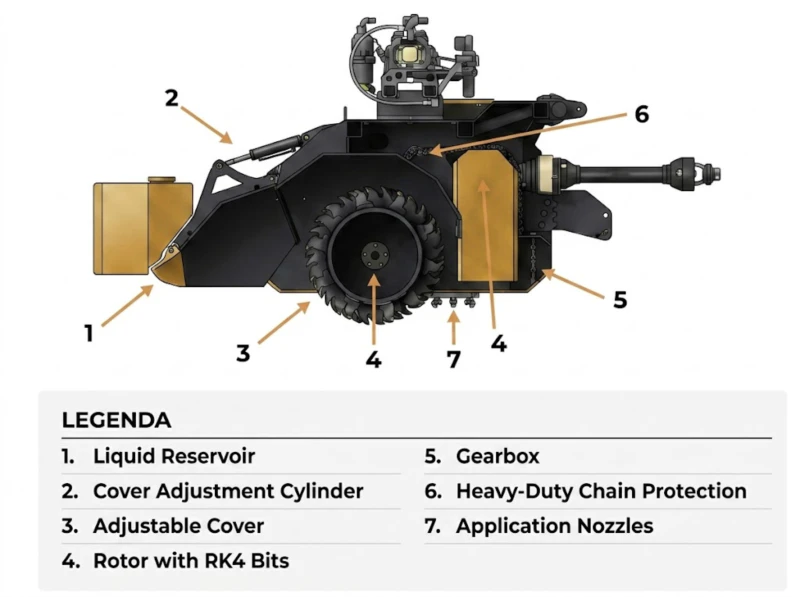
| Equipment | THOR ST Soil Stabilizer — PTO-driven rotating drum with tungsten carbide tools, up to 40 cm mixing depth |
| Purpose | Blend the spread binder uniformly into the existing soil throughout the full treatment depth, pulverizing clods and stones in the process |
| Speed | 1 to 3 km/h (slow for thorough mixing) |
| Passes | One or two passes per section. Two passes produce more homogeneous mixing — recommended for cement stabilization where uniformity is critical for strength |
Operational protocol: Set the THOR ST’s working depth to match the target treatment depth (typically 25 to 40 cm). Engage PTO at the specified RPM. Drive at constant low speed along the same path as the binder spread. The high-speed rotating drum lifts soil, pulverizes it through the tungsten carbide tools, and blends the binder into every particle before depositing the mixed material behind the machine. Check mixing quality by stopping periodically and digging a test pit — the binder color should be uniform throughout the treatment depth with no visible streaks or unmixed pockets.
|
For Lime Stabilization After mixing, leave the lime-soil mixture to mellow for 1 to 7 days before final grading and compaction (or before cement addition in a dual-treatment approach). The mellowing period allows the pozzolanic reaction to modify the clay. The THOR ST can make a second mixing pass after the mellow period to re-homogenize the material before final compaction. |
|
For Cement Stabilization Proceed immediately to grading and compaction. Cement begins hydrating on contact with moist soil — you have a working window of 2 to 4 hours to complete mixing, grading, and compaction before the material begins to set. Plan the daily production length so the roller reaches the last mixed section within this window. Never leave cement-mixed soil uncompacted overnight. |
Step 3: Grade and Shape
| Equipment | Motor grader, or tractor with rear-mounted grading blade. For small projects, a skid-steer with bucket can shape the surface |
| Purpose | Shape the mixed material into the final road profile: crown for water drainage, correct cross-slope, smooth driving surface, even thickness |
Operational protocol: Shape the mixed material into a crowned profile — the center of the road should be 2 to 4 cm higher than the edges per meter of half-width. This crown ensures rainwater drains to the road edges rather than pooling on the surface. Grade in long, even passes to create a smooth profile without dips or bumps. Check level with a string line or laser if precision is required. Remove any oversized stones or debris exposed during mixing that the grader brings to the surface.
Drainage ditches: If the road lacks side drainage, now is the time to cut shallow ditches or shape the road shoulder to direct water away from the stabilized surface. Water that pools on or beside a stabilized road will eventually soften the edges — drainage is essential for long-term performance.
Step 4: Compact
| Equipment | Vibratory smooth-drum roller (8 to 12 tonne). A padfoot roller may be used for initial breakdown on clay soils, followed by a smooth drum for the final surface |
| Purpose | Eliminate air voids, maximize density, accelerate chemical reaction, and create a smooth finished surface |
Operational protocol: Begin compaction from the road edges and work toward the center — this prevents material from pushing outward and losing the crowned profile. Use vibration on the first passes to achieve depth compaction, then switch to static (non-vibrating) mode for the final surface passes to create a smooth finish. Overlap each pass by 15 to 20 cm. Typically 4 to 8 passes achieve target density (95 to 98 percent of Modified Proctor maximum).
Timing is everything (cement): Compaction must be completed within 2 to 4 hours of THOR ST mixing for cement-stabilized soils. Late compaction breaks the early cement bonds, producing a weaker final result. For long road sections, stagger the workflow: spread and mix 200 to 300 m, then immediately grade and compact that section while the next section is being spread and mixed. Relay the equipment in sequence rather than completing all spreading before starting mixing.
After Compaction: Curing and Opening to Traffic
| Cement-stabilized road | Keep the surface moist for 3 to 7 days after compaction by light water spraying 2 to 3 times daily (or cover with damp hessian/fabric). This curing allows cement hydration to continue without drying out, maximizing strength. Open to light traffic after 3 days; heavy traffic after 7 days. Full design strength is reached at 28 days. |
| Lime-stabilized road | Can be opened to traffic immediately after compaction. Lime stabilization develops strength gradually over weeks to months. The road improves over time as the pozzolanic reaction continues. Protect from heavy rain during the first 48 hours if possible. |
| Dual treatment (lime + cement) | Cure as for cement-stabilized road after the final cement mixing and compaction. The lime mellowing period is the pre-treatment; the cement curing period is the post-treatment. Total timeline from start to heavy traffic: 10 to 14 days (lime mellow + cement cure). |
Typical Daily Production Rate
| Operation | Rate | Time for 500 m |
|---|---|---|
| Binder spreading (DCW 2.2) | 3-6 km/h | 10-15 min (incl. refills) |
| Soil mixing (THOR ST, 2 passes) | 1-3 km/h | 30-50 min |
| Grading | 2-5 km/h | 15-25 min |
| Compaction (6-8 passes) | 2-4 km/h per pass | 40-60 min |
| Total per 500 m section | 2 to 3 hours (all four steps) | |
| Daily production (8-hour day) | 500 to 1,000 linear meters | |
A 10-kilometer farm road network can be fully stabilized in 10 to 20 working days with this workflow. For larger networks or contractor operations, two equipment sets operating in parallel can double the daily output.
6 Common Workflow Mistakes and How to Avoid Them
|
1. Uneven binder spreading Result: Alternating strong and weak zones that fail under traffic. Fix: Use the DCW 2.2 at constant speed with calibrated metering. Never spread by hand from bags for professional road construction. |
|
2. Insufficient mixing depth Result: Thin stabilized surface layer that cracks and peels from the unstabilized soil beneath. Fix: Set the THOR ST depth gauge to the full target treatment depth (25-40 cm) and verify by digging test pits after mixing. |
|
3. Late compaction on cement Result: Roller breaks early cement bonds, producing 30 to 50 percent lower final strength. Fix: Stagger the workflow in short sections (200-300 m) so the roller reaches each section within 2 hours of THOR ST mixing. |
|
4. Compacting at wrong moisture Result: Low density, high void content, weak road. Fix: Check moisture by squeezing a fistful of mixed material — it should form a ball that cracks slightly under pressure. Add water if too dry; wait or add dry material if too wet. |
|
5. No drainage provision Result: Water pools on or beside the stabilized surface, softening the edges and eventually undermining the road. Fix: Grade with a 2-4% crown and ensure side drainage channels exist to carry water away from the road edge. |
|
6. Skipping the curing period (cement) Result: Cement dries out before fully hydrating, reaching only 50 to 70 percent of potential strength. Fix: Keep surface moist for 3 to 7 days post-compaction. Light water spraying or covering with damp fabric prevents premature drying. |
Frequently Asked Questions
|
Q1: How many people does the workflow require? Minimum: one tractor operator (runs both DCW 2.2 and THOR ST sequentially), one grader operator, and one roller operator — three people total. On small farm projects, one operator can run all equipment sequentially with careful scheduling. A quality controller who checks binder rate, mixing depth, and compaction density improves results. |
|
Q2: Can I stabilize in wet weather? Lime stabilization can proceed in damp conditions — lime actively dries wet soil. Cement stabilization should not proceed during or immediately after heavy rain, as excess moisture weakens the cement reaction. Light drizzle after compaction is acceptable (helps curing). Plan cement work for dry weather windows. |
|
Q3: Do I need a separate water truck? Useful but not always essential. If the soil is near OMC naturally, no water addition is needed. If the soil is too dry, a water truck or tractor-mounted water tank adds moisture during or after THOR ST mixing. For cement curing, a simple water trailer with a spray bar is sufficient. On most rural projects, a tractor-mounted water bowser handles both needs. |
|
Q4: Can the same tractor pull both the DCW 2.2 and the THOR ST? Not simultaneously — they are separate implements used sequentially. The DCW 2.2 is tractor-mounted with hydraulic drive. After spreading a section, unhitch the DCW and hitch the THOR ST to mix. On larger projects, using two tractors (one for each implement) allows leapfrogging: the spreader works ahead while the stabilizer follows on the previous section. |
|
Q5: What if I find different soil types along the road? Treat each soil section with the appropriate binder: lime for clay sections, cement for sandy/silt sections. Transition between binder types at natural soil boundaries. The DCW 2.2 hopper is emptied and refilled with the new binder type at each transition. The THOR ST mixes whichever binder was spread without any adjustment. |
|
Q6: How do I get the equipment and start a project? Contact our team with your road network length, soil type, and tractor power. We will quote the DCW 2.2 + THOR ST system, recommend the binder and application rate, and provide production timeline estimates for your specific project. |
Four Steps. One Day. A Road That Lasts Years.
Spread, mix, grade, compact — the complete soil stabilization workflow that transforms dirt tracks into durable all-weather roads. Two machines make it happen: the DCW 2.2 for precision binder distribution and the THOR ST for full-depth soil mixing. Factory-direct pricing, worldwide delivery.
|
DCW 2.2 + THOR ST Quote Complete system pricing |
Project Planning Binder, rate, and timeline |
Contractor Equipment Stabilization service fleet |