Your Soil Is Telling You Exactly What It Needs. The Test Report Is the Translation.
A soil test report is the most valuable document a farmer receives each season — yet it is also one of the most commonly misread, misunderstood, or simply ignored. The single page of numbers, abbreviations, and ratings it contains tells you precisely what nutrients your soil has, what it lacks, whether its pH is correct for your crop, and how much of each fertilizer and lime product to apply. Farmers who use this information make targeted, cost-effective applications. Farmers who guess apply too much of what the soil already has and too little of what it needs — wasting money and limiting yield.
This guide walks through a standard soil test report line by line, explains what each value means, shows how to convert the results into actionable fertilizer and lime rates, and identifies the equipment that applies those rates accurately in the field.
The 7 Key Numbers on Every Soil Test Report
|
1. pH — Soil Acidity/Alkalinity What it means: A scale from 0 (extremely acidic) to 14 (extremely alkaline), with 7.0 being neutral. Most crops grow best between pH 6.0 and 7.0. Potatoes prefer slightly acidic conditions: pH 5.5 to 6.5. If too low (acidic): Apply agricultural lime to raise pH. The soil test report typically includes a lime recommendation in tonnes per hectare. Lime can be spread with the DCW 2.2 Binder Spreader, which handles powdered agricultural lime as well as road construction binders. If too high (alkaline): Rare in most agricultural regions. Elemental sulfur or acidifying fertilizers can lower pH gradually. Consult an agronomist for high-pH soils. |
|
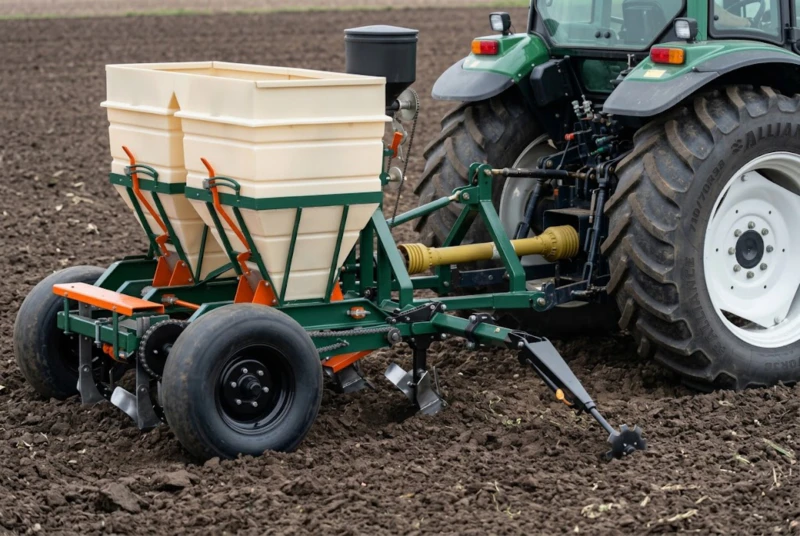
2. P (Phosphorus) — Available Phosphorus What it means: The amount of plant-available phosphorus in the soil, usually expressed in mg/kg (ppm) or as a P index (0 to 5+ scale). Phosphorus is critical for root development, tuber initiation, and energy transfer within the plant. For potatoes: Target P index 3 (adequate) to 4 (optimal). Below index 2, phosphorus deficiency limits yield significantly. Phosphorus is immobile in soil — it must be placed near the roots, not broadcast. The PANTHER and PAI planters place P-rich starter fertilizer directly alongside the seed tuber for immediate root access. If low: Apply phosphorus fertilizer (e.g., DAP 18-46-0, MAP 11-52-0) at rates recommended on the test report. Banded application via the ERA cultivator or planter delivers phosphorus directly to the root zone — 2 to 3 times more efficient than broadcasting. |
|
3. K (Potassium) — Available Potassium What it means: Plant-available potassium, expressed in mg/kg or as a K index. Potassium drives tuber sizing, starch accumulation, disease resistance, and water regulation in potatoes. It is the nutrient consumed in the highest quantity by potato crops. For potatoes: Target K index 2+ (adequate). Potato crops remove 200 to 350 kg K₂O per hectare at yields of 40 to 50 t/ha — more than any other major nutrient. If the test shows K index 0 or 1, a substantial potassium application is needed. Apply via base dressing during seedbed preparation (ERA cultivator or ADB-380/480) to ensure deep root-zone placement. |
|
4. N (Nitrogen) — Available or Mineralizable Nitrogen What it means: Some reports measure available nitrate-N or ammonium-N; others estimate the soil’s nitrogen mineralization potential (how much N the soil will release during the growing season from organic matter breakdown). Nitrogen is the primary driver of canopy growth and yield potential. For potatoes: Total N requirement: 150 to 250 kg N/ha depending on variety and yield target. The soil test N value is subtracted from the total requirement — the remainder is the fertilizer N to apply. Banded application at planting via the PAI or PANTHER planter ensures N is immediately available to the emerging root system. |
|
5. Mg (Magnesium) What it means: Plant-available magnesium, essential for chlorophyll production (photosynthesis). Deficiency causes yellowing between leaf veins. Often reported alongside K, as high potassium application can induce magnesium deficiency by competing for root uptake. If Mg is low, use a Mg-containing compound fertilizer (e.g., NPK 12-12-17+2MgO) or apply dolomitic lime (which contains both calcium and magnesium) instead of calcitic lime for pH correction. |
|
6. Organic Matter (%) What it means: The percentage of the soil that is decomposed plant and animal material. Organic matter improves water holding, nutrient retention, soil structure, and biological activity. Typical values: 1 to 3 percent (mineral soils), 3 to 6 percent (fertile loams), 10+ percent (peaty soils). Higher organic matter generally means higher natural fertility and better nitrogen mineralization — reducing the amount of fertilizer N needed. This value also influences lime requirement: organic soils buffer pH more strongly and may need higher lime rates to achieve the same pH shift. |
|
7. CEC (Cation Exchange Capacity) What it means: The soil’s ability to hold and release positively charged nutrient ions (K⁺, Ca²⁺, Mg²⁺, NH₄⁺). Measured in meq/100g or cmol/kg. Higher CEC means greater nutrient holding capacity — the soil acts as a larger nutrient reservoir, reducing leaching losses. Sandy soils have low CEC (5 to 10); clay and organic soils have high CEC (20 to 40+). CEC influences fertilizer strategy: low-CEC soils benefit from split applications (smaller doses more frequently) to avoid leaching; high-CEC soils can receive larger single applications that the soil stores until the plant needs them. |
Reading the Ratings: What “Low,” “Medium,” and “High” Mean
Most soil test laboratories convert raw analytical values (mg/kg) into rating categories to make interpretation easier. While the exact thresholds vary by laboratory, the general system is consistent:
| Rating | What It Means | Action |
|---|---|---|
| Very Low / Deficient | Severe deficiency — yield will be limited without correction | Apply the full recommended rate immediately. For P and K, build-up applications over 2 to 3 years may be needed to raise reserves. |
| Low | Below optimum — yield response to fertilizer is likely | Apply the recommended rate. The crop will respond with measurable yield increase. |
| Medium / Target | At or near optimum — the soil has adequate reserves | Apply a maintenance rate — enough to replace what the crop removes, keeping the level stable. |
| High | Above optimum — soil has surplus reserves | Reduce or skip application. Additional fertilizer at this level produces minimal yield response — the money is wasted. |
| Very High | Excessive — potential for nutrient imbalance or environmental loss | Do not apply this nutrient. Allow the crop to draw down reserves over 2 to 3 seasons before resuming application. |
The cost-saving insight: Every nutrient rated “High” or “Very High” on your soil test is a nutrient you do not need to buy this season. Farmers who ignore soil tests and apply a standard blanket rate of NPK every year often over-apply the nutrients their soil already has enough of — spending money on fertilizer that produces zero yield benefit. The test pays for itself many times over by identifying which nutrients to skip.
From Report to Field: Converting Results Into Application Rates
The soil test report usually includes fertilizer recommendations — either as nutrient rates (kg N/ha, kg P₂O₅/ha, kg K₂O/ha) or as compound fertilizer product rates (kg/ha of a specific NPK grade). Here is how to use these numbers:
|
Step 1: Read the recommended nutrient rates The report says, for example: “Apply 180 kg N/ha, 80 kg P₂O₅/ha, 220 kg K₂O/ha.” These are the total nutrients your crop needs from fertilizer (after accounting for what the soil already supplies). |
|
Step 2: Choose your fertilizer product(s) Select compound NPK grades that match the recommended ratio. For example, NPK 10-20-20 provides N, P, and K in one product. The ratio 10:20:20 is close to the recommended ratio 180:80:220 — so a base dressing of this compound plus a nitrogen top-up delivers all three nutrients efficiently. |
|
Step 3: Calculate the product application rate Divide the recommended nutrient rate by the nutrient percentage in the product. Example: 220 kg K₂O needed ÷ 0.20 (20% K₂O in NPK 10-20-20) = 1,100 kg/ha of NPK 10-20-20. This rate provides 110 kg N, 220 kg P₂O₅, and 220 kg K₂O — then top up the remaining 70 kg N with a straight nitrogen fertilizer (e.g., 200 kg/ha of ammonium nitrate 34.5%). |
|
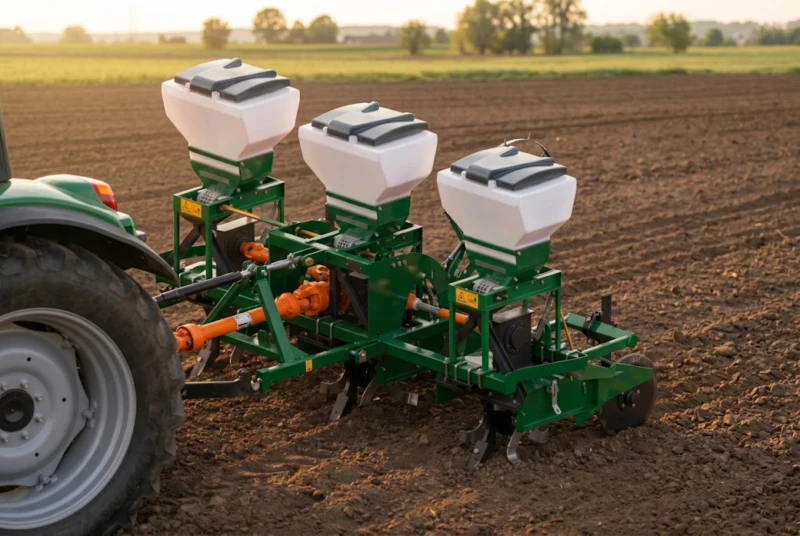
Step 4: Decide the application strategy For potatoes, the dual-band approach delivers the highest efficiency: 60 to 70 percent of the total as a base dressing during seedbed preparation (via ERA cultivator or ADB-380/480), and 30 to 40 percent as a starter dressing at planting (via PANTHER or PAI planter). This places nutrients at two depths for immediate and sustained feeding. See: How Dual Fertilizer Application Improves Potato Yield. |
|
Step 5: Set the equipment Calibrate your applicator to the calculated product rate (kg/ha). The ERA cultivator, ADB-380/480, and PANTHER/PAI planters all have adjustable metering systems. Run a calibration check: weigh the product dispensed over a measured distance and adjust until the actual rate matches the target. Accurate calibration converts the soil test recommendation into precise field application — closing the loop from laboratory to yield improvement. |
The Lime Recommendation: Correcting pH
If your soil test shows pH below the target range (below 6.0 for most crops, below 5.5 for potatoes), the report will include a lime recommendation — typically expressed in tonnes of calcium carbonate equivalent (CaCO₃) per hectare. This is the amount of pure limestone needed to raise the pH to the target level.
| Lime recommendation | Example: “Apply 3.5 tonnes CaCO₃ equivalent per hectare.” This means 3.5 tonnes of pure limestone — if your lime product is 90% CaCO₃ purity, apply 3.5 ÷ 0.90 = 3.9 tonnes/ha of your actual product. |
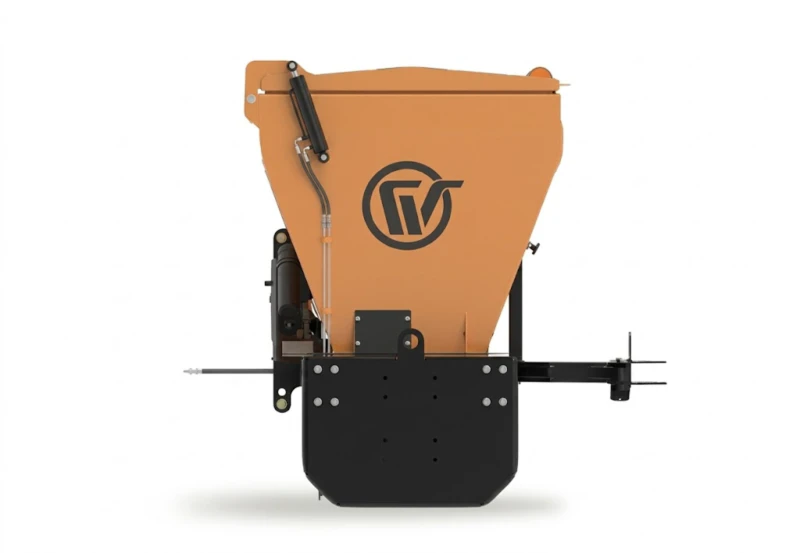
| Application equipment | The DCW 2.2 Binder Spreader handles agricultural lime spreading — the same machine used for road stabilization binder distribution. Its 2,200 kg hopper and calibrated metering system ensure uniform coverage at the prescribed rate. |
| Timing | Apply lime 3 to 6 months before planting if possible — the pH correction takes time. Incorporate into the soil by ploughing or rotavating after spreading. For soil stabilization projects, lime serves a dual purpose: pH correction for agriculture and structural improvement for roads. |
| Frequency | Re-test every 3 to 5 years. Soils gradually re-acidify through rainfall leaching, nitrogen fertilizer use, and organic matter decomposition. Regular testing catches pH drift before it limits yield. |
How to Take a Soil Sample That Produces a Useful Report
|
Take multiple cores per field Walk a W-pattern across the field and take 15 to 25 cores at 0 to 20 cm depth (or 0 to 30 cm for potatoes). Mix all cores into one composite sample per field. A single core from one spot does not represent the field — nutrient levels vary across even small areas. |
|
Avoid unrepresentative spots Do not sample from headlands, near fences, in old manure heaps, near gates, or in waterlogged depressions. These locations have abnormal nutrient levels that skew the composite sample. Take cores from the productive area of the field only. |
|
Sample at the same time each year Nutrient levels fluctuate with season, moisture, and recent fertilizer history. Sampling at the same time each year (ideally autumn after harvest, before the next season’s fertilizer) produces comparable year-to-year trends. Spring sampling after recent fertilizer application inflates results. |
|
Use the same laboratory Different laboratories use different extraction methods that produce different numerical values for the same soil. Switching labs makes year-to-year comparison unreliable. Choose one reputable laboratory and use it consistently. |
Frequently Asked Questions
|
Q1: How much does a soil test cost? A standard agricultural soil test (pH, P, K, Mg, organic matter) typically costs the equivalent of 20 to 50 kg of compound fertilizer. The savings from targeted application — skipping nutrients rated “High” and correctly dosing those rated “Low” — often exceed the test cost tenfold in the first season alone. It is the highest-ROI investment a farmer can make before buying any fertilizer. |
|
Q2: How often should I test? Every 3 to 5 years for established fields in a stable rotation. Annually for new land, recently limed fields, or fields with known nutrient problems. Fields entering potato production for the first time should always be tested — potatoes have high and specific nutrient demands that differ from cereals or grass. |
|
Q3: My P is “Very High” — should I still apply phosphorus? No. Applying phosphorus when the soil already has excess P wastes money and increases the risk of environmental P loss (run-off into waterways). Allow the crop to draw down the reserve over 2 to 3 seasons without application, then re-test. The saving from skipping P for 2 years often exceeds the cost of multiple soil tests. |
|
Q4: Does the soil test tell me about nitrogen? Partially. Soil mineral nitrogen (nitrate, ammonium) is mobile and fluctuates rapidly — a single test gives a snapshot, not a season-long picture. Some labs measure “potentially mineralizable nitrogen” (PMN), which estimates how much N the soil will release from organic matter during the growing season. For potatoes, most advisors use a standard N recommendation for the variety and yield target, then adjust based on soil type and previous crop. |
|
Q5: Can the soil test guide my stabilization project too? A standard agricultural test (pH, nutrients) is different from a geotechnical test (Atterberg limits, CBR, particle size) used for road stabilization. However, the pH value from an agricultural test indicates whether lime application will benefit both the crop (pH correction) and the road (clay modification) — making the DCW 2.2 a dual-purpose tool for farmers who both lime fields and stabilize roads. |
|
Q6: What equipment applies fertilizer most efficiently based on soil test results? Banded application places 100 percent of the fertilizer in the root zone — compared to broadcasting which places 40 to 50 percent between rows where no roots exist. Our range includes dedicated banding applicators (ADB-380/480), 3-in-1 cultivators with integrated banding (ERA series), and planters with onboard fertilizer (PANTHER and PAI series). See: Banded vs Broadcast Fertilizer. |
|
Q7: How do I get equipment for precision fertilizer application? Contact our team with your soil test results, crop type, and hectarage. We will recommend the equipment configuration that converts your soil test data into precise, banded, root-zone fertilizer placement — delivering maximum yield return from every kilogram of fertilizer applied. |
Test First. Apply Smart. Save on Every Kilogram.
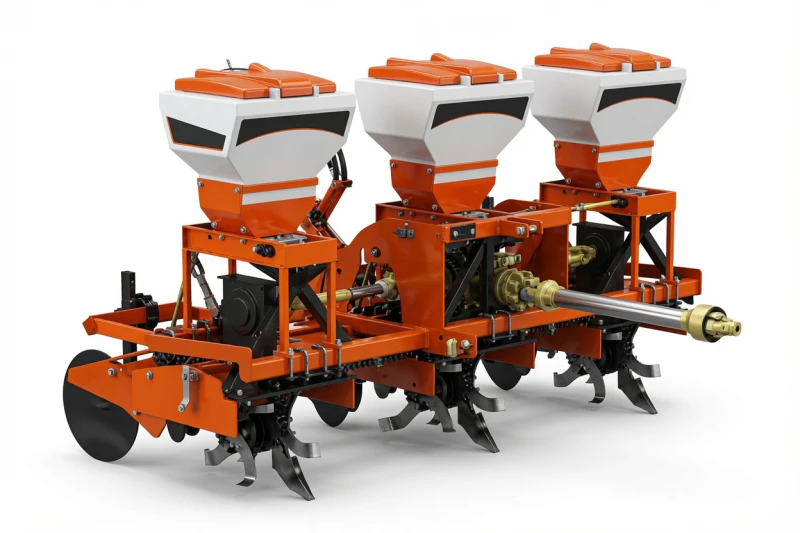
A soil test costs less than one bag of fertilizer. The information it provides saves you dozens of bags by telling you what to apply and — equally valuable — what to skip. Banded application with the ERA cultivator, ADB applicator, or PANTHER/PAI planter converts that information into precise, root-zone nutrient placement that maximizes yield per kilogram of fertilizer. Factory-direct pricing, worldwide delivery.
|
Fertilizer Equipment Quote ERA / ADB / Planter range |
Lime Spreading Equipment DCW 2.2 for ag lime |
Application Advice Rate and strategy guidance |