Your Digger Got You Here. But It Cannot Take You Further.
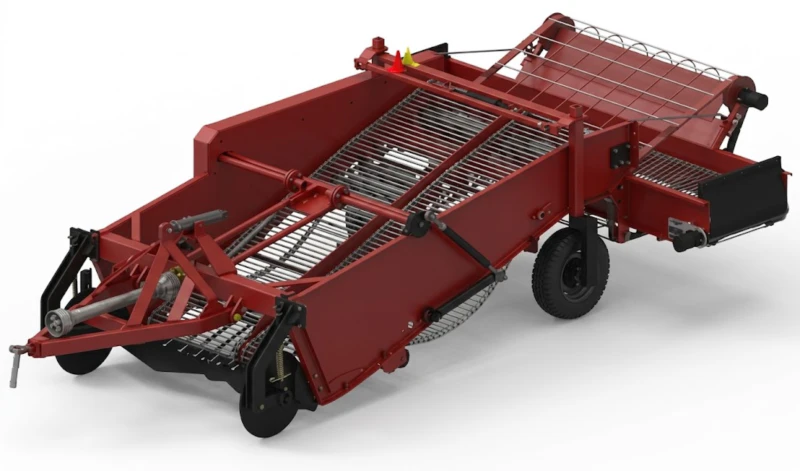
A potato digger was the right machine when you started — affordable, simple, compatible with your small tractor, adequate for your acreage. It lifted potatoes out of the ground, shook off most of the soil, and deposited them in a windrow for your crew to pick up. For years it did the job.
But something has changed. Maybe your acreage has grown. Maybe your crew has shrunk. Maybe your market demands better tuber quality. Maybe the last harvest season felt like a battle you barely won — racing against weather, scrambling for workers, watching damaged potatoes pile up at the grading line. Whatever the trigger, you are reading this because you sense your digger has become the bottleneck holding your operation back.
This guide identifies the five unmistakable signs that a digger-based harvest has outgrown its usefulness, quantifies the cost of each one, and explains exactly what changes when you upgrade to an elevator harvester like the CWB-2L.
Sign 1: You Cannot Finish Harvest Before the Weather Turns
This is the clearest, most urgent sign. If your digger-and-crew system consistently fails to complete harvest before autumn rains, early frost, or soil waterlogging arrives, you are losing potatoes every season — not because you cannot grow them, but because you cannot get them out of the ground fast enough.
| The digger reality | A mounted digger covers 4 to 6 hectares per day of digging. But the total harvest throughput is limited by the picking crew, not the digger. If the crew can collect only 3 hectares of windrows per day, that is your true daily capacity — regardless of how fast the digger runs. A 100-hectare farm needs 33+ harvest days at this rate. If the weather window is only 20 to 25 days, you leave 25 to 50 hectares unharvested. |
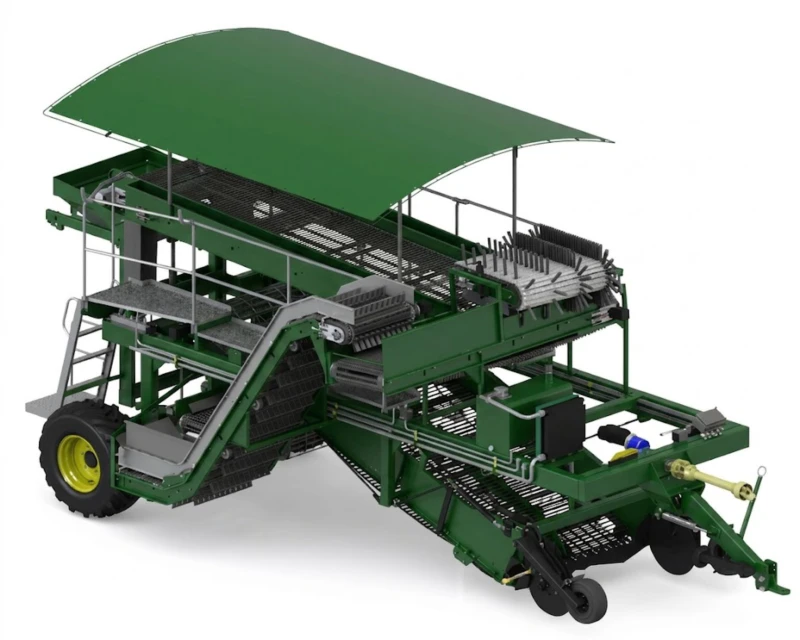
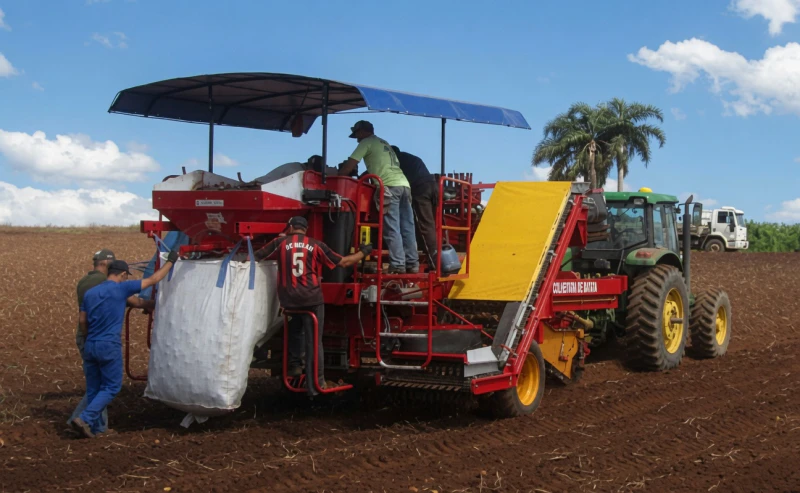
| The harvester difference | The CWB-2L elevator harvester digs, sieves, and loads 4 to 5 hectares per day — completely harvested, field to trailer, zero crew dependency. The same 100 hectares completes in 20 to 25 days with one tractor and one operator. The bottleneck shifts from crew speed to weather window — and you use every available day at full machine capacity. |
Cost of not upgrading: Every hectare left unharvested at season end represents the total production cost of that hectare (seed, fertilizer, sprays, fuel, rent) with zero revenue return. At a yield of 40 t/ha, leaving 20 hectares unharvested abandons 800 tonnes of potatoes in the ground — a catastrophic financial loss that recurs every bad-weather season.
Sign 2: Your Picking Crew Costs More Than the Harvester’s Annual Depreciation
This is the financial tipping point. When the annual cost of employing a picking crew exceeds the annual depreciation of a CWB-2L harvester, every season you continue with the digger is a season you are actively choosing the more expensive option.
| Crew cost components | Daily wages for 8 to 20 pickers across 3 to 6 weeks. Transport to and from the field daily. Meals and refreshments. Insurance and liability coverage. Supervision labor (someone must manage the crew). Overtime during long days to beat weather. Emergency recruitment when workers quit or fail to show. End-of-season bonus or completion payments. |
| The calculation | Total your crew cost for one harvest season. If it exceeds 20 to 25 percent of a CWB-2L’s purchase price, the harvester pays for itself within 4 to 5 seasons — and saves every year thereafter. In regions with rising minimum wages, the crossover point is approaching faster with each passing year. |
The critical insight: Crew cost is a permanent recurring expense. Harvester depreciation is a declining expense that reaches zero once the machine is paid off. After payoff, every harvest season is essentially crew-cost-free. The longer you own the harvester, the wider the financial gap becomes.
Sign 3: Your Grading Line Rejects Are Increasing
If the percentage of damaged, greened, or contaminated tubers arriving at your grading line (or your buyer’s grading line) is trending upward, the problem is almost certainly your digger-based harvest process — not your agronomy.
|
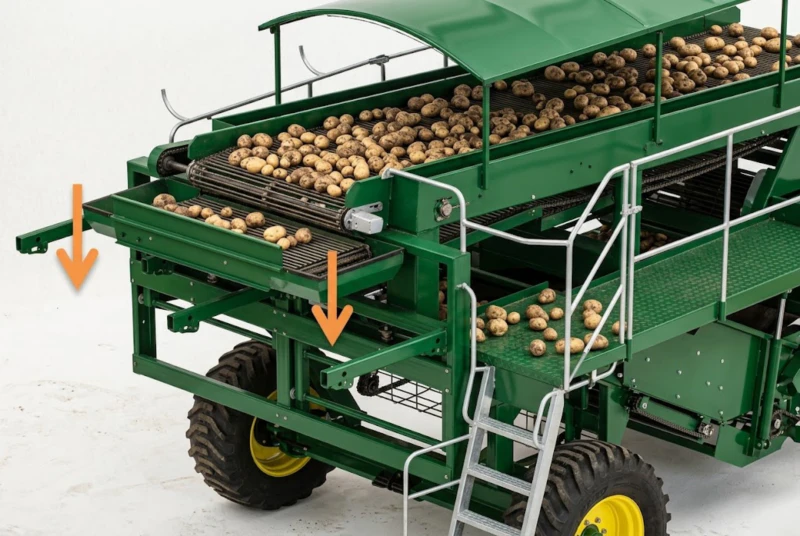
Bruising and black spot Tubers hitting stones and each other on a single-stage digger sieve, then hitting the ground surface when deposited, then being handled again during crew pickup — three impact opportunities. Each one adds bruise risk. The CWB-2L eliminates ground impact entirely and uses rubber-cushioned multi-stage sieves with gentler transitions. |
|
Greening from light exposure Tubers in a windrow under direct sunlight begin producing solanine within hours. On a busy day when the crew cannot keep up, windrows sit in the sun for 2 to 4 hours — enough to cause visible greening on light-skinned varieties. The CWB-2L loads tubers into a covered trailer in seconds — near-zero light exposure. |
|
Stone and clod contamination A single-stage digger sieve allows more tuber-sized stones and clods through than the CWB-2L’s multi-stage system. Contamination adds dead weight to loads, damages tubers in transit and storage, and causes rejection at processor intake. Every percentage point of contamination is a percentage point of revenue lost. |
The combined quality effect: Operations switching from digger to CWB-2L typically report 3 to 5 percentage points lower total reject rate at the grading line. On a 100-hectare farm at 40 t/ha, that is 120 to 200 additional tonnes reaching market as premium ware rather than being downgraded or discarded.
Sign 4: You Spend More Time Managing Workers Than Managing Crops
Seasonal harvest labor requires constant management: recruiting before the season, training new workers, daily transport logistics, attendance tracking, quality supervision, conflict resolution, payroll processing, and end-of-season settlement. For many farm managers, the labor management burden during harvest season consumes more time and mental energy than any agronomic decision.
| The hidden costs | Your own time spent managing crew instead of managing crop. Stress and uncertainty — will the crew show up tomorrow? Quality variation — some workers handle tubers carefully, others do not. Slow workers limiting the pace of fast ones. Disagreements about piece rates, working conditions, break times. Workers leaving mid-season for better-paying opportunities. |
| The harvester reality | One tractor. One operator. No crew to recruit, manage, transport, feed, supervise, or pay. The CWB-2L is available every day, starts when you start, works at a consistent pace regardless of morale, and never quits mid-season. Your management time returns to crop and business decisions where it belongs. |
Sign 5: You Are Expanding — or Planning to Expand — Your Potato Acreage
If your business plan includes growing your potato acreage over the next 3 to 5 years, your harvest capacity must grow with it. Scaling a digger-based harvest means scaling the crew — more workers, more transport, more supervision, more cost. Scaling a harvester-based harvest means simply running the same machine for more days.
| Expansion Scenario | Digger + Crew | CWB-2L Harvester |
|---|---|---|
| Current: 50 ha | 12 pickers, 17 days | 1 operator, 10-13 days |
| Expand to 80 ha | Need 18-20 pickers or longer season | Same 1 operator, 16-20 days |
| Expand to 120 ha | Need 25+ pickers — logistically difficult | Same 1 operator, 24-30 days |
| Cost per additional hectare | Proportional crew cost increase | Marginal fuel cost only |
The harvester’s cost per hectare decreases as acreage increases (same fixed machine cost spread over more hectares). The crew’s cost per hectare stays constant or increases (each additional hectare requires proportional additional labor). The more you expand, the more the harvester saves — and the more unsustainable the crew model becomes.
Score Yourself: How Many Signs Apply to Your Operation?
| Score | Interpretation | Recommendation |
|---|---|---|
| 0 of 5 | Your digger fits your current operation | Keep the digger. Revisit in 1-2 years. |
| 1-2 of 5 | Your digger is reaching its limits | Consider the AWB trailed digger as an intermediate upgrade (higher speed, better stability). |
| 3 of 5 | Your digger is the bottleneck | Start planning for a CWB-2L. Get a quote, calculate payback, budget for next season. |
| 4-5 of 5 | Your digger is costing you money every season | Upgrade to the CWB-2L before the next harvest. Every season you delay, you absorb avoidable losses. |
The Upgrade Path: Three Options
|
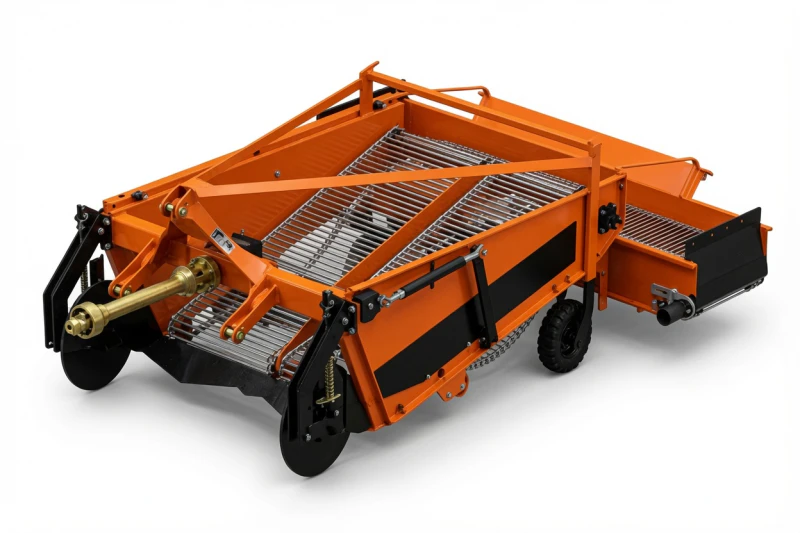
Option A: Upgrade to Trailed Digger (Intermediate Step) The AWB-1600 AAR / BAR / CAR trailed digger doubles your digging speed (5-10 km/h vs 3-5 km/h) and improves stability, but still requires a picking crew. This is the right choice if your primary problem is digging speed (Sign 1) but crew is still available and affordable (Signs 2 and 4 are not yet critical). Lower investment than the harvester; sells well later if you upgrade further. |
|
Option B: Upgrade to CWB-2L Elevator Harvester (Full Solution) The CWB-2L eliminates the picking crew, eliminates greening, eliminates weather risk, improves sieve separation, and delivers 4-5 ha/day of fully harvested potatoes with one operator. This is the right choice if Signs 2, 3, and 4 are all present — the harvester addresses every one of them permanently. Higher investment, but zero recurring crew cost and dramatically lower total harvest cost per hectare. |
|
Option C: Enhance Your Current Digger + Crush Stones (Partial Solution) If budget does not allow a harvester yet, the highest-impact single investment is stone crushing with the THOR. Eliminating stones from the ridge zone reduces bruising by 50 to 70 percent, eliminates stone contamination at the grading line, and allows the digger to run faster (no need to slow down for stone avoidance). This buys time while you build budget for the CWB-2L. |
CWB-2L Elevator Harvester: What You Get
| Rows | 2 |
| Sieve stages | Multiple (progressive soil and debris removal) |
| Elevator reach | 3.9 m (loads standard trailers and high-side bins) |
| Min. tractor power | 100 hp |
| Weight | 3,150 kg |
| Daily capacity | 4-5 ha/day (fully harvested, trailer-loaded) |
| Picking crew | Zero — eliminated entirely |
Frequently Asked Questions
|
Q1: At what acreage does the harvester become more economical than a digger? Typically 50 to 80 hectares, depending on local labor costs. At this scale, the seasonal crew cost approaches or exceeds the CWB-2L’s annual depreciation. Above 80 hectares, the harvester is nearly always the cheaper option. However, even on 40-hectare farms in high-labor-cost regions, the crossover may occur within 3 to 4 seasons. |
|
Q2: What happens to my old digger? Sell it — AWB diggers hold good resale value, especially in developing markets where farms are transitioning from manual to mechanized harvest. Alternatively, keep it as a backup for the rare occasion when the harvester needs service during peak season, or use it for small, awkward fields where the harvester is impractical. |
|
Q3: Do I need a bigger tractor for the CWB-2L? The CWB-2L requires minimum 100 hp. If your current tractor is 75 to 95 hp (sized for a mounted digger), you will need to step up. Many growing farms are already planning a tractor upgrade as acreage expands — the CWB-2L purchase becomes a natural companion to the tractor upgrade. |
|
Q4: Is the trailed digger a worthwhile intermediate step? Yes — if your primary bottleneck is digging speed but crew is still available and affordable. The trailed digger nearly doubles digging speed (5-10 km/h vs 3-5 km/h) at lower investment than the CWB-2L. It buys 2 to 3 years of improved capacity before the inevitable harvester upgrade. It also retains good resale value for the eventual trade-up. |
|
Q5: Will the CWB-2L handle my stony fields? The CWB-2L works on stony ground but produces better results on stone-free ground — less bruising, less contamination, higher throughput. For the best harvest quality, combine the CWB-2L with pre-season stone crushing (THOR). The crusher permanently eliminates stones; the harvester then operates at maximum efficiency and minimum damage on clean soil. |
|
Q6: Can I hire the CWB-2L through a contractor before buying? In some regions, contractors offer elevator harvesting as a per-hectare service. This is an excellent way to experience the quality and throughput improvement before committing to a purchase. However, contractor availability during peak harvest season is not guaranteed — owning your own machine ensures harvest timing independence. |
|
Q7: What planter should I pair with the CWB-2L? If you are upgrading to a 100+ hp tractor for the CWB-2L, you can also upgrade your planter: PANTHER 3-Row (100 hp) or PANTHER 4-Row / PAI-480-AR (125-140 hp) for farms planning 100+ hectares. Matching high-throughput planting with high-throughput harvesting maximizes the return on both machines. |
|
Q8: How do I get a quote and payback estimate? Contact our team with your current acreage, crew size and cost, current reject rates, tractor power, and expansion plans. We will provide a CWB-2L quote, calculate your specific payback period based on your crew cost, and recommend whether to go direct to the harvester or via the trailed digger as an intermediate step. |
How Many of the 5 Signs Apply to You?
If the answer is 3 or more, your digger is costing you money — not saving it. The CWB-2L pays for itself through eliminated crew cost, reduced reject rates, and recovered yield from potatoes that would otherwise be damaged, greened, or left in the ground. One tractor, one operator, zero crew. Factory-direct pricing, worldwide delivery.
|
CWB-2L Quote Price + payback calculation |
Trailed Digger Quote AWB AAR/BAR/CAR pricing |
Upgrade Consultation Which path fits your farm |