Two Approaches That Look Similar — But Work Completely Differently
If your farm has a stone problem, you have likely narrowed your options to two implements that seem to achieve a similar result: a stone-burying rotavator and a كسارة الحجارة. Both are PTO-driven, tractor-mounted machines that process stony ground in a single pass. Both leave the surface looking clean and workable. Both are serious capital investments. And both salespeople will tell you theirs is the better choice.
But beneath the surface — literally — these two machines do something fundamentally different to the stones. That difference determines whether you solve your stone problem once and permanently, or whether you are committing to a recurring cost cycle that compounds over the years. It also determines which approach actually saves you more money over 5, 10, and 20 years.
This article provides the honest, number-driven comparison that most equipment suppliers will not give you. We manufacture both stone-burying rotavators and stone crushers, so we have no reason to steer you toward one over the other — we sell whichever you choose. What follows is our objective engineering and financial analysis to help you make the decision that is right for your specific operation.
What Each Machine Actually Does to the Stones
|
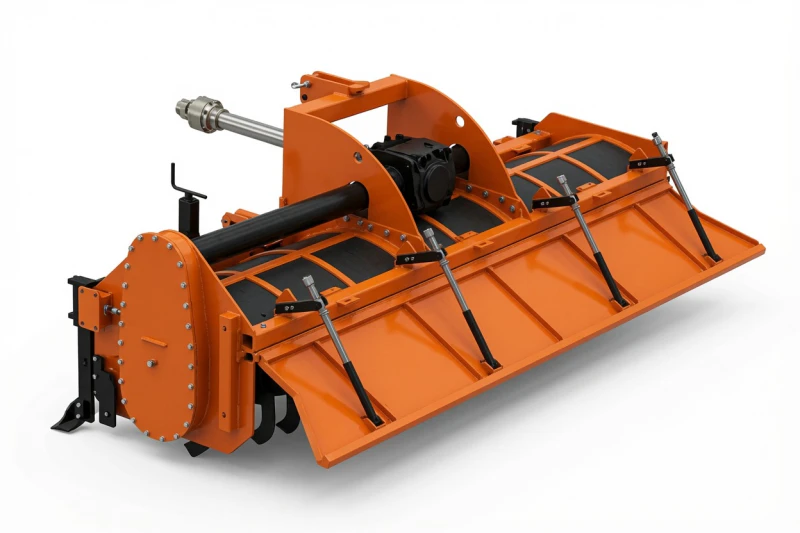
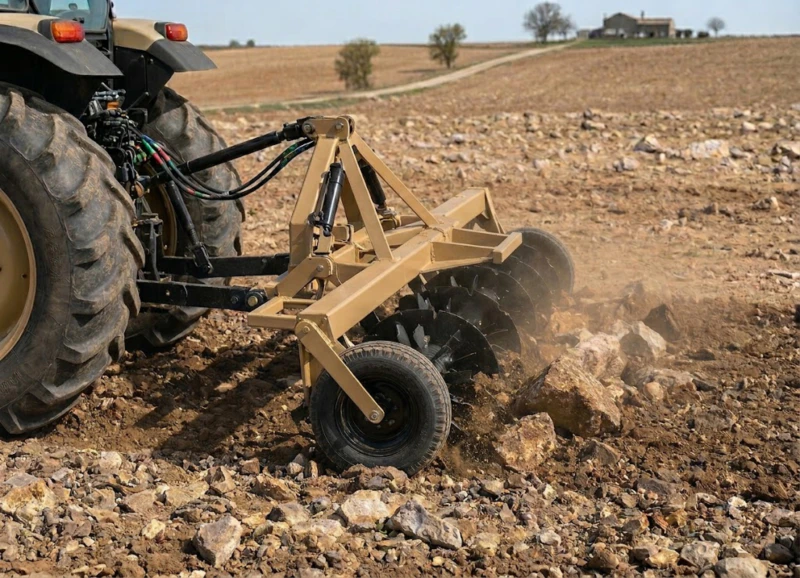
Stone-Burying Rotavator PTO-driven rotary blades till the topsoil at high speed while pushing stones downward beneath the cultivated layer. The result is a fine, stone-free seedbed on the surface with the stones still intact but repositioned 20 to 30 cm below the surface. The stones are hidden, not destroyed. They remain in the soil at the same size, the same hardness, the same mass — just deeper. Analogy: Sweeping dirt under a rug. The room looks clean, but the dirt is still there. |
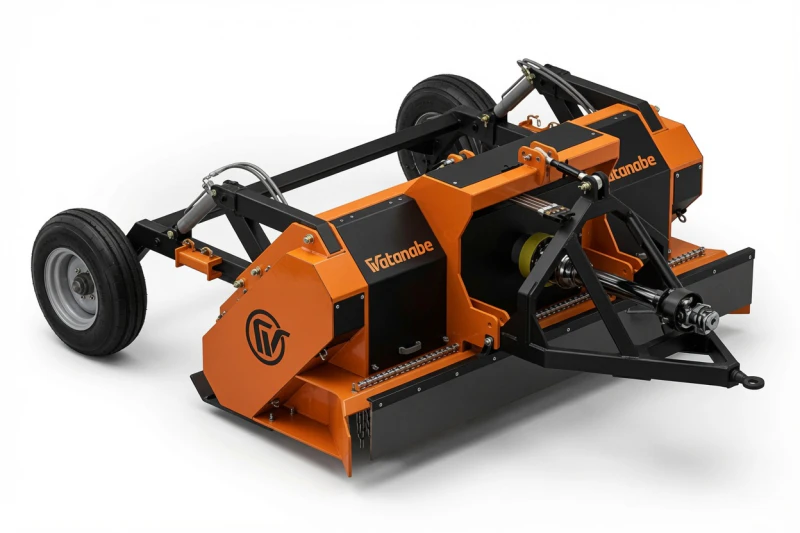
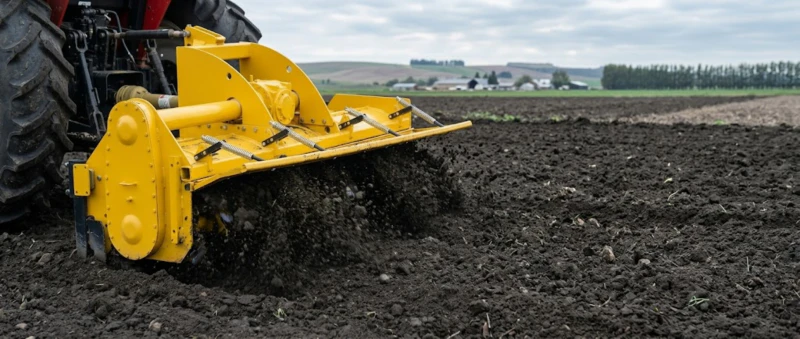
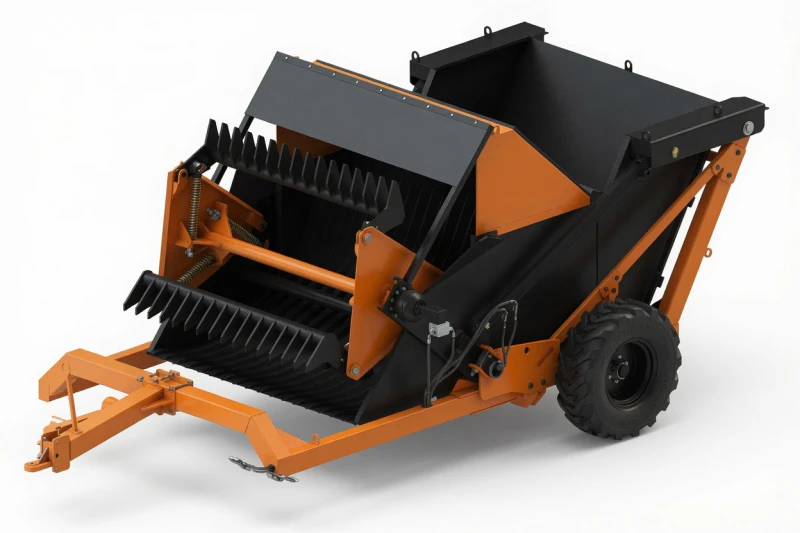
Stone Crusher A high-speed hammer rotor with tungsten carbide tips smashes stones into particles smaller than 50 mm. The crushed fragments mix into the soil as a permanent, beneficial component — improving drainage and soil structure. The stones are physically destroyed. They no longer exist as obstacles at any depth. Nothing can bring them back. Analogy: Putting the dirt through a shredder. It becomes part of the floor and cannot be swept up again. |
The Critical Difference: Buried stones are still intact. They can and will return to the surface through deep ploughing, subsoil cultivation, or frost heave over subsequent seasons. Crushed stones are permanently destroyed. They can never return. This single fact drives every cost difference between the two approaches.
Head-to-Head Specification Comparison
| Factor | Stone-Burying Rotavator (PSW-3200) | Stone Crusher (THOR 2.4 / 3.0) |
|---|---|---|
| What happens to the stones | Pushed below surface (intact) | Destroyed (pulverized to under 50 mm) |
| Can stones return? | Yes — ploughing and frost heave | No — permanently eliminated |
| Working Width | 3.2 m | 2.4 m / 3.0 m |
| Min. Tractor Power | 140 hp | 180 / 230 hp |
| Working Speed | 2-4 km/h | 3 km/h |
| Max. Stone Size | ~200 mm | ~400 mm |
| Simultaneous Tillage | Yes — fine seedbed created | Partial — secondary tillage recommended |
| Soil Structure Improvement | Fine surface tilth (above stones) | Permanent drainage and structure improvement |
| Machine Weight | 1,665 kg (PSW-3200) | 2,300 / 2,800 kg |
The Money Question: 5-Year and 10-Year Cost Comparison
This is where most comparisons fall short. They compare purchase prices and stop there. The real comparison must include every cost over time: the initial treatment, recurring re-treatments, fuel, wear parts, yield impact, and the hidden costs that most budgets overlook.
Scenario: 100-Hectare Farm, Moderate Stone Density
| Cost Component | Rotavator (5 Years) | Crusher (5 Years) |
|---|---|---|
| Machine Purchase | Lower | Higher |
| Number of Treatments (5 years) | 3 to 5 (annually or biannually before planting) | 1 (one-time, year one) |
| Total Fuel (5 years) | 3 to 5 full-field passes | 1 pass only |
| Wear Parts (blades/hammers) | Blade replacement per treatment | One set of hammers (year one) |
| Residual Stone Damage to Crops | Ongoing — stones resurface | Zero after year one |
| Equipment Repair (stone damage) | Ongoing — resurfaced stones | Dramatically reduced |
| Drainage Improvement | Surface tilth only | Permanent full-profile improvement |
| 5-Year Total Cost of Ownership | Accumulating (grows each year) | Fixed (all in year one) |
The pattern is clear: the rotavator has a lower entry price but generates recurring costs every season. The crusher has a higher entry price but zero recurring stone management costs after year one. The crossover point — where the crusher’s total cost becomes lower than the rotavator’s — typically occurs between year 2 and year 4, depending on stone density, crop type, and how frequently the rotavator treatment must be repeated.
Beyond the crossover, every additional year adds cost to the rotavator column while adding nothing to the crusher column. Over 10 years, the financial gap becomes substantial. Over 20 years (a typical farm ownership horizon), it becomes overwhelming.
When the Rotavator IS the Better Financial Choice
To be fair, there are legitimate scenarios where the stone-burying rotavator saves more money than a crusher:
|
Your tractor is below 180 hp and upgrade is not planned The PSW-3200 runs on 140 hp. If your farm’s largest tractor is in the 140 to 170 hp range and there is no plan to upgrade, the rotavator is the practical choice because the crusher simply cannot be powered. In this case, the rotavator delivers real value despite its temporary nature. |
|
You need simultaneous tillage and stone management The rotavator creates a fine, planting-ready seedbed while burying stones — combining two operations in one pass. If you need annual seedbed preparation anyway, the stone-burying function comes essentially for free as a bonus. The crusher does not create a finished seedbed; you still need a separate tillage pass afterward. |
|
Short-term land use (1 to 3 years) On rented land with a lease of only 1 to 3 years, the one-time cost advantage of the rotavator outweighs the crusher because there is not enough time for the recurring costs to cross over. The crusher’s long-term payback does not materialize within a short lease. |
|
Very light stone density with small stones only If your stone problem is light (occasional small stones under 100 mm), the rotavator handles it easily and the annual recurrence is minimal. Investing in a crusher for a light stone problem may be overkill if a simple rotavator pass solves it adequately each season. |
When the Crusher IS the Better Financial Choice
|
You own the land or have a long-term lease (5+ years) On owned or long-leased land, the crusher pays back within 2 to 4 seasons and then delivers free benefits for every subsequent year. Over 10 to 20 years, the total savings from eliminated recurring treatment, reduced crop damage, and improved drainage are substantial. |
|
You grow potatoes or high-value root crops Potatoes suffer direct financial damage from stones at harvest. Buried stones that resurface into the ridge zone cause tuber bruising and cutting. The crusher eliminates this permanently. For potato growers, the crop-quality improvement alone can justify the crusher investment within the first 2 seasons. |
|
Moderate to heavy stone density Heavier stone problems mean the rotavator struggles more (larger stones exceed its burying capacity), requires more frequent retreatment, and generates higher ongoing costs. The crusher handles stones up to 400 mm — double the rotavator’s practical limit — making it the only viable option for seriously stony land. |
|
You deep-plough or subsoil regularly Deep ploughing undoes the rotavator’s work by bringing buried stones back to the surface. If your rotation includes deep ploughing or subsoiling, the rotavator solution is effectively reset to zero every time you plough deep. The crusher is unaffected by ploughing depth because the stones no longer exist at any depth. |
|
You want to increase land value permanently Crushed, stone-free land with improved drainage is worth measurably more than stony land — both in rental value and sale price. The crusher treatment permanently increases the productive value of the land. A rotavator treatment does not add permanent value because the underlying stone problem remains. |
The Best of Both Worlds: Crush Then Rotavate
For potato growers seeking the absolute highest seedbed quality on stony land, the optimal workflow combines both machines in sequence:
| Step | Operation | Result |
| 1 | Crush with THOR (one-time, permanent) | All stones destroyed to under 50 mm. Drainage and soil structure permanently improved. |
| 2 | Rotavate with PSW-3200 (annual seedbed prep) | Creates the finest possible seedbed from the already stone-free soil. Any remaining small crushed fragments are pushed below the ridge zone. The result is a premium-quality potato bed that rivals the best stone-free land anywhere. |
In this workflow, the crusher solves the stone problem permanently (Step 1, done once), and the rotavator provides the annual seedbed preparation service that every potato grower needs regardless of stone conditions (Step 2, each season). Each machine does what it does best, and neither is asked to do the other’s job.
We manufacture both: the THOR 2.4 and 3.0 Stone Crushers and the PSW-3200 Rotavator series (standard, extended-frame A, and fertilizer-equipped B).
Quick Decision Matrix
| Your Situation | Best Choice |
|---|---|
| Tractor under 180 hp, no upgrade planned | Rotavator |
| Short lease (1-3 years) | Rotavator |
| Light stones, small size (under 100 mm) | Rotavator |
| Need combined tillage + stone management | Rotavator (dual purpose) |
| Own land or long lease (5+ years) | Crusher |
| Moderate to heavy stones (100-400 mm) | Crusher |
| Grow potatoes or high-value root crops | Crusher |
| Deep plough or subsoil regularly | Crusher |
| Want permanent land value increase | Crusher |
| Want the absolute best potato seedbed | Crusher + Rotavator (both) |
Frequently Asked Questions
|
Q1: Can a rotavator bury stones as effectively as a crusher destroys them? For immediate surface appearance, yes — both leave a clean surface. But the rotavator’s result is temporary. Buried stones resurface through frost heave and ploughing. The crusher’s result is permanent. For the current season’s crop, both are effective. For long-term land improvement, only the crusher delivers lasting change. |
|
Q2: If I buy a rotavator now, can I switch to a crusher later? Absolutely. Many farms start with a rotavator at the lower price point and later invest in a crusher when the budget or tractor fleet allows. The rotavator remains useful as an annual seedbed preparation tool even after crushing — it is not wasted. This progressive approach is financially sensible for growing operations. |
|
Q3: How often does a rotavator treatment need repeating? On potato land, the rotavator is typically run annually as part of seedbed preparation. If deep ploughing is performed between seasons, buried stones resurface and the burying must be repeated. Without deep ploughing, the treatment may last 2 to 3 seasons before frost heave brings significant new stones to the surface. |
|
Q4: Does the crusher improve soil drainage better than the rotavator? Yes, significantly. The rotavator creates fine tilth on the surface but the intact stones below still impede deep drainage. The crusher creates angular fragments throughout the soil profile that form permanent drainage channels. The drainage improvement from crushing is deeper, more permanent, and more impactful on crop root development. |
|
Q5: Can the rotavator handle the same stone sizes as the crusher? No. The rotavator effectively buries stones up to approximately 200 mm. Larger stones exceed the blade capacity and can damage the machine. The crusher processes stones up to approximately 400 mm — double the rotavator’s limit. For fields with larger stones, the crusher is the only viable machine option. |
|
Q6: Which machine has lower wear-part costs? Per single treatment, the rotavator has lower blade costs than the crusher’s hammer costs. But over 5 years, the rotavator requires 3 to 5 sets of blades (one per treatment) while the crusher requires just one set of hammers (one treatment total). The 5-year cumulative wear-part cost is typically similar or lower for the crusher. |
|
Q7: I have 140 hp. Should I wait until I have 180 hp for a crusher? If a tractor upgrade is planned within 1 to 2 years, it may be worth waiting. In the meantime, use a rotavator for seasonal management. If no upgrade is planned, the rotavator is your best available option and delivers genuine value. Alternatively, hire a contractor with a crusher for a one-time permanent treatment, then continue using your rotavator for annual seedbed preparation. |
|
Q8: Can the PSW-3200B rotavator apply fertilizer while burying stones? Yes. The PSW-3200B model integrates a 2,000 kg fertilizer bunker, allowing simultaneous stone burying, seedbed preparation, and base fertilizer application in one pass. This 3-in-1 function is a major efficiency advantage of the rotavator approach that the crusher cannot replicate. |
|
Q9: Do you manufacture both machines? Yes. We produce the PSW-3200 Rotavator series (standard, extended A, fertilizer-equipped B) and the THOR Stone Crusher range (2.4 m and 3.0 m). We have no financial incentive to recommend one over the other — we want you to choose the machine that genuinely fits your situation. |
|
Q10: How do I get an objective recommendation for my farm? Contact our team with your stone situation, tractor power, crop type, ownership status (owned/leased), and budget. We will provide an honest recommendation — even if that means advising the lower-priced option — because our reputation depends on customers getting the right machine, not the most expensive one. |
Let Us Help You Make the Right Decision
We sell both machines. We succeed when you get the right one — the one that actually saves your farm the most money over time. Contact us with your details and we will give you the same objective analysis we have presented in this article, customized to your specific operation.
|
Rotavator Quote PSW-3200 / A / B pricing |
Crusher Quote THOR 2.4 / 3.0 pricing |
Both Machines Crush + rotavate system pricing |