Turning Raw Land Into a Productive Farm Is a Multi-Stage Engineering Project
Developing new farmland — whether converting forest clearings, reclaiming abandoned land, expanding an existing operation into adjacent parcels, or establishing a brand-new farm on greenfield ground — requires a systematic equipment-driven workflow that addresses every physical barrier between raw terrain and productive soil. Vegetation, stumps, stones, compaction, drainage deficiencies, and inaccessibility must all be solved in the right sequence, with the right machines, before the first seed can be planted.
Getting the sequence wrong wastes money. Using undersized equipment extends timelines. Skipping a critical step (particularly stone management) creates problems that compound for decades. And failing to plan access roads to the new land can strand the entire investment.
This guide walks through every stage of new farm development in the correct order — from initial site assessment to first-crop-ready soil — and identifies the specific equipment needed at each step. Whether you are a farmer expanding production, a land investor developing agricultural assets, a government agency opening new agricultural zones, or a contractor offering turnkey land development services, this is your operational blueprint.
Phase 1: Site Assessment — Know What You Are Working With
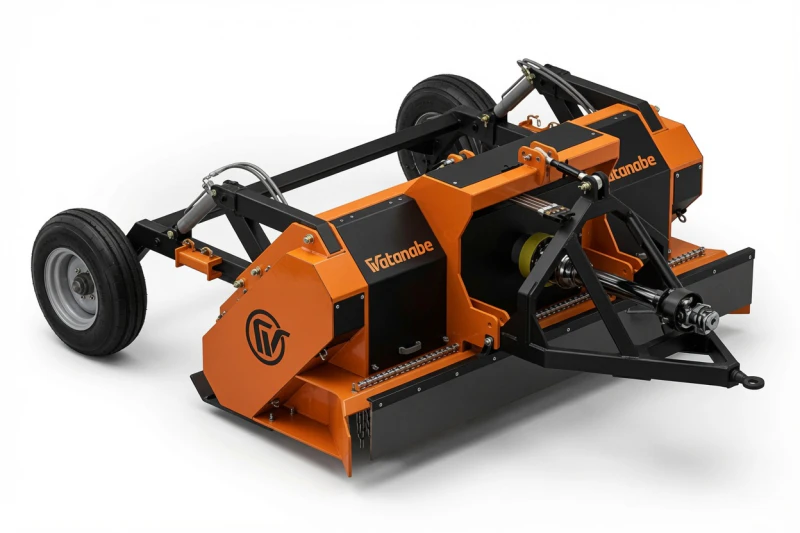
Before any machine enters the field, conduct a thorough site assessment. The findings will determine your entire equipment plan, budget, and timeline.
| Vegetation Survey | Map the type, density, and size of existing vegetation: grassland, scrub, small trees (under 20 cm diameter), or mature forest. This determines whether you need a brush cutter, forestry mulcher, or full logging operation before ground-level work can begin. |
| Stone Assessment | Walk the site and dig 5 to 10 test holes (30 cm deep). Record stone density (light, moderate, heavy), typical stone size (under 100 mm, 100 to 300 mm, over 300 mm), and distribution pattern (uniform, concentrated in zones, or deep continuous layer). This is the single most important factor in your equipment selection. |
| Soil Type and Condition | Identify the soil texture (sand, loam, clay) and compaction level. Heavily compacted land (former roads, building sites, long-abandoned fields) requires deep ripping or subsoiling before cultivation. Take soil samples for laboratory analysis of pH, nutrient levels, and organic matter content. |
| Drainage and Topography | Map slopes, low spots, and existing water courses. Identify areas prone to waterlogging. Determine whether surface drainage, subsurface tile drainage, or both will be needed. Poor drainage is the number-one cause of failed land development projects. |
| Access Assessment | Evaluate existing road access to the development site. Determine whether new access roads must be constructed to bring equipment in and, later, to transport harvested crops out. Remote sites with no road access require road construction as the first physical step. |
Phase 2: Access Road Construction (If Required)
If the development site lacks adequate road access, this must be addressed first — before any land clearing equipment can be delivered. A usable farm road is the logistical backbone of the entire project and every future season’s production.
For new farm roads, soil stabilization is the most cost-effective construction method — 60 to 80 percent less expensive than importing gravel or asphalt. The process uses the existing soil as the road material, treating it in place with lime or cement to create a durable, load-bearing surface:
| Step | Road Building Operation | Equipment |
| 1 | Crush any surface rock on the road corridor | THOR Stone Crusher |
| 2 | Spread lime or cement binder on road surface | DCW 2.2 Binder Spreader |
| 3 | Mix binder into soil with water injection | THOR ST Soil Stabilizer |
| 4 | Grade and compact to finished road surface | Motor grader + vibratory roller |
A stabilized farm road eliminates dust, supports heavy harvest traffic, resists weather deterioration, and significantly reduces vehicle maintenance costs compared to an untreated dirt track.
Phase 3: Vegetation Clearing
With access secured, clear the development site of existing vegetation. The method depends on vegetation type:
|
Grassland and Light Scrub Mow, flail, or mulch with a tractor-mounted rotary mower or flail mower. The residue can be incorporated during subsequent tillage. This is the simplest and fastest clearing scenario. |
|
Dense Scrub and Small Trees (Under 15-20 cm Diameter) A forestry mulcher attached to a tractor or excavator grinds woody vegetation into chips in place. No hauling, no burning, no stump removal — the mulched material decomposes and adds organic matter to the soil. The THOR stone crusher can also process stumps and woody debris during the subsequent stone management phase. |
|
Mature Forest Requires logging (harvest merchantable timber), followed by stump removal or grinding, and debris clearing before ground-level equipment can work. This is the most time-consuming and expensive clearing scenario. Ensure all necessary permits and environmental assessments are completed before starting. |
Phase 4: Stone Management — The Critical Step
Stone management is the most impactful phase of new farm development. The stone treatment you apply now determines the quality of every crop grown on this land for decades. Skipping or under-investing in this phase is the most common and most expensive mistake in land development.
Three equipment options, in order of increasing permanence and long-term value:
| Method | Equipment | Power | Permanence |
|---|---|---|---|
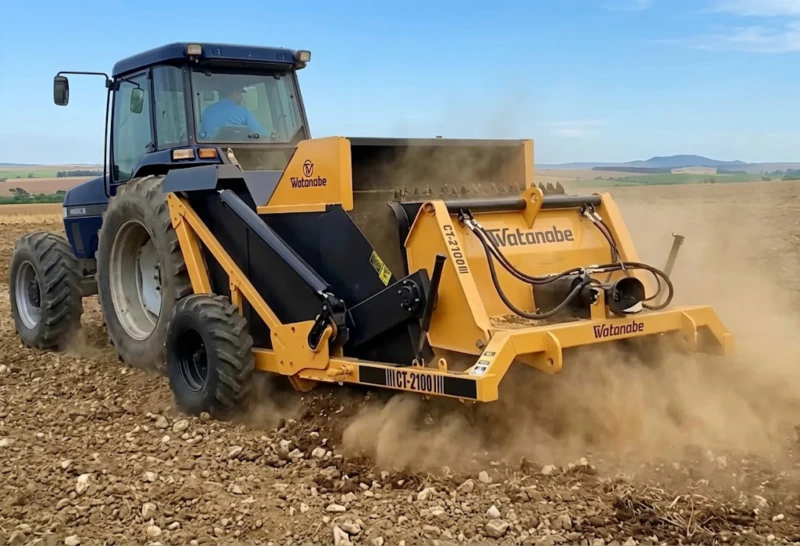
| Rake and Pick | EW-4000 Rake + CT-2100 Picker | 75-110 hp | Temporary (repeat needed) |
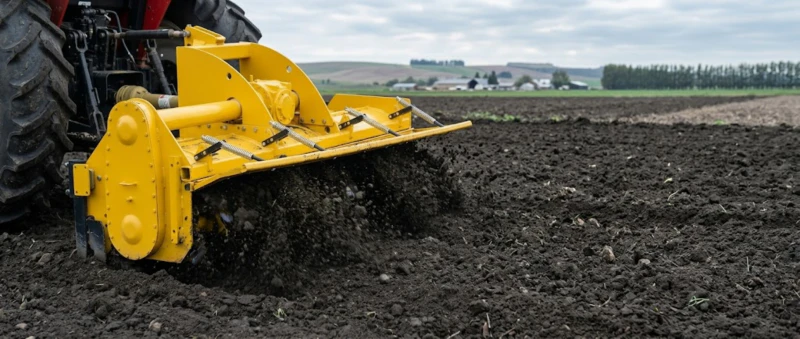
| Stone Burying | PSW-3200 Rotavator | 140 hp | Semi-permanent |
| Stone Crushing | THOR 2.4 / 3.0 Crusher | 180-230 hp | Permanent |
Our recommendation for new farm development: When you are investing in clearing and developing new land from scratch, stone crushing is almost always the correct choice. You are already mobilizing heavy equipment, spending significant capital, and preparing land you intend to farm for decades. Paying for a permanent stone solution at this stage — rather than a temporary one that requires annual retreatment — is the highest-return investment in the entire project.
Phase 5: Primary Tillage — Breaking the Ground
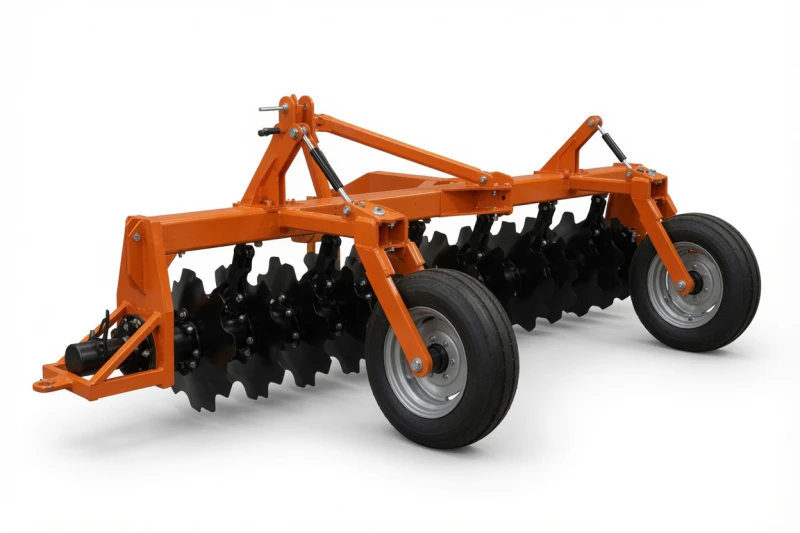
After stone management, the cleared ground needs primary tillage to break up compaction, incorporate organic residues from the clearing phase, and open the soil structure for root development. On newly developed land, this is often the first time the soil has ever been cultivated — it can be extremely compacted, especially if machinery has been driving across it during the clearing and stone management phases.
Deep ripping or subsoiling (40 to 60 cm depth) breaks through compaction layers without inverting the soil. Follow with mouldboard ploughing (25 to 30 cm) to invert the topsoil, incorporate surface organic matter, and create a workable profile. On land that was stone-crushed in Phase 4, ploughing also distributes the crushed stone particles through the plough depth, maximizing the drainage improvement.
Phase 6: Soil Amendment and Correction
Newly cleared land often has imbalanced soil chemistry — acidic pH (especially former forest land), low nutrient levels, and depleted organic matter. Before the first crop can succeed, these deficiencies must be corrected based on soil test results from Phase 1.
| pH Correction (Liming) | Apply agricultural lime to raise acidic soil pH to the optimal range (6.0 to 6.5 for most crops). For precision application, the DCW 2.2 Binder Spreader provides metered distribution — far more uniform than broadcast spreading. Incorporate with a rotavator pass. Note: on limestone-crushed land, the crushed particles themselves provide ongoing natural pH correction. |
| Base Fertilization | Apply base NPK and any deficient micronutrients according to soil test recommendations. For row crops, banded application with the ADB-380 or ADB-480 Fertilizer Applicator is 20 to 40 percent more efficient than broadcasting. |
| Organic Matter | Newly cleared land typically has low organic matter in the cultivated layer. Incorporate composted manure, green manure crops, or crop residues during the first 2 to 3 seasons to build organic content. This improves water retention, nutrient cycling, and soil biology. |
Phase 7: Secondary Tillage and Seedbed Preparation
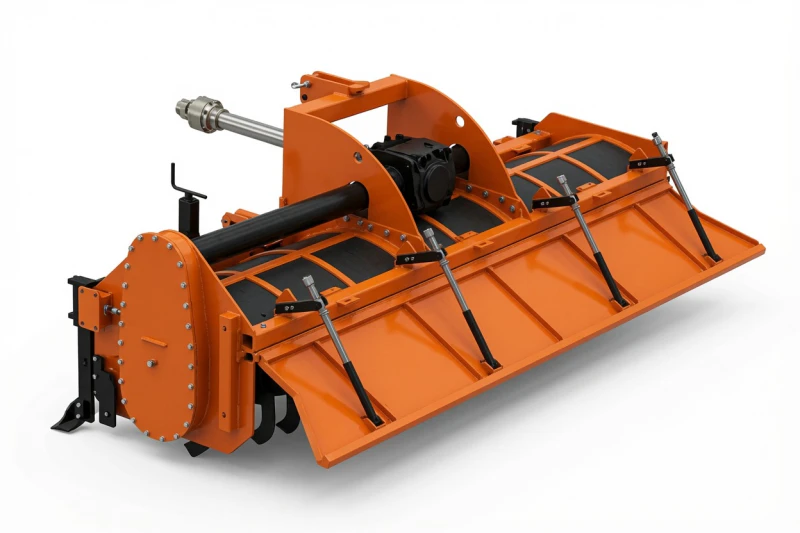
The final soil preparation step before planting. The PSW-3200 Rotavator creates a fine, uniform seedbed from the ploughed and amended soil. On land that was stone-crushed in Phase 4, the rotavator produces an exceptionally high-quality tilth because the soil is completely free of stone obstacles.
For potato and root crop operations, the ERA Series Rotary Cultivator provides a streamlined alternative — combining secondary tillage, banded fertilizer application, and ridge formation in a single 3-in-1 pass.
Phase 8: First Crop — Planting on New Land
With all preparation phases complete, the land is ready for its first crop. Equipment selection depends on the planned crop rotation:
|
Potato and Root Crops Ridge formation with the R-380 or R-580 Potato Furrower, followed by planting with the PANTHER or PAI Potato Planter. On stone-crushed land, the entire planting chain operates at maximum efficiency with zero stone-related damage or downtime. |
|
Grain and Broadacre Crops Direct drill or conventional sow into the prepared seedbed. Stone-free, well-drained soil produces uniform emergence, fewer equipment breakdowns, and higher yields from the very first season. |
|
Pasture Establishment Broadcast seed and roll. The crushed-stone soil provides excellent drainage for new pasture, preventing waterlogging that kills young grass seedlings. Pasture established on crushed land typically establishes 30 to 50 percent faster than on untreated stony ground. |
Complete Equipment Checklist for New Farm Development
| Phase | Operation | Equipment | We Supply? |
|---|---|---|---|
| 2 | Access road — stone crushing | THOR 2.4 / 3.0 Crusher | Yes |
| 2 | Access road — binder spreading | DCW 2.2 Binder Spreader | Yes |
| 2 | Access road — soil stabilization | THOR ST Stabilizer | Yes |
| 4 | Stone raking (pre-concentration) | EW-4000 / EW-4000T Rock Rake | Yes |
| 4 | Stone picking (collection and removal) | CT-2100 Rock Picker | Yes |
| 4 | Stone crushing (permanent elimination) | THOR 2.4 / 3.0 Stone Crusher | Yes |
| 6 | Lime/amendment application | DCW 2.2 Binder Spreader | Yes |
| 6 | Banded fertilizer application | ADB-380 / ADB-480 Applicator | Yes |
| 7 | Secondary tillage / seedbed | PSW-3200 Rotavator / ERA Cultivator | Yes |
| 8 | Ridging (potato/root crops) | R-380 / R-580 Furrower | Yes |
| 8 | Planting (potato) | PANTHER / PAI Planter | Yes |
Every machine in this checklist is available from a single manufacturer — agriculturalstonecrusher.com. One point of contact, one consistent quality standard, one support team, and factory-direct pricing across the entire equipment chain.
Frequently Asked Questions
|
Q1: How long does it take to develop raw land into a productive farm? Timeline depends on site condition and project scale. A typical 100-hectare greenfield project from initial clearing through first crop takes 3 to 6 months of active work, spread across one or two seasons. Stone management and primary tillage can often be completed in autumn, with seedbed preparation and planting in the following spring. |
|
Q2: What is the single most important equipment investment for new land? The stone crusher. On stony land (and most undeveloped land has stones), the crusher permanently solves the stone problem for every future crop, every future season. Every other investment — tillage, fertilizer, planting — works better and costs less on stone-free ground. |
|
Q3: Can I hire equipment instead of buying for a one-time development project? Yes. Many contractors offer stone crushing, raking, picking, and tillage as per-hectare services. This is cost-effective for a one-time project. If you plan ongoing farming with annual operations (seedbed preparation, fertilizer, planting, harvesting), purchasing makes better long-term sense. |
|
Q4: Do I need to build an access road before starting field work? If the site has no existing road access capable of supporting heavy equipment delivery and future harvest transport, then yes. A soil-stabilized road is the most cost-effective approach and can be built using the same tractor and equipment (THOR crusher + DCW 2.2 + THOR ST) that will later be used for field development. |
|
Q5: What tractor power do I need for a complete development project? The highest power requirement in the chain is the stone crusher (180 to 230 hp) and soil stabilizer (250 hp). If stone crushing and road stabilization are hired out to contractors, the remaining operations (raking, picking, rotavating, furrowing, planting) can all be done with 75 to 140 hp tractors. |
|
Q6: What if my new land has drainage problems? Address drainage before investing in tillage and planting. Stone crushing significantly improves natural drainage. If subsurface tile drainage is also needed, install it after stone management (so stones do not damage the installation equipment) and before primary tillage. |
|
Q7: Can one manufacturer supply everything I need? For the soil preparation and planting chain, yes. We manufacture stone crushers, rock rakes, rock pickers, rotavators, binder spreaders, soil stabilizers, fertilizer applicators, rotary cultivators, potato furrowers, and potato planters. General equipment (tractors, ploughs, graders, rollers) is sourced from mainstream manufacturers. |
|
Q8: Is this guide applicable to tropical land development? Yes. The phases and equipment are the same in tropical regions. Key differences: higher emphasis on drainage (tropical rainfall), potential need for more aggressive pH correction (tropical soils tend to be more acidic), and different crop planting equipment (cassava, sweet potato, yam instead of potato). All our equipment operates effectively in tropical conditions. |
|
Q9: What are the most common mistakes in new farm development? The top three: (1) Skipping or under-investing in stone management — creating a problem that compounds for decades. (2) Neglecting drainage — the single most common cause of failed projects. (3) Skipping soil testing — leading to incorrect fertilizer and lime applications that waste money and underperform. |
|
Q10: How do I get a custom equipment plan for my development project? Contact our project team with your site details: location, total hectares, vegetation type, stone assessment, soil type, target crop, tractor fleet, and budget range. We will design a phased equipment plan with specific model recommendations and factory-direct pricing for every machine in the chain. |
Planning a New Farm Development? Start With the Right Equipment Plan.
We supply the complete equipment chain for land development — from stone crushers and road stabilizers through rotavators, fertilizer applicators, and planters. One manufacturer, one quality standard, factory-direct pricing, and a single project team to support you from first clearing to first harvest.
|
Custom Project Plan Full equipment recommendation |
Complete System Pricing Every machine in one quote |
Dealer and Contractor Inquiries Turnkey development equipment |