Three Machines. Three Passes. Three Times the Cost. There Is a Better Way.
After ploughing, a traditional potato seedbed requires three separate field operations before planting can begin: a rotavator pass to create fine tilth, a fertilizer applicator pass to place nutrients in the root zone, and a furrower pass to shape the soil into planting ridges. Three machines must be purchased, stored, maintained, and transported. Three tractors (or one tractor making three trips) must cross the field. Three sets of fuel, labor hours, and compaction damage accumulate before a single seed tuber enters the ground.
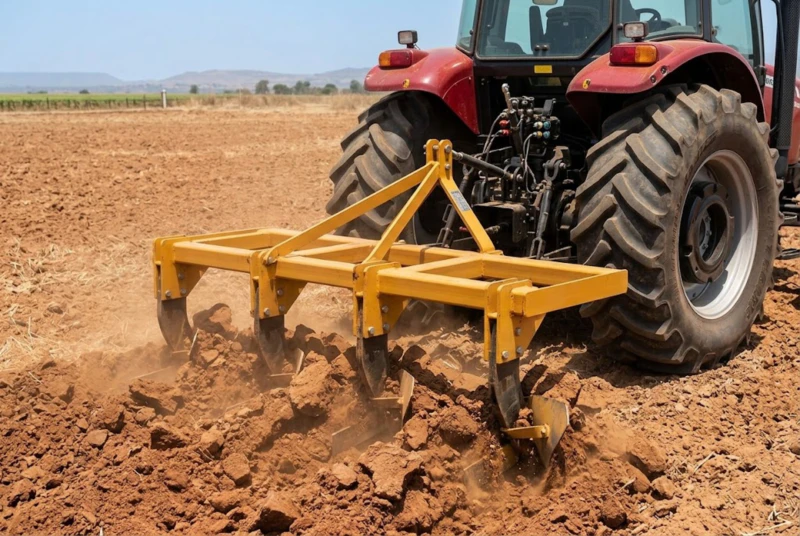
The ERA Series Rotary Cultivator eliminates this entire sequence by integrating all three functions — secondary tillage, banded fertilizer application, and ridge formation — into a single machine that performs all three operations simultaneously in one forward pass. One machine replaces three. One pass replaces three. The result is a finished, fertilized, ridged potato bed created in the same time, fuel, and compaction as a single rotavator pass.
This guide explains exactly how the ERA achieves this integration, quantifies the savings versus the three-machine approach, and provides the operational detail needed to get maximum performance from the machine in the field.
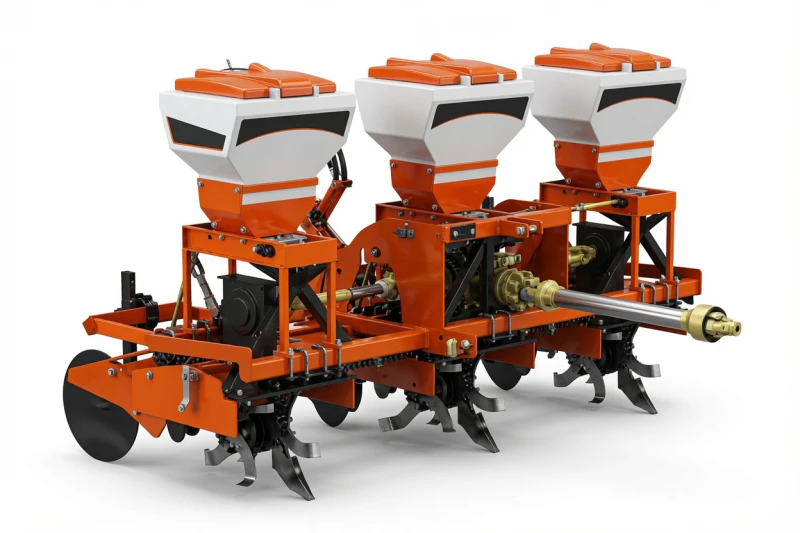
Inside the ERA: Three Machines on One Frame
The ERA is not simply three machines bolted together. It is an integrated system where each function feeds into the next in a carefully sequenced workflow as the machine advances:
|
Function 1: Rotary Tillage (Replaces Standalone Rotavator) A set of PTO-driven rotary blades per row penetrates the ploughed soil, breaking clods into fine aggregates (5 to 20 mm target particle size). The blades work only within the row zone — not the full width between rows — focusing energy where seedbed quality matters most and reducing total power demand compared to a full-width rotavator. What it replaces: A full-width PSW-3200 Rotavator pass (140 hp, separate field operation) |
|
Function 2: Banded Fertilizer Application (Replaces Standalone Applicator) Immediately behind each set of rotary blades, an individual fertilizer hopper (125 kg capacity per row) meters granular NPK into the freshly tilled soil through a precise metering mechanism. The fertilizer is deposited in a concentrated band within the root zone — exactly where the plant will access it. No nutrients land between the rows. Independent row control prevents waste on headlands. What it replaces: A standalone ADB-380 or ADB-480 Fertilizer Applicator pass (75-85 hp, separate field operation) |
|
Function 3: Ridge Formation (Replaces Standalone Furrower) At the rear of each row unit, adjustable spring furrowers shape the tilled, fertilized soil into a uniform planting ridge. The ridge height, angle, and profile are adjustable to match row spacing (60 to 100 cm) and planting requirements. The ridges emerge behind the machine fully formed and ready for the planter. What it replaces: A standalone R-380 or R-580 Potato Furrower pass (75-85 hp, separate field operation) |
The three functions happen simultaneously in a single forward pass at 3 to 6 km/h. By the time the machine has crossed the field once, the ploughed ground has been transformed into a finished, fertilized, ridged potato bed — ready for the planter with zero additional field operations.
ERA Model Range: 2, 3, and 5-Row Configurations
| Specification | ERA-2100 | ERA-3100 | ERA-5100 |
|---|---|---|---|
| Number of Rows | 2 | 3 | 5 |
| Working Width (at 75 cm spacing) | 1.5 m | 2.25 m | 3.75 m |
| Fertilizer Capacity (total) | 250 kg | 375 kg | 625 kg |
| Min. Tractor Power | 75 hp | 85 hp | 100 hp |
| Row Spacing | Adjustable 60 to 100 cm | ||
| Best For | Smallholders, up to 30 ha | Commercial, 30-100 ha | Large-scale, 100+ ha |
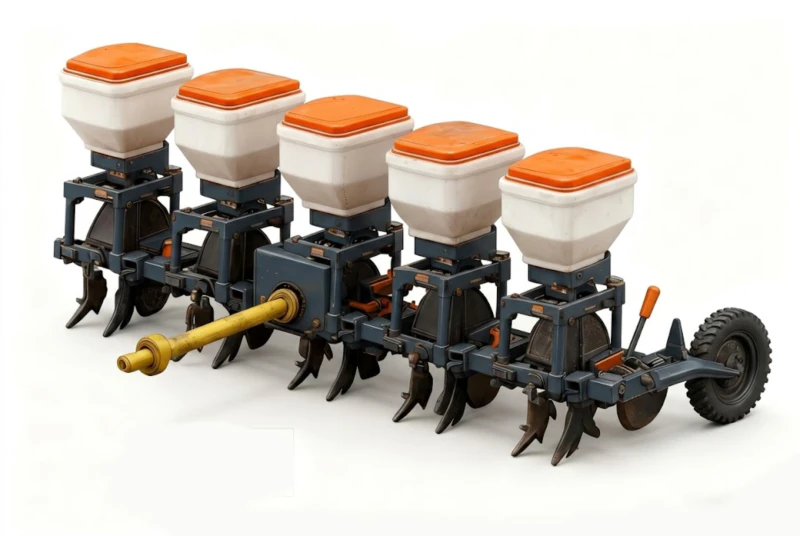
The Full Comparison: ERA vs. Three Separate Machines
| Factor | ERA (3-in-1) | Rotavator + ADB + Furrower |
|---|---|---|
| Machines needed | 1 | 3 |
| Field passes | 1 | 3 |
| Tractor hours (per 100 ha) | Baseline (1x) | ~2.5 to 3x |
| Fuel consumption | Baseline (1x) | ~2.5 to 3x |
| Soil compaction passes | 1 pass (minimum compaction) | 3 passes (cumulative compaction) |
| Total equipment purchase cost | 1 machine cost | 3 machine costs combined |
| Storage space | 1 bay | 3 bays |
| Maintenance items | 1 set (blades + hoppers + furrowers) | 3 separate maintenance schedules |
| Hitch/unhitch time | 1 hookup | 3 hookups (+ PTO/hyd. connections) |
| Weather-window sensitivity | Low (1 pass in 1 day window) | High (3 passes need 3 days) |
| Days from plough to planting | 2 days (ERA + planter) | 4-5 days (3 machines + planter) |
Why Fewer Passes = Better Potatoes (The Compaction Factor)
Every tractor pass compresses the soil. On potato land, compaction in the root zone restricts tuber expansion, reduces tuber count, increases malformation, and impedes water movement. Research from potato agronomic institutes shows a measurable yield penalty for each additional field pass after ploughing:
| 1 pass after ploughing (ERA) | Minimal recompaction. The soil retains most of the open, aerated structure created by ploughing. Tubers develop freely in loose soil. Optimal drainage maintained. |
| 3 passes after ploughing (traditional) | Cumulative compaction from three full-field tractor crossings. Wheel tracks create localized dense zones where tubers develop smaller or misshapen. Drainage is impeded in compacted wheel lines, creating wet zones that promote disease. |
The yield benefit of reduced compaction is in addition to the cost savings from fewer passes. It is a dual advantage: you spend less per hectare in preparation and you harvest more per hectare at the end of the season.
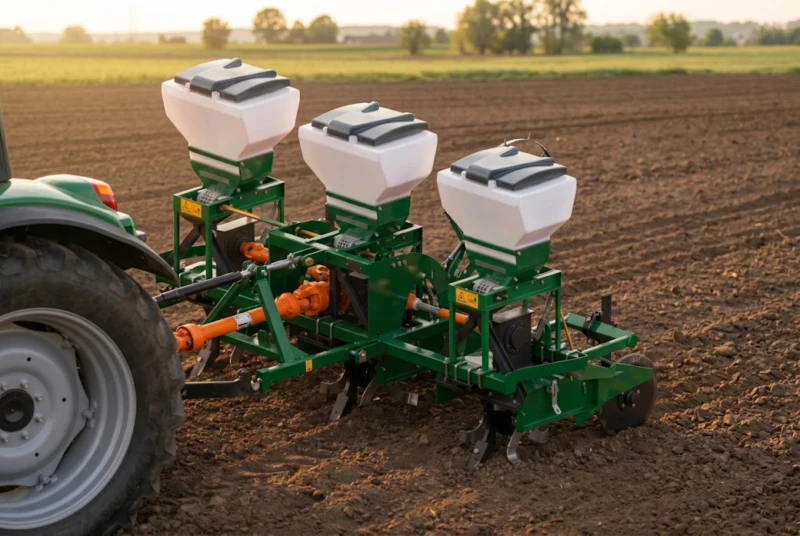
Operational Guide: Getting Maximum Performance From the ERA
|
Setting Up: Before Entering the Field Set row spacing on the frame (60 to 100 cm — match your planter and harvester). Adjust rotary blade depth to 12 to 18 cm depending on soil condition and desired tilth depth. Set furrower angle and depth for target ridge height (15 to 20 cm). Calibrate fertilizer metering gates: run a test at operating speed, collect output from each row, verify the rate matches your agronomist’s recommendation. |
|
PTO Speed: The Quality Controller PTO speed determines tilth fineness. Higher PTO speed produces finer aggregates — use on heavy, cloddy soil after fresh ploughing. Lower PTO speed produces coarser aggregates — use on friable, weathered soil to avoid over-pulverization and surface capping risk. The ideal aggregate size for potatoes is 5 to 20 mm: fine enough for seed contact but coarse enough to resist rain crusting. |
|
Forward Speed: The Efficiency Controller 3 to 4 km/h on heavy or cloddy soil for maximum blade contact time per meter. 5 to 6 km/h on light, friable soil where less work is needed. Match forward speed to PTO speed to achieve the target aggregate size. If the tilth is too coarse, slow down or increase PTO speed. If too fine, speed up or reduce PTO speed. |
|
Fertilizer Management: Headland Control Disengage individual row fertilizer flow on headlands and field edges to prevent over-application on turning areas. Each row has independent control. Monitor hopper levels during operation and plan refilling stops to minimize field downtime. With 125 kg per row, refilling frequency depends on your application rate — at 900 kg/ha on a 3-row ERA-3100, one fill covers approximately 1.25 hectares. |
|
Ridge Quality: The Final Check Stop after the first pass and inspect the ridges. They should be 15 to 20 cm above the furrow bottom, rounded (not pointed), uniform in width, and consistent in height. If ridges are too low, deepen the furrowers. If too high or sharp, raise them. The ridge must be large enough to cover developing tubers but stable enough not to collapse during rain or irrigation. |
Which ERA Model Do You Need?
|
ERA-2100 (2-Row) — The Smallholder Specialist Best for: Farms up to 30 hectares of potatoes. Tractor from 75 hp. Pairs perfectly with the PAI-2100 planter (2-row) and AWB-1600 digger (2-row) for a complete matched 2-row production system. The most affordable entry into 3-in-1 potato bed preparation. |
|
ERA-3100 (3-Row) — The Commercial Workhorse Best for: Farms of 30 to 100 hectares. Tractor from 85 hp. Pairs with the PANTHER 3-Row planter and AWB trailed digger for a balanced 3-row chain. The most popular model for mid-scale commercial potato operations. |
|
ERA-5100 (5-Row) — Maximum Output Best for: Farms over 100 hectares or contractors serving multiple clients. Tractor from 100 hp. At 75 cm spacing, 5 rows covers 3.75 m working width — the widest ERA configuration. Pairs with PAI-480-AR (4-row) planter or two passes of a PANTHER 3-Row for maximum planting speed. |
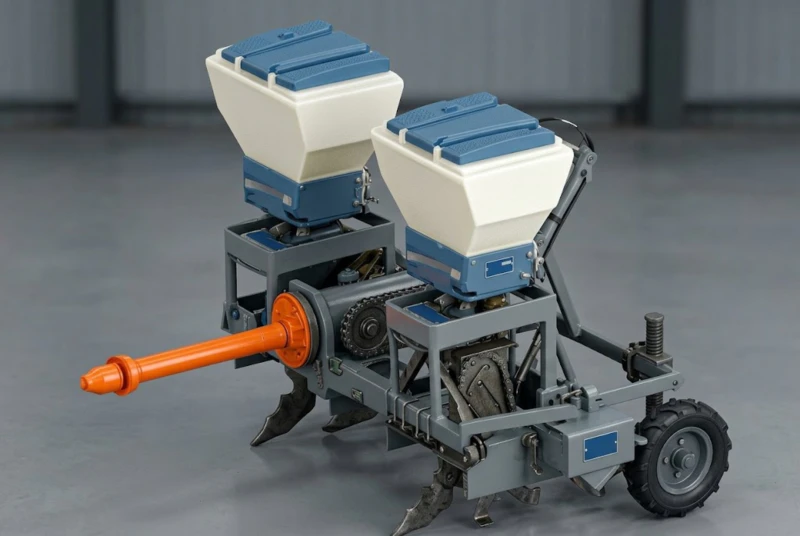
Frequently Asked Questions
|
Q1: Does the ERA produce as fine a seedbed as a full-width rotavator? Yes. The ERA’s rotary blades use the same PTO-driven mechanism as the PSW-3200 rotavator. The difference is that the ERA tills only the row zone (where seedbed quality matters), not the inter-row space. Within the row zone, the tilth quality is identical or better — and since there is no subsequent compaction from two more machine passes, the final seedbed structure is actually superior. |
|
Q2: Can the ERA bury stones like the PSW-3200? The ERA’s rotary blades push small stones below the tilled layer in the row zone, similar to the PSW-3200. However, the ERA works in the row zone only, not full-width. For comprehensive stone burying across the entire field width, the PSW-3200 is the better tool. For fields that have been stone-crushed with the THOR crusher, the ERA handles any remaining small fragments easily. |
|
Q3: Is 125 kg per row enough fertilizer capacity? For base dressings of 600 to 900 kg/ha (banded, not broadcast), 125 kg per row provides adequate capacity for 1 to 2 hectares per fill on a 3-row machine. For higher application rates or larger fields, plan fertilizer refilling stops. Many farms combine the ERA base dressing (60 to 70 percent of total) with a planter-applied starter dressing (30 to 40 percent) for optimal dual-band placement. |
|
Q4: Can the ERA work on unploughed ground? The ERA is designed for secondary tillage after ploughing — it refines already-loosened soil. It is not a primary tillage tool. On unploughed or heavily compacted ground, the rotary blades cannot penetrate effectively. Always plough (or deep-cultivate) first, then follow with the ERA for the 3-in-1 seedbed pass. |
|
Q5: What row spacings can the ERA handle? All three models are adjustable from 60 to 100 cm row spacing. Standard potato spacing is 75 cm in most regions. Specify your required spacing when ordering and we will pre-configure the machine. Adjusting spacing in the field requires repositioning the row units on the frame — a straightforward mechanical adjustment. |
|
Q6: How many hectares can the ERA-5100 cover per day? At 4 km/h average speed with a 3.75 m working width: approximately 10 to 12 hectares per 8-hour day, including headland turns and fertilizer refilling. This is the coverage of a single pass — no return trips. A traditional 3-machine workflow covering the same 10-12 hectares would need 3 days instead of 1. |
|
Q7: Can I use the ERA for crops other than potatoes? Yes. The ERA works for any ridged or bedded crop: sweet potatoes, yams, cassava, carrots, onions, garlic, and other vegetables grown in rows. Adjust the row spacing and ridge profile to match the crop. The 3-in-1 efficiency benefit applies equally to any row crop requiring tilled, fertilized beds. |
|
Q8: Do I still need my existing rotavator if I buy an ERA? For potato bed preparation, no — the ERA replaces the rotavator entirely. However, a full-width rotavator (like the PSW-3200) remains useful for general seedbed preparation for non-ridged crops (cereals, grassland) and for full-width stone burying on stony land. Many farms keep both: ERA for potato beds, PSW-3200 for general tillage. |
|
Q9: What planter matches each ERA model? ERA-2100 (2-row) pairs with PAI-2100 (2-row planter). ERA-3100 (3-row) pairs with PANTHER 3-Row. ERA-5100 (5-row) pairs with PAI-480-AR (4-row) or PANTHER 4-Row. Matching row counts between cultivator and planter ensures the planter follows exactly in the ERA’s prepared ridges. |
|
Q10: How do I get a quote? Contact our team with your hectarage, tractor power, row spacing, and whether you want to quote the ERA alone or as a matched system with planter. We will recommend the right ERA model and provide factory-direct pricing including shipping to your location. |
Replace Three Machines With One. Start Saving This Season.
The ERA Rotary Cultivator is the single most impactful efficiency upgrade for any potato operation still running three separate seedbed machines. One purchase replaces three. One pass replaces three. The savings in fuel, time, compaction, and equipment cost begin the day you first enter the field. Available in 2-, 3-, and 5-row configurations at factory-direct pricing.
|
ERA Cultivator Quote 2 / 3 / 5-row models |
ERA + Planter Package Matched system pricing |
Dealer Opportunities 3-in-1 product line |
Contact Us — Get Your ERA Quote and Matched Planter Recommendation