The Wrong Planter Costs You More Than the Right One Saves
A potato planter that is too small for your farm turns planting season into a race against the weather — every lost day narrows the planting window, delays emergence, and shortens the growing season. A planter that is too large wastes capital, demands a tractor you may not have, and sits underused if your acreage does not justify the throughput.
Choosing the right planter is not simply about row count. It is about matching seed capacity, fertilizer integration, insecticide capability, tractor requirements, and daily planting capacity to your specific farm size, workforce, and operational style. A 2-row planter is not just a smaller version of a 4-row — it serves a fundamentally different type of operation.
This guide walks you through every decision factor, compares all five planter models in our range side by side, and gives you a clear recommendation matched to your hectarage, tractor power, and production goals.
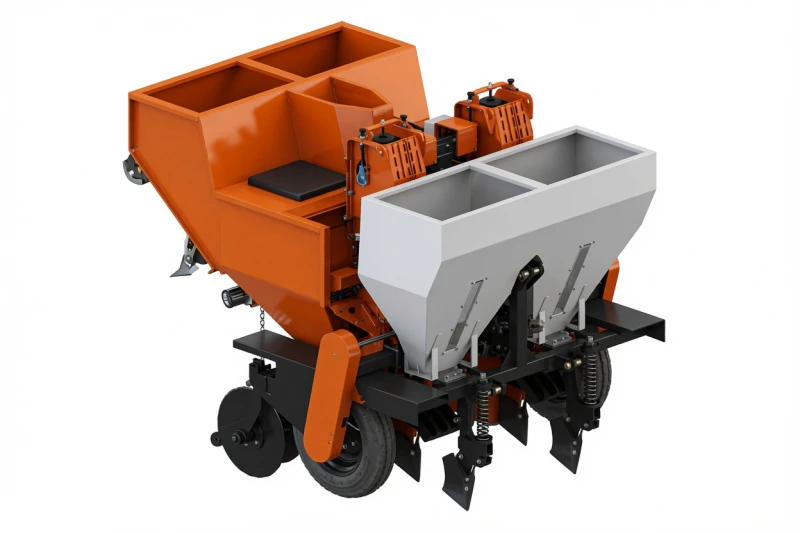
Our Planter Range: Five Models, Two Series
We manufacture two planter series — PANTHER and PAI — covering the full spectrum from 10-hectare smallholder operations to 500+ hectare industrial farms:
| Model | Rows | Seed | Fertilizer | Insecticide | HP | Hectares |
|---|---|---|---|---|---|---|
| PAI-2100 | 2 | 350 kg | 200 kg | 200/300 L | 75 | 10–40 |
| PANTHER 2-Row | 2 | 700 kg | 680 kg | 200/300 L | 85 | 20–80 |
| PANTHER 3-Row | 3 | 750 kg | 600 kg | 300 L | 100 | 40–150 |
| PANTHER 4-Row | 4 | 1,200 kg | — | 300 L | 125 | 100–300 |
| PAI-480-AR | 4 | 4,000 kg | 2,000 + 500 kg | 300/600 L | 140 | 150–500+ |
Decision Factor 1: How Many Hectares Do You Plant?
Farm size is the single strongest predictor of the right planter. The key calculation is daily planting capacity vs. available planting days. In most climates, the planting window for potatoes is 2 to 4 weeks. If your planter cannot cover your entire acreage within that window, you either finish late (losing yield) or do not finish at all.
| Farm Size | Daily Capacity Needed | Recommended Model |
|---|---|---|
| 10 to 40 ha | 2-4 ha/day | PAI-2100 or PANTHER 2-Row |
| 40 to 150 ha | 5-10 ha/day | PANTHER 3-Row |
| 100 to 300 ha | 8-15 ha/day | PANTHER 4-Row |
| 150 to 500+ ha | 12-20+ ha/day | PAI-480-AR |
How daily capacity works: A 2-row planter at 5 km/h with 75 cm row spacing covers approximately 0.75 ha/h. Over an 8-hour day with refilling stops, that is 4 to 5 ha/day. A 4-row planter at the same speed covers approximately 1.5 ha/h, or 8 to 10 ha/day. The PAI-480-AR, with its massive 4,000 kg seed hopper (minimal refilling stops), sustains 12 to 15+ ha/day.
Decision Factor 2: Seed Hopper Capacity — The Hidden Productivity Driver
Seed hopper capacity determines how often you stop to reload. Every refilling stop costs 15 to 30 minutes of field downtime — travel to the seed store, loading, return, and re-alignment. On a long planting day, these stops accumulate significantly.
| Model | Seed Capacity | Ha per Fill (at 2.5 t/ha seed rate) | Stops per 10 ha |
|---|---|---|---|
| PAI-2100 | 350 kg | ~0.14 ha | ~71 |
| PANTHER 2-Row | 700 kg | ~0.28 ha | ~36 |
| PANTHER 3-Row | 750 kg | ~0.30 ha | ~33 |
| PANTHER 4-Row | 1,200 kg | ~0.48 ha | ~21 |
| PAI-480-AR | 4,000 kg | ~1.6 ha | ~6 |
The difference is dramatic. Planting 10 hectares with the PAI-2100 requires approximately 71 refilling stops. The PAI-480-AR covers the same area in approximately 6 stops. On large farms, the PAI-480-AR’s 4,000 kg hopper is the single biggest productivity advantage — it effectively eliminates refilling as a bottleneck.
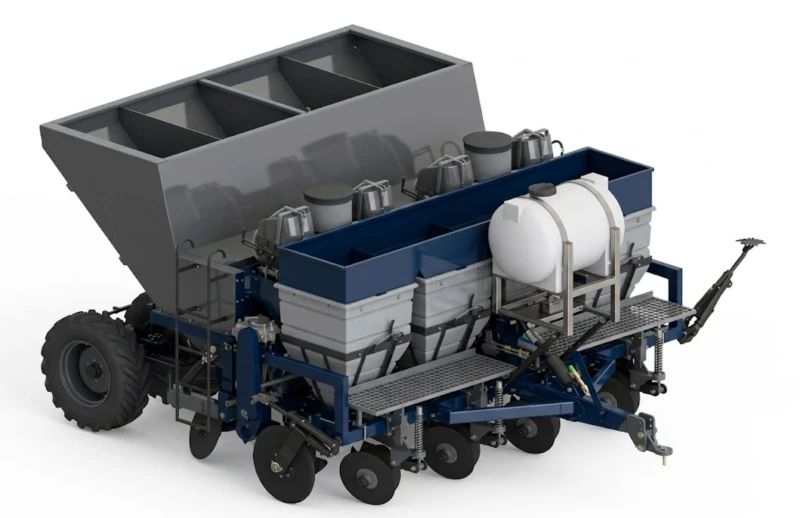
Decision Factor 3: Integrated Fertilizer — Do You Need It at Planting?
Not all planters carry fertilizer. Whether you need integrated fertilizer at planting depends on your overall nutrient strategy:
|
You NEED planter-integrated fertilizer if: You want to place a starter dressing directly alongside the seed tuber at planting depth — the most effective position for immediate nutrient uptake. This is the agronomically optimal approach, especially when combined with a base dressing applied earlier during seedbed preparation by the ERA cultivator or ADB applicator. The dual-band strategy (base + starter) provides the strongest early growth and highest yield potential. |
|
You can skip planter-integrated fertilizer if: You have already applied the full fertilizer program during seedbed preparation (via PSW-3200B rotavator with 2,000 kg bunker, or ERA cultivator, or ADB applicator) and do not need a separate starter dose. In this case, the PANTHER 4-Row (no fertilizer hopper) is a simpler, lighter, faster planting machine. |
| Model | Fertilizer at Planting? | Capacity |
|---|---|---|
| PAI-2100 | Yes | 200 kg |
| PANTHER 2-Row | Yes | 680 kg |
| PANTHER 3-Row | Yes | 600 kg |
| PANTHER 4-Row | No | — |
| PAI-480-AR | Yes — Dual system | 2,000 + 500 kg |
The PAI-480-AR stands out with a dual fertilizer system: a 2,000 kg primary hopper and a 500 kg secondary hopper. This allows simultaneous application of two different fertilizer products (e.g., NPK compound + straight potassium) in separate bands at different depths — the most advanced nutrient placement available from any planter in this class.
Decision Factor 4: In-Furrow Insecticide
All five models carry liquid insecticide tanks for in-furrow application at planting. This provides early-season protection against soil-dwelling pests (wireworm, Colorado beetle larvae, aphids) without a separate spraying pass. Tank sizes range from 200 L (PAI-2100) to 600 L (PAI-480-AR). For most operations, the standard 300 L tank on the PANTHER 3/4-Row models provides adequate capacity for a full day’s planting.
Decision Factor 5: Tractor Power and Fleet
|
75 hp tractor → PAI-2100 The PAI-2100 is designed for the smallest tractors commonly found on smallholder farms. At 75 hp minimum, it works with John Deere 5E, Kubota L/M series, Massey Ferguson 4700, New Holland T4/T5, and similar compact utility tractors. If your farm runs a single 75 hp tractor for all operations, the PAI-2100 fits your fleet without requiring an upgrade. |
|
85–100 hp tractor → PANTHER 2 or 3-Row The mid-range PANTHER models match the 85 to 100 hp tractors that form the backbone of most commercial farms. The loaded weight (seed + fertilizer + insecticide) requires adequate hydraulic lift and rear-axle capacity. Confirm your tractor’s lift capacity against the loaded weight before ordering. |
|
125–140 hp tractor → PANTHER 4-Row or PAI-480-AR The large-frame planters require 125+ hp for adequate draft and hydraulic power. The PAI-480-AR, loaded with 4,000 kg of seed and 2,500 kg of fertilizer, is a heavy implement that demands a substantial tractor: Case IH Maxxum/Puma, New Holland T6/T7, John Deere 6R/7R, Massey Ferguson 6700, or equivalent. |
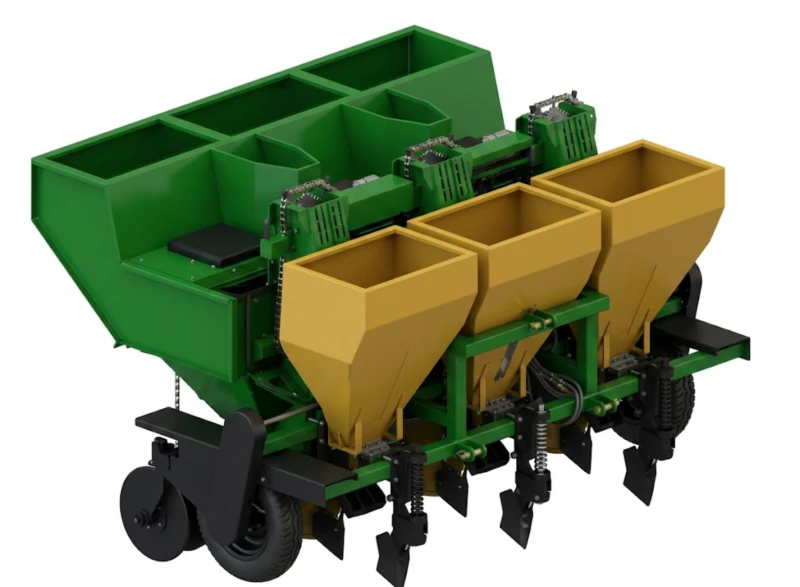
Model-by-Model Buyer Profiles
|
PAI-2100 — The Entry Point Ideal buyer: Smallholder or new potato grower with 10 to 40 hectares, one 75 hp tractor, limited shed space, and a tight equipment budget. The PAI-2100 delivers mechanized planting with fertilizer and insecticide at the lowest possible investment. It is the starting point for growers transitioning from hand or semi-manual planting to full mechanization. Pairs with: ERA-2100 cultivator (2-row) + AWB-1600 digger (2-row) for a complete matched 2-row chain from seedbed to harvest. |
|
PANTHER 2-Row — The Capable Upgrade Ideal buyer: Established grower with 20 to 80 hectares wanting more seed and fertilizer capacity than the PAI-2100 without stepping up to 3-row complexity. The PANTHER 2-Row carries double the seed (700 kg vs 350 kg) and triple the fertilizer (680 kg vs 200 kg), dramatically reducing refilling stops and extending daily run time. Pairs with: ERA-2100 cultivator + AWB-1600B/C trailed digger for enhanced 2-row productivity. |
|
PANTHER 3-Row — The Commercial Standard Ideal buyer: Commercial operation with 40 to 150 hectares and a 100 hp tractor. The 3-row PANTHER is the most popular model in our range — it hits the sweet spot between daily coverage, manageable tractor requirement, and integrated fertilizer capability. Three rows at 75 cm spacing covers 2.25 m per pass, completing 6 to 8 ha/day. Pairs with: ERA-3100 cultivator (3-row) + AWB trailed digger for a balanced 3-row production system. |
|
PANTHER 4-Row — The Speed Machine Ideal buyer: Large commercial farm with 100 to 300 hectares, a 125 hp tractor, and a separate pre-plant fertilizer strategy (ERA or ADB applicator handles all fertilizer). The PANTHER 4-Row is designed purely for fast, high-quality planting without the weight and complexity of onboard fertilizer. Four rows at 75 cm covers 3.0 m per pass — 50 percent more than the 3-row at similar speed. Pairs with: ERA-5100 cultivator (5-row) + CWB-2L elevator harvester for maximum throughput. |
|
PAI-480-AR — The Industrial Solution Ideal buyer: Large-scale operation (150 to 500+ hectares), contractor planting for multiple clients, or seed potato producer requiring maximum daily throughput with zero compromise on fertilizer placement. The 4,000 kg seed hopper and dual fertilizer system (2,000 + 500 kg) provide unmatched field autonomy — plant for hours without returning to the yard. The 600 L insecticide tank covers the largest possible acreage per fill. Pairs with: ERA-5100 cultivator + CWB-2L harvester + THOR 3.0 stone crusher for a complete industrial potato chain. |
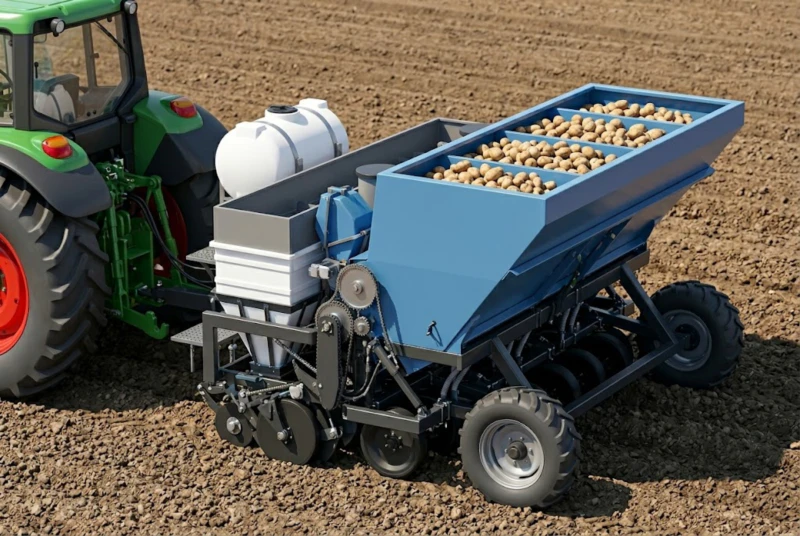
Quick Decision Flowchart
|
Question 1: Do you plant more than 150 hectares? YES → PAI-480-AR (industrial scale, maximum autonomy). NO → continue. |
|
Question 2: Do you plant more than 80 hectares? YES → PANTHER 3-Row (with fertilizer) or PANTHER 4-Row (without fertilizer, if ERA/ADB handles it). NO → continue. |
|
Question 3: Do you have more than 85 hp? YES → PANTHER 2-Row (higher capacity, more fertilizer). NO → continue. |
|
Question 4: Do you have at least 75 hp and under 40 hectares? YES → PAI-2100 (most affordable entry into mechanized planting). |
Frequently Asked Questions
|
Q1: What is the difference between the PANTHER and PAI series? The PANTHER series (2/3/4-row) is the mid-range all-rounder line with robust construction and integrated fertilizer on 2- and 3-row models. The PAI series covers the two extremes: the PAI-2100 is the entry-level 2-row for budget-conscious smallholders, and the PAI-480-AR is the industrial-scale 4-row with the largest seed and dual fertilizer capacity in the range. Choose PANTHER for the commercial middle ground; PAI for the entry or top end. |
|
Q2: Can I start with a PAI-2100 and upgrade later? Absolutely. Many growers start with the PAI-2100, expand their acreage and tractor fleet, then upgrade to a PANTHER 3-Row or PAI-480-AR. The PAI-2100 retains good resale value and can continue serving as a backup planter or be sold to fund the upgrade. |
|
Q3: Why does the PANTHER 4-Row have no fertilizer hopper? The 4-Row is designed for maximum planting speed and minimum weight. Removing the fertilizer system reduces loaded weight, lowers power demand, and simplifies the machine — on the assumption that fertilizer has already been applied during seedbed preparation by the ERA cultivator, ADB applicator, or PSW-3200B rotavator. If you need 4-row planting WITH integrated fertilizer, the PAI-480-AR provides this. |
|
Q4: What is the advantage of the PAI-480-AR’s dual fertilizer system? The dual system allows two different fertilizer products to be applied simultaneously in separate bands at different depths. For example: NPK compound in the primary band below the seed for sustained feeding, plus straight potassium or micronutrient blend in the secondary band beside the seed for targeted early nutrition. This precision is unavailable from single-hopper planters. |
|
Q5: What row spacing do the planters support? All five models are adjustable from 60 to 100 cm row spacing. Standard is 75 cm for most potato markets. Specify your required spacing at order and we will pre-configure. Changing spacing in the field requires repositioning row units on the toolbar — a straightforward mechanical adjustment. |
|
Q6: What seed sizes can the planters handle? All models handle standard seed tuber sizes from 28 to 60 mm diameter. The cup-belt metering mechanism is adjustable for different tuber sizes. Precise calibration ensures one tuber per cup — minimizing doubles and skips. On well-graded seed, spacing accuracy exceeds 95 percent. |
|
Q7: What seedbed preparation equipment should I pair with the planter? For 2-row planters: ERA-2100 cultivator. For 3-row planters: ERA-3100. For 4-row planters: ERA-5100. The ERA cultivates, fertilizes, and ridges in one pass, creating the ideal bed for the planter to follow. See our guide: How to Build the Perfect Potato Seed Bed in 3 Passes. |
|
Q8: What harvesting equipment matches each planter? 2-row planters pair with AWB-1600 mounted digger (2-row). 3-row planters pair with AWB trailed digger (2-row, 1.5 passes per planter pass). 4-row planters pair with the CWB-2L elevator harvester (2-row, 2 passes per planter pass) for maximum harvest quality. |
|
Q9: I am a contractor planting for multiple clients. Which model? The PAI-480-AR. Its 4,000 kg seed capacity, dual fertilizer system, and 600 L insecticide tank provide the maximum daily output and the flexibility to serve different clients with different fertilizer requirements. The dual fertilizer system eliminates the need to clean and reconfigure between clients using different products. |
|
Q10: How do I get a recommendation and quote? Contact our team with your total potato hectarage, tractor model and HP, row spacing, seed size, fertilizer strategy, and whether you want a standalone planter quote or a matched system (ERA + planter + harvester). We will recommend the exact model and provide factory-direct pricing. |
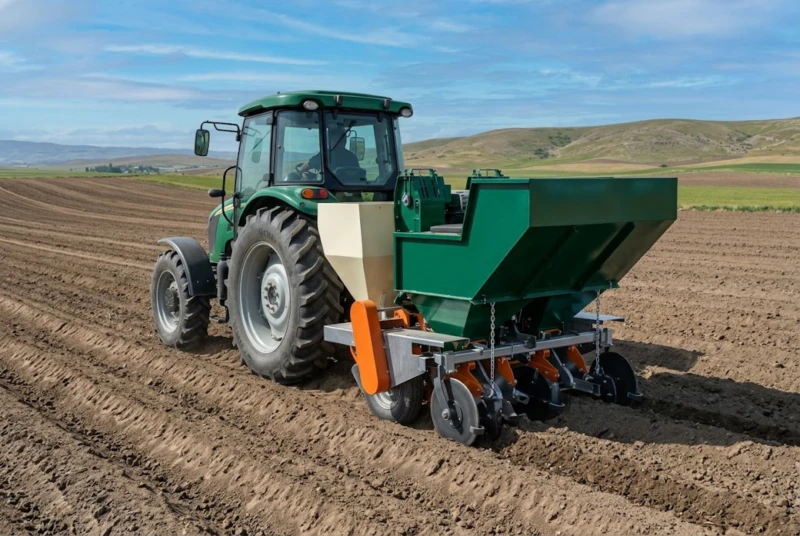
Find the Planter That Fits Your Farm — Not the Other Way Around
The right planter finishes your acreage within the planting window, works with your tractor, and integrates with your seedbed and fertilizer strategy. We manufacture all five models and will recommend the one that genuinely fits — not the most expensive. Factory-direct pricing on every model, worldwide delivery.
|
Planter Recommendation Matched to your hectares |
Planter + ERA Package Complete seedbed-to-plant system |
Dealer Inquiries Full planter range distribution |